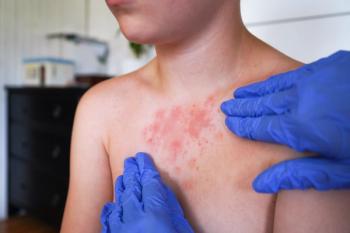
Across the 3 trials, 110 children aged 6 months to 18 years were treated with anacaulase-bcdb. These children and adolescents had deep thermal burns of up to 67% total body surface area. A total of 77 children were treated with anacaulase-bcdb in the phase 1/2 study, where 92.7% of areas treated developed “complete eschar removal within 0.9 days from admission.”5
In the phase 3 RCT, 33 children were included, 17 of which were treated with anacaulase-bcdb compared to 16 that received standard of care. All wounds that were treated with anacaulase-bcdb achieved complete eschar removal, with a time of 0.9 days for complete removal for anacaulase-bcdb (compared to 6.5 days for standard of care [P < .001]).5
Seventeen children participated in a phase 3b follow-up study, where 9 received anacaulase-bcdb and 8 received standard of care. In this study, long-term endpoints were measured by assessors masked to original treatment, 2 to 4 years after the injury. Endpoints were scar quality and quality of life.5
The investigative team noted long-term modified Vancouver Scar Scale scores were 3.4 for NexoBrid-treated wounds vs 4.4 for standard of care-treated wounds. No significant treatment-related adverse events were recorded.5
In a January 2024 Q+A interview with Contemporary Pediatrics, Stan Monstrey, former head of the Plastic Surgery Clinic and Burn Center, Ghent University Hospital, Ghent, Belgium; former Secretary General, president, European Association of Plastic Surgeons, said in part:
"In pediatric patients we know that there will be increased scar tissue formation, so it is even more necessary to prevent and reduce the residual burn scars. Most importantly, children must live the rest of their lives with these sometimes unsightly scars... We are convinced, and this has been confirmed in the literature as well as in our own clinical experience, that the scar-reducing capacities of [anacaulase-bcdb] are even more important in pediatric patients to increase the quality of life after burn injury."5
Click here for the full Q+A interview.
According to Vericel, anacaulase-bcdb is commercially available in the United States.2
References:
- MediWound announces US Food and Drug Administration approval of NexoBrid for the treatment of pediatric patients with severe thermal burns. MediWound Ltd. Press release. August 15, 2024. Accessed August 20, 2024. https://ir.mediwound.com/news-releases/news-release-details/mediwound-announces-us-food-and-drug-administration-approval
- Verical announces FDA approval approval of NexoBrid for the treatment of pediatric patients with severe thermal burns. Vericel Corporation. Press release. August 15, 2024. Accessed August 20, 2024. https://investors.vcel.com/news-releases/news-release-details/vericel-announces-fda-approval-nexobrid-treatment-pediatric
- A study to evaluate the efficacy and safety of NexoBrid in children with thermal burns compared the standard of care. ClinicalTrials.gov. Updated July 27, 2022. Accessed August 20, 2024. https://clinicaltrials.gov/study/NCT02278718
- Fitch, J. FDA accepts sBLA for NexoBrid to remove eschar in pediatric thermal burn patients. Contemporary Pediatrics. January 10, 2024. Accessed August 20, 2024. https://www.contemporarypediatrics.com/view/fda-accepts-sbla-for-nexobrid-to-remove-eschar-in-pediatric-thermal-burn-patients
- Fitch, J. How could NexoBrid change the pediatric thermal burn treatment landscape? Contemporary Pediatrics. January 24, 2024. Accessed August 20, 2024. https://www.contemporarypediatrics.com/view/how-could-nexobrid-change-the-pediatric-thermal-burn-treatment-landscape-