• Benzophenones: These are broad-spectrum blockers, showing a greater affinity for UV-B absorption and limited absorption of UV-A II. Some derivatives in this category have been known to induce various forms of dermatitis reactions.
• Ecamsule: This compounddemonstrates photostability, water resistance, and low systemic absorption.
• Avobenzones: These are considered broad-spectrum blockers effective against UV-A I. However, they are limited by photoinstability, losing 50% to 90% of efficacy after 1 hour of UV exposure.
• Anthranilates: Thesefunction as weak blockers of both UV-B and UV-A rays.
UV-B filters
· Octocrylene: This compoundcan enhance SPF when combined with other UV absorbers. It is considered safe and is less likely to cause irritation.15
• Ensulizole: This compoundfilters only UV-B rays and is water-soluble. It is commonly used in cosmetics.
• Aminobenzoates: These arehighly effective UV-B absorbers with no UV-A absorption. They are associated with PABA, which often causes dermatitis.
• Padimate O: This compound isgenerally considered safe, being a PABA derivative with effective UV-B protection. However, further testing is required by the FDA before inclusion in the GRASE category.
Irritants and allergies
Certain sunscreen ingredients can trigger reactions in individuals with sensitive skin. It is recommended to avoid products containing ingredients that have previously irritated your child’s skin. However, if a caregiver suspects a potential reaction based on past experiences, patch testing offers a safe method to prevent more severe reactions.16
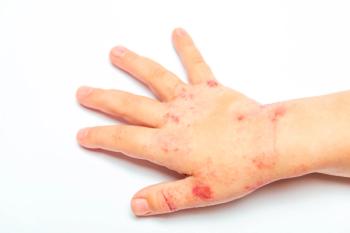
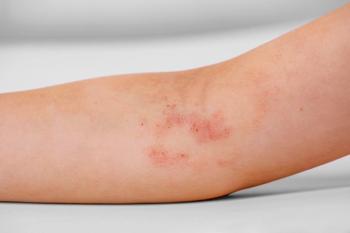
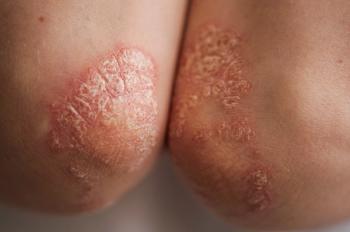
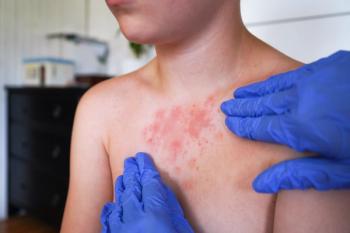
Patch testing involves applying a small amount of the product to the skin on the forearm and monitoring for any reaction over a 48-hour period. Signs of a reaction may include swelling, hives, scaling, pain, or blistering.17 If your child displays any of these symptoms, it is important to notify their primary care physician, dermatologist, or allergist for further evaluation and guidance.
Recent studies have identified common allergens in sunscreens, including added fragrances, cinnamates, dibenzoylmethanes, and benzophenones like benzeophenone-3 and oxybenzone.18 Allergic reactions are more likely to be triggered by inactive ingredients than by active ones. However, individuals with autoimmune conditions may react to both inactive and active ingredients, making physical sunscreens preferable over chemical ones in such cases. Additionally, research indicates that all SPF 100 sunscreens utilize chemical blockers, highlighting the importance of consulting a dermatologist when choosing a suitable sunscreen for your child’s skin condition.19
Caregivers can discuss 4 types of reactions, also referred to as forms of dermatitis or eczema, with their child’s health care provider to gain a better understanding of their child’s condition. These include contact dermatitis, irritant contact dermatitis, allergic contact dermatitis, and photocontact dermatitis. It is worth noting that sunscreens rarely cause photocontact dermatitis.20
Sunscreen guidelines and management for pediatric age groups of all skin types
Infants (ages 0-6 months)
Sunscreen should not be used on infants under 6 months of age due to their inability to metabolize sunscreen ingredients. Sun safety for infants includes using lightweight sun-protective clothing with Ultraviolet Protection Factor; wide-brimmed hats; and, if tolerated, sunglasses with UV-A/UV-B protection. It is also essential to keep infants hydrated and out of the sun between 10 am and 4 pm. Further protective measures, such as UV window films or shades, which filter UV radiation, should be implemented. Protecting infants from exposure to UV radiation is crucial in reducing their risk of cataracts and retinal damage, which often occurs before the age of 18.21
Babies (ages 6-12 months)
Sunscreen is safe to use in babies above 6 months of age. A baby’s sunscreen should include broad-spectrum protection against both UV-A and UV-B rays, have SPF 30 or higher, include GRASE ingredients, and avoid fragrances. Patch testing is recommended to minimize the risk of a reaction.22
Once an appropriate sunscreen has been selected for your baby, apply the sunscreen 30 minutes before sun exposure and reapply every 2 hours. If water-resistant sunscreen is used, reapplication must be done every 40 to 80 minutes due to its limited efficacy in water. Apply sunscreen to all exposed skin surfaces, including the face, ears, neck, hands, and feet. Use lightweight sun-protective clothing, wide-brimmed hats, and umbrellas to keep your baby safe.23
Toddlers to school-aged children
The use of sunscreen and sun-protective clothing is important for school-aged children. Some schools may allow for the reapplication of sunscreen throughout the day. However, additional protective measures include ensuring your child’s play area has adequate shading and areas to cool off. If your child has a skin condition that requires the reapplication of sunscreen throughout the day, a doctor’s note may be necessary to ensure your child’s health and safety at school.24
Tweens (ages 9-12 years)
There has been a growing interest among tweens in skin care and the establishment of a skin care routine, which necessitates appropriate guidance. Academic institutions such as Kaiser Permanente have outlined components of an age-appropriate skin care regimen for tweens, which typically include a gentle moisturizer, broad-spectrum sunscreen with SPF 30 to 50, and a mild cleanser. Tweens are advised to refrain from using retinols or acids unless specifically recommended by their physicians.25
Teenagers (ages 13-19 years)
As tweens transition into their teenage years, their skin may undergo changes, including concerns such as acne and hyperpigmentation. Skin types become relevant in this age group, ranging from dry and oily to combination skin. A teenager’s skin type influences the type of sunscreen recommended. Gel sunscreens are lightweight and may be best for oily skin, while cream sunscreens, containing emollients, may be more suitable for dry skin.26
Teenagers dealing with acne may be undergoing certain treatments, emphasizing the need for appropriate sunscreen use to prevent complications. This includes individuals taking oral antibiotics, using retinols, or undergoing isotretinoin treatment.27 Older teenagers using advanced treatments such as laser hair removal may also need to incorporate sunscreen as a fundamental component of their skin care routine.
Skin care routines at this age may be as simple as using a gentle cleanser, moisturizer, and sunscreen. Teenagers should also consider using a lip balm with sunscreen to protect their lips. Those who wear makeup should not rely solely on the integrated sunscreen in foundations and concealers, as sunscreen is most effective when applied directly to the skin.28 Teenagers should apply sunscreen in the morning after washing their faces. The recommended order of skin care items is as follows: gentle face wash, sunscreen, moisturizer, and then makeup.29 For teenagers using vitamin C serums, apply the serum before sunscreen.
Click here for more from the May issue of Contemporary Pediatrics.
References:
1. 10 surprising facts about indoor tanning. American Academy of Dermatology Association. Updated April 26, 2023. Accessed April 5, 2024. https://www.aad.org/public/diseases/skin-cancer/surprising-facts-about-indoor-tanning
2. Infant sun protection: how parents can keep their baby safe. American Academy of Dermatology Association. 2023. Accessed April 5, 2024. https://www.aad.org/public/diseases/skin-cancer/prevent/sun-babies
3. Generally recognized as safe (GRAS) notification program. FDA. January 31, 2024. Accessed April 5, 2024. https://www.fda.gov/animal-veterinary/animal-food-feeds/generally-recognized-safe-gras-notification-program
4. Center for Drug Evaluation and Research. Sunscreen Innovation Act: Section 586C(c) Advisory Committee Process: Guidance for Industry. FDA; 2016. FDA-2015-D-3990. Accessed April 5, 2024. https://www.fda.gov/regulatory-information/search-fda-guidance-documents/sunscreen-innovation-act-section-586cc-advisory-committee-process
5. Kanellis VG. Barriers to sun safety in autism spectrum disorder. Biophys Rev. 2020;12(4):791-792. doi:10.1007/s12551-020-00732-2
6. Skin cancer. Centers for Disease Control and Prevention. April 19, 2023. Accessed April 5, 2024. https://www.cdc.gov/cancer/skin/index.htm
7. Petersen B, Wulf HC. Application of sunscreen—theory and reality. Photodermatol Photoimmunol Photomed. 2014;30(2-3):96-101. doi:10.1111/phpp.12099
8. Lyons AB, Trullas C, Kohli I, Hamzavi IH, Lim HW. Photoprotection beyond ultraviolet radiation: a review of tinted sunscreens. J Am Acad Dermatol. 2021;84(5):1393-1397. doi:10.1016/j.jaad.2020.04.079
9. Geoffrey K, Mwangi AN, Maru SM. Sunscreen products: rationale for use, formulation development and regulatory considerations. Saudi Pharm J. 2019;27(7):1009-1018. doi:10.1016/j.jsps.2019.08.003
10. Bens G. Sunscreens. In: Reichrath J, ed. Sunlight, Vitamin D and Skin Cancer. 2nd ed. Springer; 2014:429-463. doi:10.1007/978-1-4939-0437-2_25
11. Paul SP. Ensuring the safety of sunscreens, and their efficacy in preventing skin cancers: challenges and controversies for clinicians, formulators, and regulators. Front Med (Lausanne). 2019;6:195. doi:10.3389/fmed.2019.00195
12. Sunscreen FAQs. American Academy of Dermatology Association. Updated October 19, 2023. Accessed April 5, 2024. https://www.aad.org/media/stats-sunscreen
13. Kullavanijaya P, Lim HW. Photoprotection. J Am Acad Dermatol. 2005;52(6):937-958. doi:10.1016/j.jaad.2004.07.063
14. Gabros S, Nessel TA, Zito PM. Sunscreens and photoprotection. In: StatPearls. StatPearls Publishing; 2023.
15. Rai R, Shanmuga SC, Srinivas C. Update on photoprotection. Indian J Dermatol. 2012;57(5):335-342. doi:10.4103/0019-5154.100472
16. Roh J, Cheng H. Ultraviolet filter, fragrance and preservative allergens in New Zealand sunscreens. Australas J Dermatol. 2022;63(1):e21-e25. doi:10.1111/ajd.13748
17. Garg V, Brod B, Gaspari AA. Patch testing: uses, systems, risks/benefits, and its role in managing the patient with contact dermatitis. Clin Dermatol. 2021;39(4):580-590. doi:10.1016/j.clindermatol.2021.03.005
18. Heurung AR, Raju SI, Warshaw EM. Adverse reactions to sunscreen agents: epidemiology, responsible irritants and allergens, clinical characteristics, and management. Dermatitis. 2014;25(6):289-326. doi:10.1097/DER.0000000000000079
19. Keyes E, Werth VP, Brod B. Potential allergenicity of commonly sold high SPF broad spectrum sunscreens in the United States; from the perspective of patients with autoimmune skin disease. Int J Womens Dermatol. 2019;5(4):227-232. doi:10.1016/j.ijwd.2019.05.006
20. Shaw T, Simpson B, Wilson B, Oostman H, Rainey D, Storrs F. True photoallergy to sunscreens is rare despite popular belief. Dermatitis. 2010;21(4):185-198.
21. Should you put sunscreen on infants? not usually. FDA. August 24, 2021. Accessed April 5, 2024. https://www.fda.gov/consumers/consumer-updates/should-you-put-sunscreen-infants-not-usually
22. Jindal AK, Gupta A, Vinay K, Bishnoi A. Sun exposure in children: balancing the benefits and harms. Indian Dermatol Online J. 2020;11(1):94-98. doi:10.4103/idoj.IDOJ_206_19
23. Salvado M, Fraga A, Marques DL, Pires IM, Gonçalves CC, Silva NM. Sun exposure in pediatric age: perspective of caregivers. Children (Basel). 2021;8(11):1019. doi:10.3390/children8111019
24. Görig T, Södel C, Pfahlberg AB, Gefeller O, Breitbart EW, Diehl K. Sun protection and sunburn in children aged 1-10 years in Germany: prevalence and determinants. Children (Basel). 2021;8(8):668. doi:10.3390/children8080668
25. Why are tweens obsessed with skincare? a dermatologist explains. Mid-Atlantic Permanente Medical Group. February 7, 2024. Accessed April 5, 2024. https://mydoctor.kaiserpermanente.org/mas/news/why-are-tweens-obsessed-with-skincare-a-dermatologist-explains-2403605
26. Nitiyarom R, Banomyong N, Wisuthsarewong W. Knowledge about, attitude toward, and practices in skin care among Thai adolescents. J Cosmet Dermatol. 2022;21(4):1539-1546. doi:10.1111/jocd.14309
27. Morales-Sánchez MA, Navarro-Rodríguez FD, Olguín-García MG, Rodríguez-Acar M, Peralta-Pedrero ML, Cruz FJ. Sun exposure and sun protection behaviors among teenagers and adults in Mexico City. Conductas de exposición y protección solar en adolescentes y adultos de la Ciudad de México. Gac Med Mex. 2021;157(2):121-126. doi:10.24875/GMM.M21000536
28. Kim MA, Jung YC, Bae J, Ha J, Kim E. Layering sunscreen with facial makeup enhances its sun protection factor under real‐use conditions. Skin Res Technol. 2021;27(5):751-757. doi:10.1111/srt.13010
29. Addor FAS, Barcaui CB, Gomes EE, Lupi O, Marçon CR, Miot HA. Sunscreen lotions in the dermatological prescription: review of concepts and controversies. An Bras Dermatol. 2022;97(2):204-222. doi:10.1016/j.abd.2021.05.012