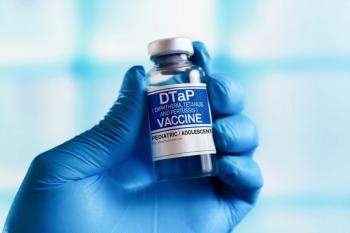
Completing the DTaP primary series was 96.2% effective against pertussis in Alaska children aged 6 months to 6 years during a record 2024 outbreak.
Due to increased RSV activity observed in Southeastern regions of the United States, the Centers for Disease Control and Prevention (CDC) has issued an official Health Alert Network Health Advisory. The CDC recommends that clinicians prepare to implement recently FDA-approved prevention methods.
This short series on RSV is a collaboration between
On Tuesday, September 5, 2023, the Centers for Disease Control and Prevention (CDC) issued a Health Alert Network (HAN) Health Advisory because of increased respiratory syncytial virus (RSV) activity observed in parts of the Southeastern United States.
On a national level, the weekly percentage of positive RSV detections that are reported to the National Respiratory and Enteric Virus Surveillance System (NREVSS) has been below the threshold of 3.0% polymerase chain reaction (PCR) test positivity for 2 consecutive weeks. There have been increases in some Southern states, as Florida’s NREVSS data demonstrated positivity above 3.0% for the week ending July 22, 2023. According to the CDC, the 3-week moving average positivity has been over 5.0% for the last 4 weeks.
The CDC has noticed an increased rate of RSV-associated hospitalizations in Georgia, as rates increased from 2.0 hospitalizations per 100,000 population in children younger than 4 years for the week ending August 5, 2023, to 7.0 hospitalizations per 100,000 for the week ending August 19, 2023. A majority of these hospitalizations have occurred in infants younger than 1 year.
The increases in recent weeks could be signs pointing toward national, seasonal RSV trends observed prior to the COVID-19 pandemic. These regional increases have previously predicted historical RSV seasons, which typically begin in the fall and peak in winter months.
The CDC is advising clinicians to get ready for and prepare to implement new RSV prevention options, such as
The CDC is advising clinicians to offer nirsevimab (expected to be available in October 2023) for all infants younger than 8 months. The agency is also recommending nirsevimab for children aged 8 to 19 months at an increased risk for severe RSV disease. Specifically, infants younger than 8 months born during, or entering their first RSV season should receive 1 dose of nirsevimab, while those born before or during the RSV season should receive the dose in the first week of life. For the 8-to-19-month-old children at increased risk, 1 dose of nirsevimab should be administered “shortly before entering or during their second RSV season.” The CDC recommends that infants younger than 8 months that weigh less than 11 lbs (less than 5 kg) receive a single 50 mg dose. Those that weigh 11 or more lbs (5 kg or more) should receive a single injection 100 mg dose of nirsevimab.
Each year, approximately 58,000 to 80,000 hospitalizations and between 100 to 300 deaths occur in children younger than 5 years, according to CDC estimates.
To learn more about women’s health, go to
Reference:
Increased respiratory syncytial virus activity in parts of the Southeastern United States: new prevention tools available to protect patients. Centers for Disease Control and Prevention. Press release. September 5, 202. Accessed September 6, 2023. https://emergency.cdc.gov/han/2023/han00498.asp