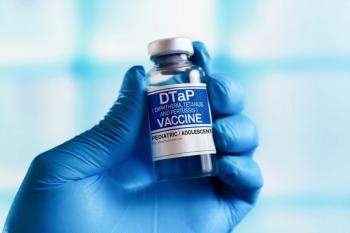
Completing the DTaP primary series was 96.2% effective against pertussis in Alaska children aged 6 months to 6 years during a record 2024 outbreak.
Approved for use at 32 weeks through 36 weeks gestation, Pfizer’s maternal respiratory syncytial vaccine (Abrysvo), is delivered through a single dose injection to the muscle, and is the first vaccine for use in pregnant individuals to prevent lower respiratory tract disease (LRTD) and severe LRTD because of RSV in infants (birth to 6 months).
This article is part 1 of a 3-part series highlighting RSV ahead of the traditional RSV season.
The FDA has approved the first vaccine for use in pregnant individuals to prevent lower respiratory tract disease (LRTD) and severe LRTD as a result of respiratory syncytial virus (RSV) in infants, from birth through 6 months of age, the federal agency stated in a press release on August 21, 2023.1
Approved for use at 32 weeks through 36 weeks gestation, Pfizer’s maternal respiratory syncytial vaccine (Abrysvo), is delivered through a single dose injection to the muscle.1
“I think [this approval] is fabulous, it really is,” said Tina Tan, MD, FAAP, FIDSA, FPIDS, professor of pediatrics, Feinberg School of Medicine, Northwestern University, pediatric infectious disease attending, Ann & Robert H. Lurie Children’s Hospital of Chicago, in an interview with Contemporary Pediatrics®. “We know that RSV is the leading cause of LRTD in infants and we know that the peak of disease is usually within the first 3 months of life. Having this vaccine licensed for use in pregnant women is absolutely wonderful.”
In the United States, RSV circulation is seasonal, generally beginning in the fall and peaking during the winter. By the time they reach 2 years of age, most children are expected to be infected with RSV according to the FDA. RSV can lead to serious LRTD such as bronchiolitis and pneumonia, and risk of RSV-associated LRTD is at its highest during the first year of life. Further, it is the leading cause of infant hospitalization in the United States.1
“This approval provides an option for health care providers and pregnant individuals to protect infants from this potentially life-threatening disease,” said Peter Marks, MD, PhD, director, Center for Biologics Evaluation and Research, FDA.1
The FDA’s decision to approve Pfizer’s bivalent RSV prefusion F (RSVpreF) vaccine was based on results demonstrated in the phase 3 MATISSE (Maternal Immunization Study for Safety and Efficacy) trial (NCT04424316), a double-blinded, randomized, and placebo-controlled study that evaluated the vaccine against LRTD and severe LRTD because of RSV in infants born to healthy individuals who received the vaccine during pregnancy.2
In the trial, approximately 3500 pregnant individuals received the RSVpreF vaccine and approximately 3500 more received placebo. Pfizer’s RSVpreF vaccine reduced severe LRTD risk by 81.8% within 90 days of birth and 69.4% within 180 days of birth, respectively. The vaccine reduced LRTD by 34.7% and risk of severe LRTD by 91.1% within 90 days compared to placebo for a subgroup of pregnant individuals who were 32 to 36 weeks gestational age. Within 180 days after birth, the vaccine reduced risk of LRTD by 57.3% and severe LRTD by 76.5% compared to placebo.1
This approval follows the FDA’s decision to approve
“I think it’s great that we now have more tools in the toolbox to basically protect these young infants against RSV disease,” Tan said. “The severity of the respiratory symptoms should definitely be much less with either maternal vaccination antibodies on board, or the baby actually getting the monoclonal antibody themselves. It really is the severe respiratory symptoms—the need for oxygen, etc.—that is what keeps these kids in the hospital. These babies might have a little bit of a runny nose or a cough, but hopefully they are not requiring oxygen or having the severe wheezing that they may have if they didn’t have any antibodies on board.”
According to the FDA, pain at the injection site, muscle pain, headache, and nausea were the most commonly reported side effects by pregnant recipients of the RSVpreF vaccine. Pre-eclampsia, a hypertensive disorder, occurred in 1.8% of pregnant individuals that received the vaccine compared to 1.4% who received placebo, according to the FDA. Jaundice and low birth weight in infants occurred at a higher rate in pregnant individuals that received the RSVpreF vaccine compared to placebo-receiving individuals in the safety studies.1
The FDA states that prescribing information for the vaccine “includes a warning to inform that a numerical imbalance in preterm births in Abrysvo recipients (5.7%) occurred compared to those who received placebo (4.7%).” The warning informs healthcare providers to administer the vaccine as indicated in pregnant individuals (32 weeks through 36 weeks gestational age) to avoid potential risk of preterm birth because of administration prior to 32 weeks gestation.1
To assess the signal of serious risk of preterm birth and to assess hypertensive disorders of pregnancy, the FDA is requiring Pfizer to conduct post marketing studies.1
This article is part 1 of a 3-part series highlighting RSV ahead of the traditional RSV season.
References: