
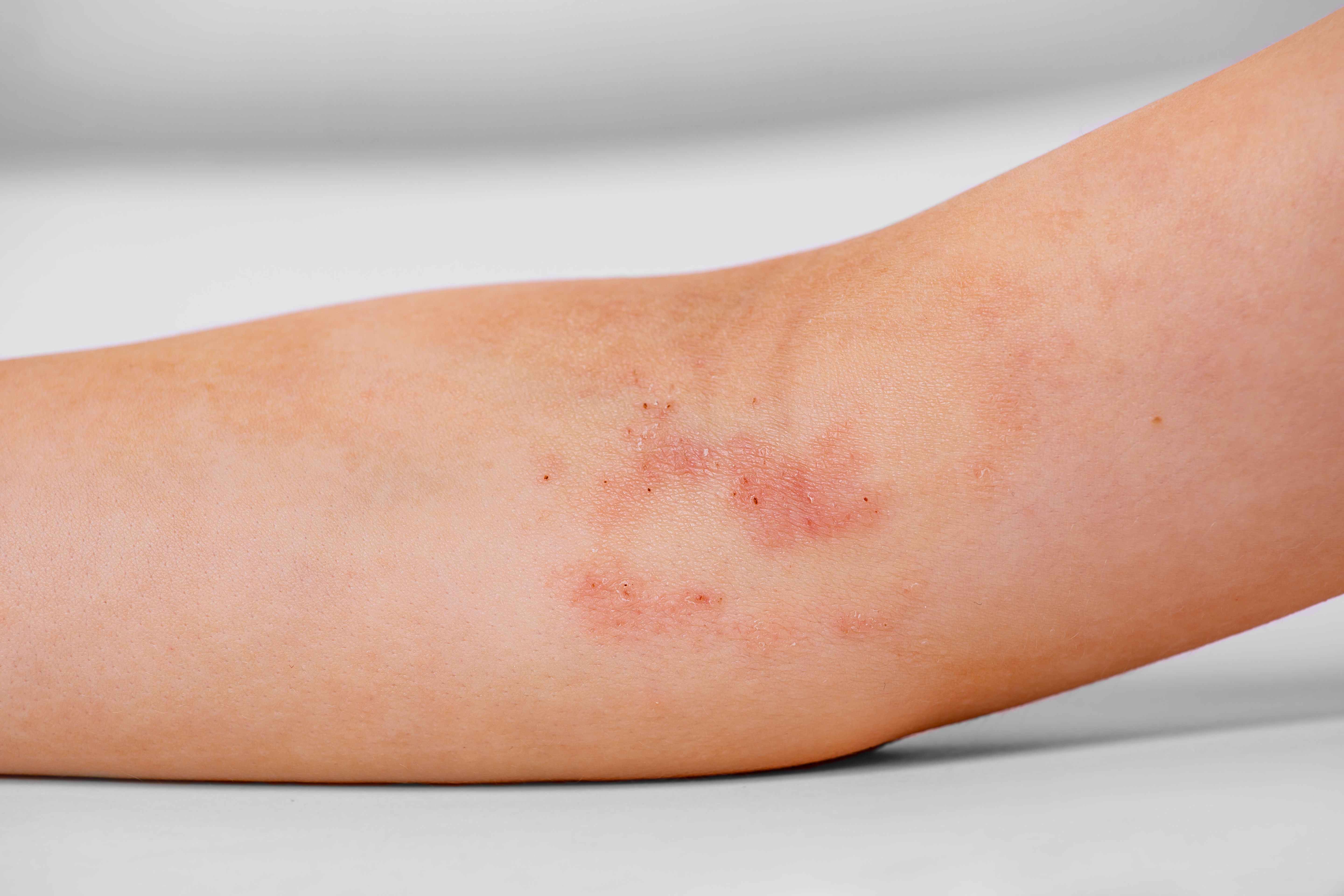




Atopic Dermatitis
Latest News

Advertisement
Latest Videos




Shorts

0:53
The truth about food allergies and atopic dermatitis
6 days ago
by
Peter Lio, MD

0:31
Why treating eczema helps the whole family
7 months ago
by
Linda Stein Gold, MD

1:48
Roflumilast cream safety in pediatric populations with atopic dermatitis
7 months ago
by
Lawrence Eichenfield, MD

1:37
Leveraging roflumilast cream in pediatric atopic dermatitis
7 months ago
by
Lawrence Eichenfield, MD

0:49
Importance of Long-Term Safety Data in Pediatric Populations with Atopic Dermatitis
7 months ago
by
Lawrence Eichenfield, MD

0:24
Understanding Vtama’s discontinuation rates and adverse effects
a year ago
by
Druhan Howell, MD

0:24
Why sleep improvement is vital for atopic dermatitis families
a year ago
by
Druhan Howell, MD

0:28
Safety and tolerability of tapinarof cream 1%
a year ago
by
Druhan Howell, MD(+1 more)

Advertisement
More News

Tralokinumab showed expected pharmacokinetics and no new safety findings in 28 children with moderate-to-severe atopic dermatitis.

If approved, the expanded indication would make roflumilast cream 0.05% the first once-daily, steroid-free topical PDE4 inhibitor approved specifically for this age group.
Learn how early detection and treatments for childhood eczema and hives can curb the atopic march and boost sleep, school, and quality of life.

The FDA has approved an every-8-week maintenance regimen for lebrikizumab-lbkz (EBGLYSS), giving eligible adults and adolescents with moderate-to-severe atopic dermatitis as few as 6 injections per year without mandatory topical therapy.

FDA clearance is being sought for roflumilast cream for infants 3 months and older with mild to moderate atopic dermatitis.

Get caught up with Contemporary Pediatrics. This list helps you navigate our top stories from the week, all in one place.

The FDA will review a supplemental application for delgocitinib cream in patients aged 12 to 17 years, supported by phase 3 data showing improved outcomes.

New guidance from the American Academy of Dermatology outlines evidence-based strategies for preventing and managing atopic dermatitis in children.
A study found that maternal type 1 diabetes mellitus was independently associated with a modest but significant increase in atopic dermatitis risk in offspring.

A recent study found no significant correlation between childhood atopic dermatitis and an increase in cardiovascular risk markers.

The INTEGUMENT-OLE study results highlight the long-term efficacy and safety of roflumilast cream for pediatric patients with atopic dermatitis.

A phase 3 trial shows that lebrikizumab improves skin clearance and itch in infants and children with moderate to severe atopic dermatitis.
Get caught up with Contemporary Pediatrics! This list helps you navigate our top stories from the week, all in one place.

Phase 2b maintenance data show sustained and new EASI, vIGA-AD, and itch responses with monthly or quarterly rezpegaldesleukin.
In LEVEL UP period 2, most patients who switched from dupilumab to upadacitinib achieved higher skin clearance and itch relief by 16 weeks.

Phase 2 INTEGUMENT-INFANT study results show roflumilast cream 0.05% was well tolerated and improved disease severity in infants with atopic dermatitis.

Findings from phase 3 SHORE and COAST 2 trials showed amlitelimab met key efficacy end points in moderate to severe atopic dermatitis, supporting planned regulatory submissions.

A national survey found most patients with chronic inflammatory skin disease rely on flare-based care and report concerns about long-term topical steroid use.

Vimal H. Prajapati, MD, discusses the latest roflumilast cream data from the INTEGUMENT-PED trial for pediatric atopic dermatitis.

Sub-analysis of ADORING trials shows VTAMA cream improved skin clearance, symptoms, and patient-reported outcomes in children aged 2-17.

One sentence description: Panelists discuss how unmet needs in topical care highlight the importance of safe, simple, and effective long-term therapies for children with AD.
Panelists discuss how individualized strategies combining steroids, nonsteroidal agents, and caregiver education promote sustained disease control in children.
Panelists discuss how nonsteroidal PDE-4 and JAK inhibitors offer effective, targeted relief while addressing caregiver concerns about safety and chronic use.
Panelists discuss how calcineurin inhibitors can be safely and effectively used in children with proper education and clinical oversight.
A single injection once per 8 weeks vs once per 4 weeks demonstrated similar levles of skin clearance, for AD patients 12 years and older, according to a Fall Clinical announcement.
Advertisement
Advertisement
Trending on Contemporary Pediatrics
1
Hand, foot, and mouth disease: Red flags pediatricians should know
2
DTaP 96% effective against pertussis in Alaska outbreak
3
Early choline in FASD tied to IQ, memory gains 5 years later
4
AI fundus model predicts 1-year high myopia progression in children
5