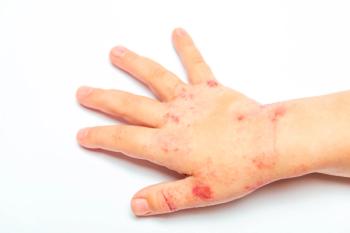
Christina Boull, MD, explains how pediatricians can recognize dermatologic conditions in darker skin tones and address pigment changes and treatment gaps.
Colleen Cotton, MD, explains how early referral, flare management, and comorbidity screening may help improve outcomes for children with hidradenitis suppurativa.
Hidradenitis suppurativa (HS) can progress unpredictably, making early referral and comprehensive management important for pediatric patients. Although specialty care is often needed, pediatricians can play a significant role in treating flares, identifying associated conditions, and supporting patients before they are evaluated by dermatology.1
In a recent interview, Colleen Cotton, MD, associate professor of dermatology and pediatrics at George Washington University School of Medicine and Health Sciences and director of the multidisciplinary pediatric HS clinic at Children's National Hospital, discussed practical steps pediatricians can take to help manage HS early in the disease course.
Cotton emphasized that HS can follow very different trajectories from one patient to another, making it difficult to predict which children will develop more severe disease.
"So, I am a big proponent of referring early and often for HS, because for some patients it kind of smolders along for a few years, for some patients it never really gets bad, and for some patients it progresses dramatically within the first few months that they have the condition," Cotton said.
Because access to dermatology can be limited in many communities, Cotton encouraged pediatricians to begin the referral process as soon as HS is suspected.
"You never really know which bucket someone's going to fall into, and so getting them established with dermatology, which I know where we are and where most people are, that's a long wait list to get into, so trying to do that, you know, as early as you can, can be helpful," she said.
While patients are waiting to see a dermatologist, pediatricians may be able to initiate treatment for active disease flares.
According to Cotton, antibiotics remain a common treatment option, not because HS is primarily infectious, but because these medications provide anti-inflammatory benefits.
"Definitely, antibiotics tend to be the mainstay for flares, not because they're treating an infectious cause, but because they have more of an anti-inflammatory effect, similar to how we use them for acne," Cotton said.
She noted that a course of doxycycline or clindamycin may provide symptom relief and can also help specialists assess treatment response when patients eventually present to dermatology.
"So, you know, while they're waiting to get into dermatology, you know, a 3-month course of doxycycline or clindamycin, that might be very helpful, because then we've tried that, and then we know by the time they get to me, is this something that's going to help you or not," Cotton said.
Cotton highlighted the substantial burden of comorbid conditions associated with HS, noting that rates may be comparable to or even exceed those seen in other chronic inflammatory skin diseases.
"We also know there's a very, very high comorbidity burden in patients with HS," she said.
Although formal pediatric screening recommendations remain limited, Cotton said pediatricians should consider evaluating patients for several commonly associated conditions.
"Making sure that these patients are being screened for polycystic ovarian syndrome, prediabetes, insulin resistance, obesity, depression, anxiety—all of those are more common in patients with HS, compared to their peers without HS," Cotton said.
Recognizing and treating these conditions may improve overall health and, in some cases, contribute to better HS control.
"Sometimes helping to manage those comorbidities will improve the treatment of HS," Cotton said.
She pointed to several therapies that may address both HS and associated metabolic or hormonal conditions.
"We know that menstrual suppression with continuous oral contraceptive pills, spironolactone, metformin, all of these are considered potential systemic therapies for HS," Cotton said.
For pediatricians, these findings underscore the importance of viewing HS as more than a skin disease. Early referral, flare management, and screening for associated conditions may help improve outcomes while patients await specialty care.
Editor’s note: This article is part 4 of a 5-part video series highlighting key clinical considerations in pediatric hidradenitis suppurativa (HS). During HS Awareness Week, Contemporary Pediatrics will publish new episodes featuring expert perspectives on recognition, diagnosis, treatment, and long-term management. Visit the website throughout the week for additional installments in the series.