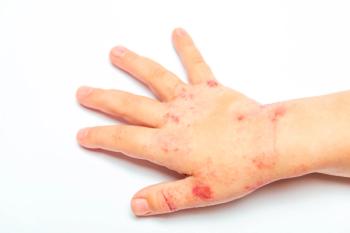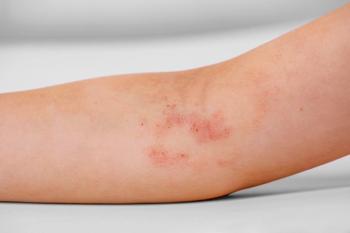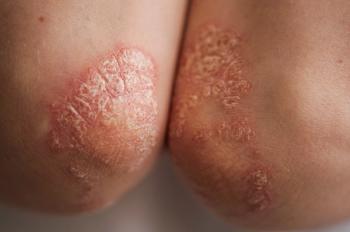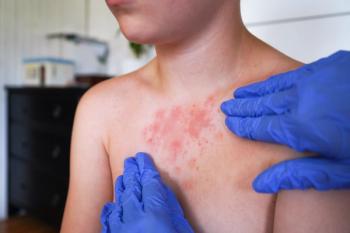
Christina Boull, MD, explains how pediatricians can recognize dermatologic conditions in darker skin tones and address pigment changes and treatment gaps.
A Rutgers-led study finds teens who follow beauty influencers or watch tutorials use significantly more personal care products, many containing endocrine-disrupting chemicals.
A new Rutgers-led study finds that high schoolers who follow beauty influencers or watch hair and makeup tutorials report using significantly more soaps, cosmetics, and fragrance products than their peers — a pattern researchers say deserves attention given how many of these products contain endocrine-disrupting chemicals.
The study, published in the Journal of Exposure Science & Environmental Epidemiology, surveyed 143 students at Princeton High School in New Jersey about their daily use of personal care products, from toothpaste and shampoo to sunscreen, deodorant, fragrance, and makeup. After adjusting for gender, grade, race, ethnicity, and parents' education, the researchers found that students who followed influencers with their own product lines reported using 30% more products in the previous 24 hours than those who didn't. Students who regularly watched hair or beauty tutorials used 40% more.
"Social media turned out to be the most interesting part of our results," said Emily Barrett, the George G. Rhoads Endowed Legacy Professor and vice chair of the Department of Biostatistics and Epidemiology at the Rutgers School of Public Health, who led the study. Barrett noted that while public conversation about social media's effects on teens has focused mostly on mental health, the findings point to a different kind of concern: platforms may also be nudging adolescents toward heavier use of products that often contain phthalates, parabens, and phenols — chemicals linked to disrupted hormone signaling and, in some cases, cancer risk.
The stakes may be higher for teenagers than adults, Barrett said, because adolescence is a period of rapid hormonal development — potentially making it a more sensitive window for chemical exposure, and also an opportunity where better product choices could make a meaningful difference.
Product use in the study was substantial and skewed heavily by gender: girls reported using a median of 14 products in the previous day, twice as many as boys. Nearly all students reported using soap and toothpaste, and 57% reported using fragrance products — notable because fragrances often contain phthalates that aren't disclosed on ingredient labels. Overall, the teens' product use was comparable to levels seen in prior studies of adults, suggesting exposure to these chemicals may be starting earlier than previously assumed.
Despite some awareness of the issue, few students took steps to limit their exposure. About 19% said they regularly read ingredient labels, and just 5% said they used an app or website designed to flag potentially harmful ingredients.
The social media angle wasn't part of the researchers' original plan — it came from two Princeton High School students, Gabrielle Kaputa and Vita Moss-Wang, who joined the research team as high schoolers in 2023 after investigators from the Rutgers Center for Environmental Exposures and Disease approached the school's research program. The two helped design the survey, pushed the team to ask about social media habits, and handled much of the outreach: preparing ethics materials, creating recruitment flyers and a video, visiting classrooms, and tracking responses. A second round of recruitment reached students in Rutgers summer programs.
"Dr. Barrett allowed us to manage the high school population outreach and data collection," said Kaputa, now a junior at the University of Connecticut. Both she and Moss-Wang, now a sophomore at Wellesley College, spent three years on the project and became coauthors on the resulting paper.
Moss-Wang put one of the study's more striking findings simply: "Teenagers don't read labels, it turns out."
The research team is now running focus groups to identify which specific accounts, influencers, and messaging styles most shape teens' product choices. Barrett and colleagues also want to expand the work to larger, more diverse student populations to see whether the pattern holds, and to pair self-reported product use with urine samples that can directly measure chemical exposure. A related open question is whether trusted online voices could be enlisted to steer teens toward safer alternatives, rather than away from them.