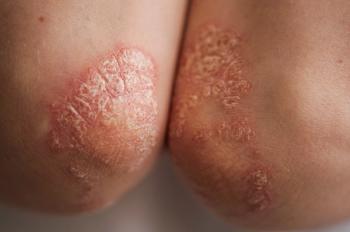
Oral icotrokinra sustained scalp, genital, and hand/foot psoriasis clearance through week 112 in ICONIC-TOTAL, with no new safety signals.
Topical botanical Cinainu earned FDA Breakthrough Therapy status for AA in patients aged 2+, supported by phase 2/3 RAAINBOW data in children.
Children with alopecia areata (AA) have no FDA-approved treatment, but an investigational topical botanical drug is moving closer to filling that gap. The FDA has granted Breakthrough Therapy designation to Cinainu (LH-8), a cutaneous solution from Legacy Healthcare, for moderate-to-severe AA in adults, adolescents, and children aged 2 years and older, the company announced October 13, 2026.¹
The designation is supported by the phase 2/3 RAAINBOW trial, in which Cinainu improved scalp hair regrowth vs placebo in children and adolescents, with benefits that persisted after treatment ended.¹˒²
"The FDA's decision represents a major milestone for Cinainu and recognizes its potential to address significant unmet needs in alopecia areata," said Saad Harti, chief executive officer of Legacy Healthcare.¹
Breakthrough Therapy designation is intended to expedite the development and review of investigational therapies with preliminary evidence of substantial improvement over available treatments.¹
RAAINBOW was an international, double-blind, placebo-controlled study that randomly assigned 107 patients aged 2 to 17 years 2:1 to Cinainu or placebo for 24 weeks, followed by a 24-week untreated follow-up period.² Eligible patients had active AA involving 25% to 95% of the scalp, with a disease duration of 6 months to 3 years.³ The primary analysis included 62 patients who met predefined criteria for moderate-to-severe disease.²
For the primary endpoint, relative change in Severity of Alopecia Tool (SALT) score from baseline to week 24, Cinainu outperformed placebo by an adjusted mean difference of 26.3% (95% CI, 0.1%-52.5%; P = .049; Cohen d = 0.52).² More Cinainu-treated patients achieved at least a 40% improvement in SALT score (26.2% vs 5.0%; P = .048).²
The between-group difference grew during the untreated follow-up, reaching 39.4% at week 48 (95% CI, 13.1%-65.6%; P = .003; Cohen d = 0.80).² Quality of life also improved, with effect sizes of 0.61 on the Children's Dermatology Life Quality Index and 0.69 on the EuroQol Visual Analogue Scale at week 24.² No serious adverse events were related to Cinainu, and treatment was well tolerated.²
AA is an autoimmune, nonscarring hair loss disorder that significantly impairs quality of life and affects an estimated 6.8 million people in the US.²˒⁴ Oral Janus kinase (JAK) inhibitors are the only approved therapies, including baricitinib for adults with severe AA and ritlecitinib for patients aged 12 years and older.⁴ These agents are limited to severe disease, carry boxed warnings for serious infections, malignancy, cardiovascular events, and thrombosis, and hair loss can return rapidly after discontinuation.¹ Patients with moderate AA and younger children have no approved options.¹˒²
Cinainu is a topical solution containing 4 botanical extracts with proposed anti-inflammatory, antiapoptotic, and antioxidant properties; investigators note that chemokines such as interleukin 8 and JAK-dependent signaling contribute to AA pathogenesis.² According to Legacy Healthcare, it is the first FDA-regulated multiplant botanical drug to receive Breakthrough Therapy designation.¹ The company suggests it could serve as a first-line option for moderate-to-severe AA and, pending further study, as continuation therapy after oral JAK inhibitors.¹
The RAAINBOW findings suggest a topical option with minimal systemic exposure could address a population that JAK inhibitors do not reach, but the evidence is early. The primary endpoint narrowly reached statistical significance, with a CI lower bound near zero, in a primary analysis of 62 patients.² Although the responder rate exceeded placebo, roughly 3 in 4 treated patients did not achieve a 40% SALT improvement.²
The designation also covers adults, although the supporting randomized data come from a pediatric trial.¹˒² Legacy Healthcare is preparing a global pivotal phase 3 program evaluating Cinainu in adults, adolescents, and children with moderate-to-severe AA.¹ Breakthrough Therapy designation does not constitute approval, and Cinainu remains investigational.