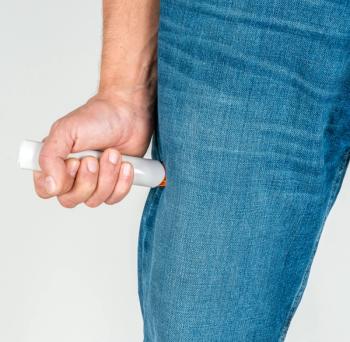
The FDA accepted the Anaphylm NDA resubmission as a class 2 response, setting a March 16, 2027, PDUFA date for the sublingual epinephrine film.
In a matched cohort of children aged 6 and younger with EoE, dupilumab was linked to less incident asthma than swallowed budesonide (10.5% vs 16.2%).
Young children with eosinophilic esophagitis (EoE) who received dupilumab were less likely to develop asthma than peers treated with swallowed budesonide, according to a retrospective cohort study presented at the American College of Allergy, Asthma and Immunology (ACAAI) 2026 Annual Scientific Meeting in Phoenix.¹ The findings raise the possibility that targeting type 2 inflammation early in the atopic march could influence which allergic conditions follow, although investigators stressed that the data show an association, not causation.¹
Study author Kayla Steinberger, MD, PhD, an immunologist, said the results suggest that dampening allergic signaling early in life may do more than ease swallowing and could reduce the chance that asthma becomes the next allergic condition to emerge. "We need more research to know for sure," she said.¹
Investigators used the TriNetX Research Network, a global electronic health record database, to identify children aged 6 years and younger with EoE and no prior asthma diagnosis between January 2016 and January 2026.¹ The analysis compared 344 children treated with dupilumab, an injected biologic, with 401 children treated with oral budesonide, a swallowed corticosteroid.¹˒² Cohorts were propensity score matched for age, sex, and atopic dermatitis.¹
Asthma developed in approximately 10.5% of the dupilumab group vs 16.2% of the budesonide group, an absolute risk difference of 5.7 percentage points (P = .02).¹ Children receiving budesonide had a 55% higher risk of incident asthma (risk ratio, 1.55; 95% CI, 1.06–2.27), corresponding to roughly one-third lower risk with dupilumab.¹ Children treated with dupilumab also had about half as many asthma diagnoses per patient during follow-up (0.37 vs 0.74; P = .03).¹
EoE is a chronic, progressive disease of the esophagus driven in part by type 2 inflammation; in young children it can present with vomiting, food refusal, and slowed growth.¹˒³ Allergic comorbidity is common. Pediatric studies report asthma in 45% to 60% of children with EoE, along with high rates of allergic rhinitis, atopic dermatitis, and IgE-mediated food allergy, likely reflecting shared pathophysiology.⁴ The ACAAI characterizes EoE and asthma as part of the atopic march, the sequential emergence of allergic conditions during childhood, driven by the same type of immune signaling.¹
Dupilumab is a fully human monoclonal antibody that inhibits IL-4 and IL-13 signaling.³ The FDA approved it for EoE in patients aged 12 years and older weighing at least 40 kg in May 2022 and expanded the indication in January 2024 to children aged 1 to 11 years weighing at least 15 kg, based on the phase 3 EoE KIDS trial.³ In that trial, 66% of children receiving higher-dose, weight-tiered dupilumab achieved histologic remission at week 16 vs 3% with placebo.³ At the time of that approval, an estimated 21,000 US children younger than 12 years were being treated for EoE with unapproved therapies.³ Dupilumab is also approved for moderate to severe asthma, among other type 2 inflammatory conditions.³
The study was retrospective, and propensity matching accounted for only age, sex, and eczema.¹ Unmeasured differences, such as food allergy, aeroallergen sensitization, family history of asthma, EoE severity, or access to a biologic, could influence both treatment selection and asthma risk. The release does not report duration of follow-up, and the findings are from a conference abstract that has not been published in a peer-reviewed journal.¹˒²
A further consideration is that dupilumab is itself an approved asthma therapy.³ In children receiving it, wheezing may have been suppressed and an asthma diagnosis delayed rather than prevented, a distinction a retrospective record review cannot resolve. Differences in how often children in each group saw allergists or pulmonologists could also affect how often asthma was diagnosed.
The investigators called for prospective studies that follow children over time to determine whether early biologic therapy alters the course of the atopic march.¹ In the meantime, the ACAAI advises families to discuss treatment options with a board-certified allergist and to watch for coughing, wheezing, or trouble breathing.¹