
Christina Boull, MD, shares recommendations for infant skin care, including choosing gentle cleansers, avoiding irritants, and supporting the skin barrier.
Christina Boull, MD, explains how pediatricians can recognize dermatologic conditions in darker skin tones and address pigment changes and treatment gaps.
Recognizing common dermatologic conditions in children with darker skin tones requires pediatricians to look beyond traditional descriptions of redness and inflammation, according to Christina Boull, MD, who emphasized that differences in rash appearance can contribute to delayed diagnoses and undertreatment.
Boull, a pediatric dermatologist at the University of Minnesota in Minneapolis, discussed variations in the presentation of skin diseases, disparities in dermatologic care, and strategies to improve clinical recognition at the American Academy of Pediatrics (AAP) 2026 National Conference & Exhibition.
She explained that medical education has historically relied heavily on images of lighter skin, potentially limiting clinicians' ability to recognize familiar conditions in patients with darker skin tones.
"One of the concerns is that a lot of our educational material for medical students and residents relies on pictures that show children with light-colored skin predominantly," Boull said.
Inflammatory skin conditions may vary in color, distribution, and morphology depending on a patient's skin tone.
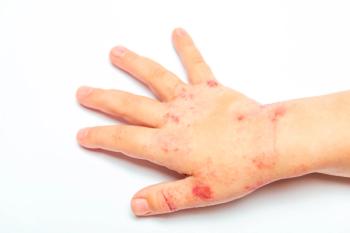
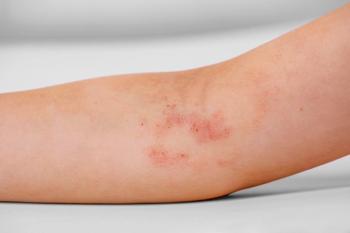
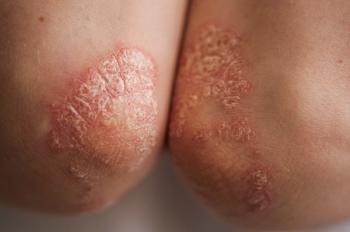
Boull explained that conditions typically described as red or pink, including eczema and psoriasis, may instead appear purple, magenta, gray, or brown in children with darker skin.
Location can also differ. Although eczema is commonly associated with flexural surfaces, Boull noted that children from Hispanic or Asian backgrounds may be more likely to develop eczema on extensor surfaces.
The morphology of lesions is another important diagnostic consideration.
For example, pityriasis rosea and eczema may have a more papular appearance in children with darker skin tones. Small bumps on the abdomen that might initially be attributed to dry skin can represent papular eczema.
"So things like the distribution, the elevation of the rash, in addition to the color, can all be very different depending on skin tone," Boull said.
These differences underscore the importance of evaluating lesion shape, texture, and distribution rather than relying exclusively on erythema to identify inflammation.
Boull highlighted Lyme disease as an example of how differences in skin appearance may affect timely diagnosis.
The characteristic erythema migrans rash is often described as a pink or red bull's-eye lesion. In darker skin, however, the rash may appear more magenta or be less visually apparent.
Boull noted that delayed recognition can result in children presenting at a later stage of Lyme disease, when additional organ systems may be affected.
She also discussed disparities in melanoma diagnosis among adults with darker skin tones, citing possible contributing factors such as limited access to dermatologic care, medical mistrust, and misconceptions that skin cancer does not occur in people with darker skin.
Beyond delayed diagnosis, Boull emphasized that children with darker skin may receive less treatment for common conditions such as acne.
Inflammatory acne that appears as bright red or pink papules in lighter skin may be less visually prominent in darker skin, where post-inflammatory dark spots can be a more noticeable feature.
This can lead clinicians to underestimate disease severity.
"When a child presents with acne to a pediatrician or a dermatologist, they're less likely to receive medication for their acne than a child with lighter colored skin," Boull said.
She encouraged pediatricians to recognize that pigmentary changes may indicate ongoing or previously active inflammation that warrants treatment.
Post-inflammatory hyperpigmentation and hypopigmentation are important considerations when evaluating inflammatory skin diseases, particularly because pigment changes may be the patient's or family's primary concern.
Boull explained that adolescents with acne may focus on dark spots without recognizing that ongoing acne is responsible for their development.
Although addressing existing hyperpigmentation is important, controlling the underlying acne can help prevent additional lesions and pigment changes.
"We still need to focus on treating the acne so they don't make more," Boull said.
For adolescents experiencing post-inflammatory hyperpigmentation, Boull discussed treatments such as tretinoin and azelaic acid, along with sun protection to help prevent dark spots from persisting.
Hypopigmentation can also create confusion for families, particularly after treatment for eczema.
Boull noted that lighter patches may remain after inflammation resolves. Parents may mistakenly attribute these changes to topical corticosteroid use rather than recognizing them as residual effects of the underlying skin condition.
She encouraged pediatricians to explain that post-inflammatory hypopigmentation can occur as eczema improves and that these changes often fade with time.
Addressing pigment changes directly can help reassure families, support treatment adherence, and ensure that concerns important to patients are not overlooked.
Boull emphasized that recognizing skin diseases is largely a matter of pattern recognition, making exposure to clinical images representing diverse skin tones particularly valuable.
"I think that so much about diagnosing skin conditions is just pattern recognition, and so the more pictures you can look at, the better," Boull said.
She recommended several resources to help pediatricians expand their familiarity with dermatologic presentations in children with darker skin.
VisualDx's Project IMPACT initiative includes efforts to increase representation of skin of color in point-of-care dermatology images. DermNet New Zealand also offers freely accessible photographs of dermatologic conditions across different skin tones.
Boull additionally highlighted textbooks and atlases featuring diverse clinical images, as well as patient education materials available through the Society for Pediatric Dermatology.
She suggested incorporating relevant patient handouts into electronic health record templates to make educational resources easier to share during routine visits.
For pediatricians, Boull's recommendations emphasize the importance of broadening visual diagnostic experience, recognizing pigmentary changes as clinically meaningful, and addressing potential treatment disparities. Greater familiarity with how common conditions appear across skin tones may help clinicians identify disease earlier and provide more equitable dermatologic care.