
For all patients with recurrent infections, early detection and treatment are critical to avoid the life-altering adverse effects of an underlying, untreated immunodeficiency disorder.
For all patients with recurrent infections, early detection and treatment are critical to avoid the life-altering adverse effects of an underlying, untreated immunodeficiency disorder.

Despite the high prevalence of congenital cytomegalovirus, many pediatricians and even obstetricians lack knowledge and awareness of the adverse sequelae of this disease on children.

Physician brings the lessons of ED medicine to private practice.

Diagnostic and medication errors frequently occur in pediatric practices, but even minor medical errors can be prevented by creating a culture of safety.

Researchers at Wisconsin Children’s Hospital in Milwaukee, Wisconsin, found that 100 children who visited a pediatric emergency department (ED) with a reported history of penicillin allergy based on low-risk symptoms all had negative allergy testing for penicillin and all tolerated a penicillin challenge (500 mg of oral amoxicillin) without developing a severe allergic reaction. Penicillin allergy labels were removed from these children’s hospital medical records.

The worried mother of an 11-year-old boy arrives at the office for evaluation of an asymptomatic bumpy rash that appeared suddenly in his right groin a month ago, and that has now extended all the way down to his right ankle. What's the diagnosis?
When you approach a parent who is hesitant about vaccinating her infant at the appropriate well-baby visits, perhaps you say something like this: “Well, we have to do some shots.” Or you might say, “How do you feel about vaccines today?” The former strategy (a “presumptive” approach) is more likely to be effective than the latter (a “participatory” approach), according to a study in parents whom a standardized survey classified as being hesitant about vaccines.

Remember these simple pearls of wisdom. They will help you through each day with a smile and a happy heart.
New mothers may develop postpartum depression (PPD) at any time during the first year after giving birth, an analysis of monthly depression screening data showed. Furthermore, the highest rate of positive screens-23%-was at 12 months postpartum.
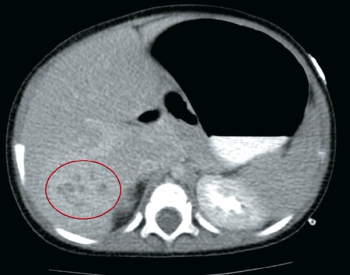
A 7-month-old girl presents to her pediatrician’s office with a 1-week history of fevers and upper respiratory symptoms. What's the diagnosis?