- Vol 35 No 7
- Volume 35
- Issue 7
Parents are most likely to accept vaccines when you assume they will
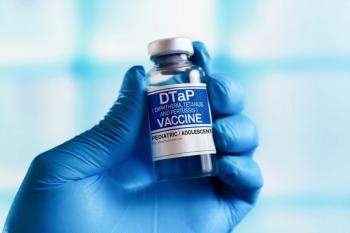
When you approach a parent who is hesitant about vaccinating her infant at the appropriate well-baby visits, perhaps you say something like this: “Well, we have to do some shots.” Or you might say, “How do you feel about vaccines today?” The former strategy (a “presumptive” approach) is more likely to be effective than the latter (a “participatory” approach), according to a study in parents whom a standardized survey classified as being hesitant about vaccines.
Investigators assessed the immunization status of the newborns of 73 parents when the infants reached age 8 months. Using electronic immunization records, they obtained data from 82%, 73%, and 53% of participants after the 2-, 4-, and 6-month visits, respectively.
At each time point, clinicians used a presumptive approach more often than a participatory approach (65% vs 42%, respectively, at 1 or more visits). A minority of parents brought up the subject of vaccines themselves. The presumptive format at 1 or 2 or more visits was associated with increased immunization, and that association increased along with the number of visits at which this approach was used. The participatory format at more than 2 visits was associated with significantly more underimmunization, also in a dose-response relationship (Opel DJ, et al. Acad Pediatr. 2018;18[4]:430-436).
Thoughts from Dr. Burke
The authors are not proposing that we should give vaccines without consent, but rather that you can lead a hesitant parent to consent more comfortably by projecting the expectation that she will want her child to be vaccinated. It turns out that the spin is important.
Articles in this issue
over 7 years ago
Congenital cytomegalovirus: Impact on child healthover 7 years ago
Pediatric change makers: Rami Sunallah, MDover 7 years ago
Prevent medical errors in your practiceover 7 years ago
Is that child with "penicillin allergy" really allergic?over 7 years ago
Boy with red bumps all in a rowover 7 years ago
6 pieces of old-school pediatric philosophyover 7 years ago
How long are new mothers at risk for postpartum depression?over 7 years ago
Infant with febrile neutropenia and a hepatic massNewsletter

Access practical, evidence-based guidance to support better care for our youngest patients. Join our email list for the latest clinical updates.

![Jodi Gilman, PhD, on cumulative prenatal adversity linked to adolescent mental health risk Document Jodi Gilman, PhD, on cumulative prenatal adversity linked to adolescent mental health risk Live? Do you want this document to be visible online? Scheduled Publishing Exclude From Home Page Do you want this document to be excluded from home page? Exclude From Infinite Scroll Do you want this document to be excluded from infinite scroll? Disable Related Content Remove related content from bottom of article. Password Protection? Do you want this gate this document? (If so, switch this on, set 'Live?' status on and specify password below.) Hide Comments [Experiment] Comments are visible by default. To hide them for this article toggle this switch to the on position. Show Social Share Buttons? Do you want this document to have the social share icons? Healthcare Professional Check Is Gated [DEV Only]Do you want to require login to view this? Password Password required to pass the gating above. Title Jodi Gilman, PhD, on cumulative prenatal adversity linked to adolescent mental health risk URL Unique identifier for this document. (Do not change after publishing) jodi-gilman-phd-on-cumulative-prenatal-adversity-linked-to-adolescent-mental-health-risk Canonical URL Canonical URL for this document. Publish Date Documents are usually sorted DESC using this field. NOTE: latency may cause article to publish a few minutes ahead of prepared time 2026-01-19 11:52 Updated On Add an updated date if the article has been updated after the initial publish date. e.g. 2026-01-19 11:50 Article Type News Display Label Author Jodi Gilman, Phd > Gilman, Jodi Author Fact Check Assign authors who fact checked the article. Morgan Ebert, Managing Editor > Ebert, Morgan Content Category Articles Content Placement News > Mental, Behavioral and Development Health > Clinical AD Targeting Group Put the value only when the document group is sold and require targeting enforcement. Type to search Document Group Mapping Now you can assign multiple document group to an article. No items Content Group Assign a content group to this document for ad targeting. Type to search Issue Association Please choose an issue to associate this document Type to search Issue Section Please choose a section/department head if it exists Type to search Filter Please choose a filter if required Type to search Page Number Keywords (SEO) Enter tag and press ENTER… Display summary on top of article? Do you want display summary on top of article? Summary Description for Google and other search engines; AI generated summary currently not supporting videos. Cumulative prenatal adversities were linked to higher adolescent mental health risk, highlighting the importance of prenatal history and early clinical monitoring. Abstract Body *********************************************************************************************************** Please include at least one image/figure in the article body for SEO and compliance purposes ***********************************************************************************************************](https://cdn.sanity.io/images/0vv8moc6/contpeds/e6097cb5e6d6c028c0d4e9efd069e69fdab6d00b-1200x628.png?w=350&fit=crop&auto=format)