




Mental, Behavioral and Development Health
Latest News
Advertisement
Latest Videos








Advertisement
More News

A new nonprofit organization is hoping to limit financial restrictions when it comes to pediatric mental health care.
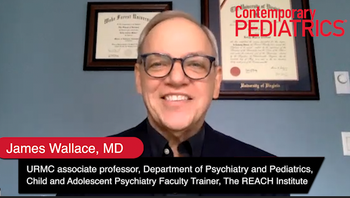
James Wallace, MD, explains the various negative effects associated with school avoidance and how primary health care providers, along with parents, can catch early signs of social and separation anxiety.

In this Contemporary Pediatrics interview, James Wallace, MD, discusses increased trends in school avoidance and the negative effects associated with less days in the classroom.

A look at the advantages and limitations of these platforms.

Across a variety of concerns, the overuse of devices and screen time was the top concern for parents listed in the 2023 Top 10 Child Health Concerns for Parents, released by the C.S. Mott Children’s Hospital National poll on Children’s Health.

From vaccinations to classroom behavior to math and reading levels, a discussion on how to best prepare children for the coming academic year.

Donna Hallas, PhD, PPCNP-BC, CPNP, PMHS, FAANP, FAAN, recaps her thoughts on the latest issue of Contemporary Pediatrics.

Data corresponding with DSM-IV symptoms were gathered around ages 18, 21, and 23 years and the primary outcome was depression at age 24.

The study revealed several concerning trends in the utilization of acute mental health care among youth during the second year of the COVID-19 pandemic.

The recent TikTok “Benadryl challenge” is just one example of the online dangers of shared videos among adolescents. Here is what pediatric health care providers should know—and how they can help.

A new treatment for severe hair thinning for adolescents and adults offers hope for young people struggling with this highly visible disorder.

Links between teenager anxiety and gastrointestinal (GI) issues are the subject of this Contemporary Pediatrics® interview with Julia Anderson, MD, MSCI; and Sara Francis, PhD.

Patients who are highly competitive in sports sometimes drastically restrict food intake in an attempt to outperform their peers.

Investigators state public health strategies should prioritize early detection of mental health needs and equitable access to it, as some Medicaid-enrolled children are not receiving mental health services following a firearm injury.

An increase in outpatient visits that included an anxiety diagnosis was also met with a decrease in treatment visits, while there was no significant change in the overall use of medications in all time periods.

In this Contemporary Pediatrics® interview, Benjamin Maxwell, MD, chief of child and adolescent psychiatry, Rady Children’s Hospital, San Diego, California, details the rise in pediatric mental health concerns, emergency department visits, and the potentially concerning aspects of social media among youth.

The US Department of Education, US Department of Health and Human Services, and the Biden-Harris Administration look to increase access to school-based health services, including mental health services, amid the national crisis.

Up to 95% of youth aged 13 to 17 years reported using a social media platform and more than a third said they use social media, “almost constantly,” according to a new advisory from the Surgeon General.
Thomas R. Young, MD, discusses how important early screening is in children and adolescents with regard to mental health. He believes a reduction in stigma associated with mental health is occurring and that primary care professionals are encouraging youth to discuss what might be bothering them.

Our President and CEO, Mike Hennessy Jr, says now is the perfect time to assess your own mental health in honor of Mental Health Awareness Month.

"Elmo's Mindfulness Spectacular" is just one of the new offerings Sesame Workshop will be presenting to address the national Children's Mental Health Crisis declared by the American Academy of Pediatrics in 2021.

Since May is Mental Health Awareness Month, the American Academy of Pediatrics is offering several tips to help a suspected self-harming child.

Pediatric health care providers, as well as teachers, coaches, and parents, must be closely involved in the healthy development of these athletes.

Contemporary Pediatrics® Editorial Advisory Board Member Steven Selbst, MD, gives a glimpse into some research he was involved in regarding physician burnout at the 2023 Pediatric Academic Societies meeting.

Erica Sood, PhD, Nemours Children’s Health pediatric psychologist, discusses her workshop focused on improving the emotional health of children with chronic conditions, which will be presented at the 2023 Pediatric Academic Societies meeting held in Washington, DC from April 27 to May 1.
Advertisement
Advertisement
Trending on Contemporary Pediatrics
1
Type 1 diabetes update: Immune therapy, screening, and new technology
2
AAP renews call for raw milk sales ban, cites emerging H5N1 risk
3
Clinician-reported misinformation tracking guides pediatric education
4
What pediatricians should know about the 2026-27 AAP vaccine schedule
5