
Consultant for Pediatricians Vol 8 No 1

A 4-month-old boy was transferred to our center from a community care hospital because of persistent fever (temperature up to 39.4°C [103°F]) of 5 days’ duration. He also had decreased activity, increased irritability, occasional vomiting after feedings, and a few episodes of loose stool.
Case: The parents of this 5-month-old boy are concerned about recurring eruptions of blisters on the infant’s hands and feet. What question could you ask the parents that might quickly define the condition for you?

Images of Hypertrichosis

Hypertrichosis refers to the increased growth of vellus or other hair at inappropriatelocations beyond the normal variation for a patient’s reference group.1 The affectedareas have a greater number of hair follicles than is normal for the body site.1 The condition is unrelated to androgen excess and unaccompanied by virilism or menstrual abnormalities.

How to Stop the Bullying

“My daughter [age 10 years] has been bullied at school for the past 2 years by another girl in her class. This girl dominates my daughter’s lunchtime and recess, controlling where she sits and who she plays with. She uses scare tactics such as loud outbursts and physical threats. I know this girl has a history of being neglected and abused by her parents, but still. . . . My daughter is absolutely miserable.

Two-year-old girl with asymmetry of leg size at birth; left leg is larger than right. The size discrepancy has remained relatively constant since birth, with no sudden change in overgrowth of the affected limb.

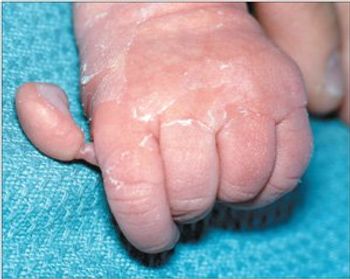
This 2-week-old boy was born with well-formed extra digits on both hands and feet. The extra digits on the hands were attached by a narrow band of tissue to the lateral base of each little finger, and there were 6 toes on each foot. Radiographs showed synostoses of the fifth and sixth metatarsals of both feet. No other anomaly was apparent. The father’s paternal grandfather, greatgrandfather, and cousin also had extra digits at birth; however, none had involvement of all 4 extremities.

Sometimes they come in as phone calls (“Is it OK to breastfeed my baby when I have a cold?”), at other times during “may-I-talk-to-youfor-a-minute” sessions at the end of a scheduled visit (“She’s in kindergarten and still sucking her thumb . . .”). Whatever their mode of delivery, questions from parents take up a significant chunk of a pediatrician’s day.