Get back-to-school pediatric guidance on vaccine updates, infection FAQs, screen time and mental health, nutrition changes, and standout cases to watch this year.
Tina Tan, MD, FAAP, FIDSA, FPIDS—editor in chief of Contemporary Pediatrics, professor of pediatrics at Northwestern University’s Feinberg School of Medicine, Infectious Diseases attending at Lurie Children's Hospital of Chicago, and president of the Infectious Diseases Society of America.
Get back-to-school pediatric guidance on vaccine updates, infection FAQs, screen time and mental health, nutrition changes, and standout cases to watch this year.

Learn how pediatricians can boost RSV protection by listening to parents, addressing hesitancy, and offering safe prevention choices over time.
Pediatric experts share how to boost RSV prevention—listen to parents, tailor
Maternal RSV vaccines and infant antibodies curb severe illness, even with reinfections
Learn which infants need RSV monoclonal antibodies, when second-season dosing matters, and why access gaps leave high-risk babies unprotected.
RSV prevention shifts: maternal vaccines and nirsevimab protect infants when timed right, cutting hospitalizations and closing care gaps.
This episode bridges the gap between clinical trial data and everyday practice, focusing on how pediatricians can systematically ensure no eligible infant falls through the cracks.
In this episode, Dr. Simões reviews the post-licensure landscape, highlighting data from real-world effectiveness studies now emerging from multiple countries. Initial real-world data for one monoclonal antibody came from the UK and France, including pragmatic trial evidence. Argentina provided complementary data on maternal immunization, having implemented it as an exclusive strategy — while the UK used monoclonal antibody prophylaxis exclusively and France deployed both approaches, offering a natural comparison. A notable French population-based study published in JAMA found a statistically significant difference in effectiveness between the two strategies; however, Dr. Simões cautions that the overlapping 95% confidence intervals suggest the clinical difference may not be meaningful. Importantly, real-world effectiveness broadly mirrors the results seen in randomized controlled trials — a reassuring finding that validates these interventions at scale. Dr. Simões highlights that real-world studies are beginning to capture outcomes not measured in trials, including effects on ICU admissions, otitis media, and all-cause respiratory hospitalizations. For second-season protection, early data with nirsevimab suggests continued benefit, though the full picture is still emerging. Evidence for clesrovimab's second-season efficacy has been presented at scientific meetings and reviewed by the FDA but has not yet received formal approval in the U.S. for this indication. The panel agrees that as additional seasons accumulate data, the understanding of sustained protection will sharpen considerably. In the next episode, "RSV Prevention in Practice: Eliminating Gaps in Immunization Coverage," Dr. Creech and Dr. Tan review the common gaps in RSV prophylaxis delivery and how pediatric practices can build systems to ensure every eligible infant is protected.
New RSV shots and monoclonals cut infant hospitalizations up to 85%, with strong real‑world safety—learn what efficacy vs effectiveness really means.
Maternal RSV vaccination and monoclonal antibodies protect infants differently, from breastfeeding IgA transfer to long-acting antibodies—plus what trial data reveals.
Compare maternal RSV vaccination vs long-acting antibodies: breast milk IgA, half-life tradeoffs, and little herd protection.
Why viral testing matters in infants: RSV, flu and more guide prognosis, parent counseling, and prevention—despite cost and reimbursement hurdles.
Learn how maternal vaccination and new RSV antibodies protect infants—timing, dosing, and seasonal guidance to prevent hospitalizations.

Explore practical pediatric updates: skin infections, SMA treatments, recurrent infant wheeze, failure-to-thrive guidance, and molluscum counseling.
Why skipping viral tests harms care: targeted RSV, flu, and COVID diagnosis guides prognosis, parent counseling, and prevention in infants.
Learn why RSV hits older adults hardest: cumulative comorbidities, global seasonality shifts, and how timing shapes vaccines and prophylaxis.
In this episode, Dr. Simões broadens the conversation on RSV risk to include older adults and a global perspective on disease burden. He explains that while pediatric risk factors center largely on medical conditions (as described by Dr. Creech), environmental and behavioral factors — such as daycare attendance, household crowding, and maternal smoking — also play an important role in children, particularly in lower-resource settings where malnutrition adds further vulnerability.
Welcome back to another Contemporary Pediatrics Peer Exchange series. In this episode titled "RSV Epidemiology: Understanding Regional Trends and At-Risk Pediatric Populations," moderator Flor M. Munoz, MD, MSc, discusses respiratory syncytial virus with C. Buddy Creech, MD, MPH, Eric Simões, MD, and Tina Tan, MD, FAAP, FIDSA, FPIDS.

This issue has a number of outstanding must-read articles related to pediatric vaccines.

Members of the Contemporary Pediatrics Editorial Advisory Board react to the Advisory Committee on Immunization Practices' September 2025 meeting.

Florida is not aiming to ban vaccinations, but its surgeon general stated "Who am I to tell you what your child should put in [their] body? I don’t have that right."

In this episode of Infectious Insights, our host Tina Tan, MD, is joined by general pediatrician Candice Jones, MD, to discuss an unprecedented vaccine season.

In this video, the last in a 3-part series, panelists discuss future directions in the field and the importance of multispecialty collaboration.
In this video, part 2 in a 3-part series, panelists discuss clesrovimab's recent approval and gaps in clinician education.
In this video, the first in a 3-part series, panelists discuss recent advancements in RSV management.

"These younger individuals are at much higher risk of getting disease and having complications," said Tina Tan, MD, FIDSA, FPIDS, FAAP.

Our editor-in-chief Tina Tan, MD, reacts to a new FDA COVID-19 framework that will limit eligibility for seasonal vaccination in pediatrics.
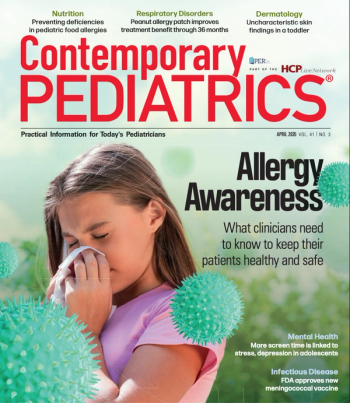
Editor-in-chief Tina Tan, MD, FAAP, FIDSA, FPIDS, highlights the April, 2025, issue of Contemporary Pediatrics, with a special focus on pediatric allergy awareness.

"The measles outbreak that is currently happening in Texas and New Mexico is occurring in an area of the states that have very high anti-vaccine sentiments," Tan said.

"Vaccines are our absolute best defense for protecting people of all ages against many serious infectious diseases," Tan said in a statement as president of IDSA.

April 18th 2022

Published: May 27th 2025 | Updated: May 27th 2025

October 17th 2022

April 18th 2023

October 9th 2023