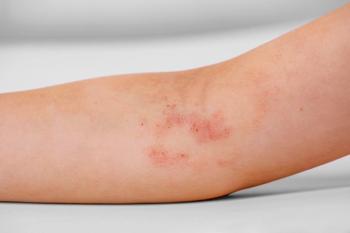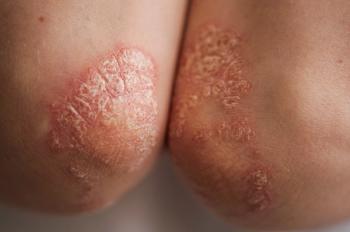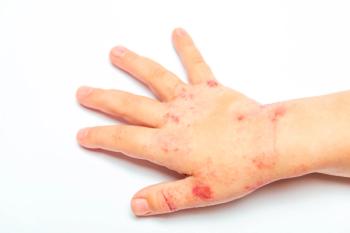
Real-world claims show dupilumab was tied to a 33%-52% lower risk of atopic march progression vs systemic corticosteroids in children with AD.
Review some of the top stories from the Contemporary Pediatrics website over the last week, and catch up on anything you may have missed.
Review some of the top stories from the Contemporary Pediatrics website over the last week, and catch up on anything you may have missed.
Thank you for visiting the Contemporary Pediatrics® website. Take a look at some of our top stories from last week (Monday, October 5 to Friday, October 9, 2026) and click each link to read and watch anything you may have missed.
The American Academy of Pediatrics issued an updated policy statement renewing its call to ban the sale and distribution of raw (unpasteurized) milk and dairy products, saying the products are unsafe, especially for young children and people who are pregnant or breastfeeding. The statement, led by Adam J. Ratner, MD, MPH, with coauthor Mark R. Corkins, MD, appears in the November 2026 issue of Pediatrics and updates guidance last issued in 2014. Raw milk remains legal to sell in at least 27 states, and nearly half of illnesses linked to raw dairy occur in people under 20, according to the AAP.
The policy also flags an emerging concern: during the 2024 US dairy outbreak, infectious H5N1 virus was detected in nearly one-quarter of raw milk samples from affected areas, and the virus can remain detectable in refrigerated raw milk for up to 5 weeks. No confirmed human H5N1 infections from drinking raw milk have been reported to date, but the AAP also cited listeriosis risk, estimated to be 12 to 14 times higher during pregnancy than in the general population, along with Escherichia coli, Salmonella, Campylobacter, and Brucella.
A joinpoint analysis of nearly 3 decades of Youth Risk Behavior Surveillance System data, presented at the AAP 2026 National Conference & Exhibition, found that several adolescent mental health and behavioral indicators changed direction around 2009-2010. Suicidal ideation among high school students declined from 1991 to 2009 (annual percent change [APC], -3.61%) before reversing and climbing from 2009 to 2021 (APC, +3.66%), researchers led by N. Sharma reported. Attempted suicide also increased after 2009 (APC, +3.42%; P = .032), and persistent sadness or hopelessness rose modestly from 2009 to 2017 (APC, +1.71%) before accelerating from 2017 to 2021 (APC, +7.67%).
The same analysis found insufficient sleep increasing after 2013 and obesity increasing after 2011, while school grades declined steadily from 2001 to 2019. The authors noted that the shift parallels the spread of digital connectivity and social media, the 2008 recession, academic pressures, and changes in health care access, but cautioned that the study cannot determine what caused the changes; the findings come from a conference abstract that has not necessarily undergone peer review.
The FDA approved dolutegravir (Tivicay PD, ViiV Healthcare) in August 2026 for treating HIV-1 in children weighing at least 2 kg, including eligible term newborns, making it the first second-generation integrase strand transfer inhibitor approved for this population. Contemporary Pediatrics spoke with Diana F. Clarke, PharmD, of Boston University School of Medicine, lead investigator on the NIH-funded IMPAACT 2023 study that supported the approval, about how the dosing was established. Clarke described an adaptive, two-cohort design in which single doses in a small newborn group informed pharmacokinetic modeling, combined with data from older infants and children, allowing researchers to choose a starting dose without exposing newborns to potentially dangerous concentrations.
The drug is approved for term infants (at least 37 weeks' gestation and 2 kg) or preterm infants who have reached a postmenstrual age of 37 weeks by treatment start; the regimen studied is not recommended for preterm infants, since clinical assays cannot reliably assess their risk of bilirubin-related neurologic harm, and dedicated studies in that group are still needed. ViiV cited UNICEF and UNAIDS estimates that about half of untreated infants with HIV die by age 2, underscoring the stakes of early treatment access.
The PrEggNut randomized trial, published in the New England Journal of Medicine, found that a maternal diet high in eggs and peanuts during pregnancy and breastfeeding did not reduce infant egg or peanut allergy at 1 year. Among 2,137 pregnant women at 4 Australian sites, each with a fetus at high hereditary allergy risk, those assigned to eat at least 6 eggs and 60 peanuts weekly showed an egg-or-peanut allergy rate of 7.8% at 1 year, versus 8.4% among those limited to no more than 3 eggs and 30 peanuts weekly (relative risk, 0.93; 95% CI, 0.69-1.26; P = .65), lead author DJ Palmer and colleagues reported.
The high-intake diet caused no increase in sensitization, eczema, anaphylaxis, or serious adverse events compared with the standard diet. However, observed allergy prevalence in both groups (about 8%) was roughly half the 16% assumed in the study's power calculations, and the confidence interval does not rule out a clinically meaningful 30% relative reduction, so the authors said a real benefit cannot be fully excluded. They advised pediatricians to tell pregnant and breastfeeding patients to eat eggs and peanuts normally, without restriction or deliberate excess, and to focus prevention efforts on timely introduction of these foods into the infant's diet.
A national analysis presented at the AAP 2026 National Conference & Exhibition compared pediatric emergency department injuries from e-bikes, conventional bicycles, and gas-powered cycles using 2005-2024 National Electronic Injury Surveillance System data on patients 17 and younger. Fractures were the most common e-bike injury (27% of cases), compared with contusions or abrasions as the leading injury for bicycles (24%) and gas-powered cycles (27%), according to lead author Seth Weir, DO, and colleagues. The head was the most frequently injured site across all three groups, affected in 20% of e-bike cases.
Despite a relatively small e-bike sample (305 cases, 1 of them fatal), e-bike riders were admitted to the hospital more often than bicycle riders (6.6% vs 5%), though less often than gas-powered cycle riders (10%). The authors said the admission and fatality figures point to a need for further regulation, such as requiring a driver's license or limiting e-bike speed for younger riders; the findings are descriptive, come from a conference abstract, and the abstract did not report statistical comparisons between groups.