Novo Nordisk filed etavopivat for SCD in patients aged 12+, backed by phase 3 HIBISCUS data showing a 27% drop in vaso-occlusive crises vs placebo.
The FDA approved once-weekly somapacitan-beco for growth failure in Turner syndrome in children aged 2.5+ years, based on phase 3 REAL8 data.
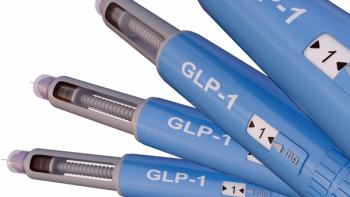
Children with Turner syndrome (TS) now have a once-weekly growth hormone (GH) option in the US. The FDA has approved somapacitan-beco (Sogroya; Novo Nordisk) 5-, 10-, and 15-mg injections for pediatric patients aged 2.5 years and older with growth failure associated with TS, making it the first long-acting GH product approved for this indication, according to the company.¹
"A once-weekly option represents a meaningful advancement in how we support growth in children with Turner Syndrome," said Colleen Silk, group vice president, rare disease, Novo Nordisk.¹ The approval rests on the TS cohort of the phase 3 REAL8 trial, in which once-weekly somapacitan produced height gains in a similar range to those seen with daily somatropin over 52 weeks.¹
The TS cohort of REAL8 enrolled 105 girls aged 2.5 to 10 years who were randomly assigned 2:1 to somapacitan 0.24 mg/kg/week (n = 68) or somatropin 0.05 mg/kg/day (n = 37) for 52 weeks.¹ REAL8 (NCT05330325) is an open-label, active-controlled basket study that also supported somapacitan's earlier approvals in other non–GH-deficiency growth disorders.⁴
At week 52, annualized height velocity, the primary end point, was 8.9 cm/year with somapacitan vs 9.7 cm/year with daily somatropin, an estimated treatment difference of −0.8 cm/year.¹ Height standard deviation score increased from baseline by 0.77 with somapacitan and 0.86 with somatropin.¹
Adverse reactions reported in at least 10% of patients with TS through week 52 were respiratory tract infection, nasopharyngitis, ear infection, pyrexia, diarrhea, vomiting, and injection site reaction.¹
TS affects approximately 50 per 100,000 females and involves multiple organ systems across the lifespan, necessitating multidisciplinary care.² Short stature is its most common feature, and the 2024 international clinical practice guideline addresses growth-promoting GH therapy as a core component of pediatric TS care.²
Until now, that therapy has meant daily subcutaneous injections, often for years. Aristides Maniatis, MD, a REAL8 investigator, noted in the company's announcement that once-weekly dosing translates to 313 injection-free days per year.¹
Somapacitan is a human GH analog with a single amino acid substitution and an attached albumin-binding moiety; reversible binding to albumin delays elimination and prolongs its duration of action.³ In pediatric patients treated at 0.24 mg/kg/week, its terminal half-life is roughly 36 to 37 hours.³
The drug was first approved in the US in 2020 and carries indications for adult GH deficiency and, in children aged 2.5 years and older, GH deficiency, short stature born small for gestational age (SGA) without catch-up growth by age 2 years, growth failure associated with Noonan syndrome, and idiopathic short stature.³ The SGA, Noonan syndrome, and idiopathic short stature indications were added in February 2026.⁴ Contraindications include closed epiphyses, active malignancy, and Prader-Willi syndrome with severe obesity or respiratory impairment.³ A missed dose may be given within 3 days of the scheduled day.³
The TS results differ in character from some earlier REAL8 cohorts. In children born SGA, somapacitan produced a height velocity of 11.0 cm/year, comparable with the higher daily somatropin dose studied (11.1 cm/year).⁴ In the TS cohort, by contrast, height velocity and height SDS gains were numerically lower with somapacitan than with daily GH.¹
The comparator dose also matters. The company noted that the daily somatropin dose used in the trial was below the maximum US-labeled pediatric TS dose of 0.067 mg/kg/day, so the trial does not show how somapacitan compares with the higher daily doses some US clinicians use in TS.¹ For families for whom injection frequency drives missed doses, a modest difference in height velocity may be offset by better adherence, although REAL8 was not designed to test that.