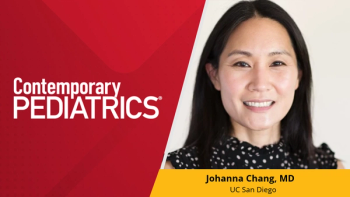
Johanna Chang, MD, offers guidance on vaccination, infection prophylaxis, and clinical warning signs in children receiving biologic therapies.
A 173-mother cohort study found parenting role models—not income alone—drove the link between maternal education and COVID-19 vaccination intent.
Mothers with at least a 4-year college degree were nearly 3 times as likely as less-educated mothers to say they intended to vaccinate their child against COVID-19, but the pathway behind that association is more complicated than income alone.1
In a longitudinal cohort of 173 mother-child dyads followed since birth at 16 US hospitals, having access to a parenting role model emerged as the only statistically significant mediator of the education-vaccination intent relationship, while household income—despite representing the largest pathway in magnitude—fell short of significance.1
The analysis drew on mothers of kindergarten-aged children born between March 2015 and May 2016, originally enrolled in a study of infant care practices and surveyed again from November 2021 to June 2022, during the window when COVID-19 vaccines were newly available to adults and older children but not yet to the youngest age groups.1
Of the 173 mothers who completed surveys, 41.6% reported intent to vaccinate their child once eligible, and the unadjusted odds of intent rose with each additional year of maternal education (OR, 2.70; 95% CI, 1.37-5.34, for a 4-year degree versus less).1 Using a product-of-coefficients mediation approach with bootstrapped confidence limits, investigators tested candidate mediators spanning demographics, resources, and informal learning. Two variables met criteria for the final model: current household income and presence of a parenting role model.1 Income behaved as a consistent mediator, and adjusting for it reduced the education-intent association (adjusted OR, 1.69; 95% CI, 0.69-4.12), while the role-model variable acted as a suppressor—adjusting for it strengthened the raw association (adjusted OR, 3.28; 95% CI, 1.60-6.73).1 In the combined model, only the parenting role model reached statistical significance as an indirect pathway (percent mediated, -18%; 95% asymmetric confidence limits, -46% to -2%).1
Although most pediatric SARS-CoV-2 infections are mild, hospitalized children have faced substantial morbidity: roughly one in four children hospitalized between July 2021 and January 2022 required intensive care.2 US pediatric vaccine uptake has lagged behind adult rates, ranging from about 81% of 16- to 17-year-olds down to roughly a quarter of children younger than 5 years with at least one dose.
The finding builds on established evidence that parents' social networks shape vaccination behavior independent of formal risk-benefit reasoning. Prior work has identified the proportion of vaccine-recommending contacts in a parent's network as the strongest predictor of childhood vaccination status, a pattern the authors say mirrors their own findings on breastfeeding and safe-sleep practices.3
Because higher-educated mothers were more likely to report an available parenting role model, and having that role model was independently associated with lower odds of vaccination intent, the authors describe the relationship as one in which informal learning and social norms—not simply income or knowledge—help explain who does and does not plan to vaccinate.1 They caution that the analysis is exploratory: candidate mediators were narrowed using statistical thresholds rather than confirmed a priori, raising the risk of chance findings.
The study relied on cross-sectional, self-reported data vulnerable to social desirability bias, could not confirm which children were ultimately vaccinated, and analyzed a modest sample of 173 dyads, limiting power and generalizability.1 The authors call for replication in larger, more diverse cohorts and suggest that interventions addressing misinformation within parents' existing social networks—rather than education-level messaging alone—may be a more productive target for improving pediatric vaccination rates.1