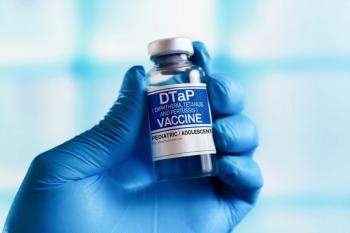
Completing the DTaP primary series was 96.2% effective against pertussis in Alaska children aged 6 months to 6 years during a record 2024 outbreak.
Jonathan Miller, MD, discusses earlier HPV vaccination, individualized conversations with hesitant families, and strategies to improve vaccine uptake.
Starting HPV vaccination at younger ages can give pediatricians more time to discuss the vaccine with families, address concerns, and complete vaccination before potential exposure to the virus, according to Jonathan Miller, MD, a general pediatrician at Nemours Children's Health and pediatrics residency program director.
At Nemours, Miller said clinicians begin recommending HPV vaccination as early as age 9. Even when families do not agree to vaccination during the initial conversation, starting the discussion earlier creates opportunities to revisit the decision at subsequent visits.
"You know they may not always get the vaccine when we recommend it at 9. Sometimes they think about it. They learn. They get more information, and then they do it at 10," Miller said. "And we're still getting it done and completed, which right now takes two HPV vaccines to get them completely vaccinated."
Like other vaccines, HPV vaccination is intended to protect against exposure, Miller explained. He also said the vaccine is more effective when administered at younger ages.
Vaccination remains beneficial and recommended for older adolescents and adults, but increasing age also increases the possibility that an individual has already encountered HPV.
"The vaccine, unfortunately, doesn't work if you've already got the virus. It's really in protecting you against the virus that it has its cancer-preventing effects," Miller said.
Starting conversations at age 9 also gives pediatricians more time to work with parents who are uncertain about vaccination, rather than treating a single visit as the only opportunity to reach a decision.
Miller, who trains pediatric residents, emphasized that vaccine conversations should not follow the same approach for every family.
"I think it's really important for us as the clinician to not approach all families and all kids the same way, and I think if you do, then it's going to be frustrating, and it's going to create some challenges," he said.
Many families accept a clinician's strong recommendation without requiring an extensive conversation, Miller said. Those who have questions, concerns, or broader opposition to vaccines may require a more individualized approach.
One strategy he teaches is motivational interviewing, which involves identifying what families value and using those priorities as a starting point for the conversation.
"I'm not necessarily going to change their mind like today or in this visit," Miller said. "So I want to play the long game, and I want them to know that I care about their child and that it's not all about the vaccines, but vaccines are important, and that we're going to talk about it."
For families strongly opposed to vaccination, Miller said he begins by asking whether they are willing to discuss the topic.
The approach allows parents who do not want the conversation to decline it. For those who agree, Miller said asking permission can make them more open to hearing what the pediatrician has to say.
He recalled a recent encounter with the father of a 12-year-old girl who had declined HPV vaccination for several years. Miller asked permission to discuss the vaccine, acknowledged the father's effort to make thoughtful decisions for his daughter, and explained its role in cancer prevention.
"And he did it," Miller said. "And that was the day that he was willing to do it. Where in years past he had said no, and I think I think that's an example of sort of playing the long game, you know, meeting them where they're at."
Individual conversations can be supported by practice-level strategies, Miller said. Reminder and recall systems can alert families when children are behind on vaccines through text messages or patient portals.
Maintaining a strong recommendation is also important, particularly when clinicians repeatedly encounter vaccine refusal.
"Making sure you're always giving strong recommendations around the HPV vaccine," Miller said. "I think some people start to weaken in their resolve over time because it can be a little defeating to get rejected so much."
Finally, Miller encouraged pediatricians to look beyond well-child appointments for vaccination opportunities. Children may present for acute illnesses or follow-up visits for chronic conditions such as asthma or attention-deficit/hyperactivity disorder.
"Making sure that we're offering and we're looking to see if they're behind on vaccines, and we're offering those vaccines at all of those opportunities," Miller said, "and that's how you're going to get kids caught up and up to date."