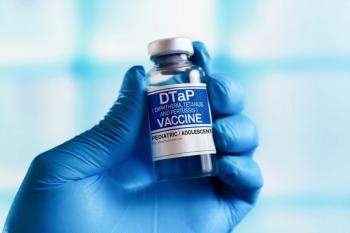
Completing the DTaP primary series was 96.2% effective against pertussis in Alaska children aged 6 months to 6 years during a record 2024 outbreak.
“We took a different approach by looking at colonizing bacteria, and we found vaccination reduced antimicrobial resistance through a completely different mechanism," said Brooke Ramay, lead author of the study.
Findings from a new study conducted in Guatemala suggest that pneumococcal conjugate vaccination may offer an unexpected benefit: lowering children’s risk of carrying drug-resistant bacteria in their gut. The findings, led by Washington State University (WSU) researchers, indicate that pneumococcal vaccination—specifically PCV13—is associated with reduced colonization of extended-spectrum cephalosporin-resistant Enterobacterales (ESCrE), a group of bacteria that includes Escherichia coli and is resistant to critical antibiotics used for severe infections.1,2
The research, published in Vaccine, evaluated whether a pair of routine childhood vaccines, rotavirus (RV) and pneumococcal (PCV13), might indirectly lower ESCrE colonization. Investigators collected vaccination records, stool samples, and questionnaire data from 406 children living in Guatemala’s Western Highlands.
“Most vaccine studies on antimicrobial resistance focus on infection and how vaccines prevent illness and reduce antibiotic use, thereby reducing selection processes of antibiotic-resistant bacteria," said Brooke Ramay, PharmD, lead author and researcher at WSU College of Veterinary Medicine’s Paul G. Allen School for Global Health. "We took a different approach by looking at colonizing bacteria, and we found vaccination reduced antimicrobial resistance through a completely different mechanism: Vaccination prevented clinic visits and resulted in a lower probability of colonization with antibiotic-resistant bacteria. We think this may be because individuals had less exposure to environments where these resistant bacteria are present."
The team’s analysis used an instrumental variables approach to explore connections between vaccination, clinic visits, diarrhea, and bacterial colonization. Children included in the study ranged from 0 to 14 years old: 123 (30.3%) were 0 to 2 years old, 103 (25.4%) were 3 to 5 years old, and 180 (44.3%) were 6 to 14 years old.2
PCV13 vaccination showed a statistically significant indirect negative effect on ESCrE colonization (–0.092; P < .01), largely mediated by its strong negative effect on clinic visits (–0.461; P < .01).2 Clinic visits have previously been linked to higher antimicrobial-resistant colonization in the region, making this pathway notable, according to the researchers.1
Rotavirus vaccination effects were inconclusive, likely due to the limited number of unvaccinated children and a low number of reported diarrhea cases, which researchers attributed to recall bias.1,2
Other measured factors also played a role2:
"Vaccination for pneumococcal disease was associated with a reduction in colonization with ESCrE bacteria," the study authors concluded. "These findings should be confirmed through studies designed to collect clinical outcomes data. Findings from this and other studies suggest that ESCrE colonization is mediated by a complex interplay of factors."
References