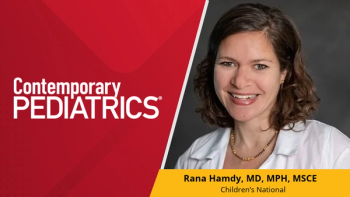
An updated AAP policy statement renews the call to ban raw milk sales, citing pathogen risks to children and pregnant people and an emerging H5N1 concern.
Get caught up with Contemporary Pediatrics! This list helps you navigate our top stories from the week, all in one place.
This week on the Contemporary Pediatrics website, we covered topics ranging from the efficacy of clesrovimab against RSV in infants to social determinants linked to long COVID. Take a look at some of our top stories from the past week (Monday, February 16, to Friday, February 20, 2026) and click on each link to read and watch anything you may have missed.
Clesrovimab (Enflonsia; Merck & Co) has displayed positive safety and efficacy results in infants and children with an increased risk of severe respiratory syncytial virus (RSV) disease across 2 RSV seasons, according to Merck.
The phase 3 SMART trial (MK-1654-007; NCT04938830) included children aged under 2 years. When receiving clesrovimab at the start of their second RSV season, infants presented with similar safety results vs those observed in the CLEVER trial (MK-1654-007; NCT04767373), when the drug was administered during RSV season 1.
“These new findings from SMART demonstrate the potential of Enflonsia to help protect these vulnerable children, who may require an additional dose for their second RSV season,” said Paolo Manzoni, MD, PhD, head of maternal–infant medicine at the University of Torino Hospital Degli Infermi.
Shield Therapeutics plc announced that Accrufer (ferric maltol) has received approval from the FDA for the treatment of iron deficiency in children 10 years and older. According to the company, Accrufer is the first and only prescription oral iron treatment approved by the FDA for the treatment of iron deficiency for that patient population. The product was initially approved in 2019 for adults with iron deficiency.
The pediatric indication was supported by findings from the FORTIS trial (NCT05126901), which evaluated the efficacy of ferric maltol in patients aged 10 to 17 years with iron deficiency. In the trial, 24 patients received age-based dosing of ferric maltol twice daily. At week 12, treatment was associated with a clinically meaningful mean increase in hemoglobin of 1.1 g/dL. This magnitude of change is described as comparable, on average, to the expected hemoglobin increase associated with one blood transfusion.
The FDA has approved a supplemental new drug application for Wakix (pitolisant) tablets for the treatment of cataplexy in pediatric patients 6 years and older with narcolepsy. According to Harmony Biosciences, the approval makes pitolisant the first and only FDA-approved, nonscheduled treatment for pediatric and adult patients with narcolepsy with or without cataplexy.
“We are excited to achieve this important milestone for pediatric narcolepsy patients who experience cataplexy,” said Kumar Budur, MD, MS, chief medical and scientific officer of Harmony Biosciences. “With this approval, clinicians now have the option to prescribe Wakix to treat excessive daytime sleepiness [EDS], cataplexy, or both, in patients 6 years and older with narcolepsy.”
Rural birth hospitals have limited access to higher-level neonatal care, according to a recent study published in JAMA Network Open.1
Between 2010 and 2022, 3257 birth hospitals were open for any duration of time in the United States. Of these, 1149 were rural and 2108 urban. Higher-level neonatal care was provided by 160 and 1281, respectively, in 2010, with 48 and 208, respectively, gaining higher-level care from 2010 to 2022.
Loss of higher-level neonatal care was reported for 70 rural hospitals and 177 urban hospitals. Overall, rural areas reported a net loss of 22 birth hospitals providing higher-level care between 2010 and 2022, while urban areas reported a net gain of 31.
A large national cohort study found that children and adolescents experiencing economic instability, food insecurity, discrimination, and low social support had significantly higher odds of long COVID compared with peers experiencing fewer social hardships. The findings highlight the role of social determinants of health in pediatric postacute SARS-CoV-2 outcomes and suggest that social conditions may influence recovery trajectories.
Kyung (Kay) Rhee, MD, MSc, MA, FAAP, professor of pediatrics and chair of the Division of Adolescent Medicine and Child and Community Health at the University of California, San Diego, said the findings underscore the importance of social conditions in pediatric health outcomes.
“It's one of those things that I think people forget that the social environment, your exposures, are things that can also affect your health,” Rhee said. “And so we really wanted to highlight, or just examine, how much these social conditions were also impacting health outcomes, especially during the early days of the pandemic.”