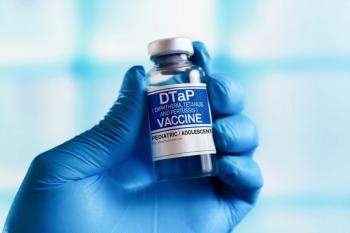
Completing the DTaP primary series was 96.2% effective against pertussis in Alaska children aged 6 months to 6 years during a record 2024 outbreak.
The AAP's 2026-2027 policy recommends universal vaccination for infants 6-23 months and a risk-based single dose for children 2-18 years.
The American Academy of Pediatrics (AAP) Committee on Infectious Diseases has issued its updated COVID-19 vaccination recommendations for the 2026-2027 season, calling for universal vaccination of infants and children 6 through 23 months of age and a risk-based, single-dose approach for most older children and adolescents.1 The CDC estimates that COVID-19 caused 130,000 to 250,000 US hospitalizations and 14,000 to 42,000 deaths across all ages between October 2025 and July 2026, and the accompanying AAP technical report shows that burden falls disproportionately on the youngest children even as overall pediatric rates decline.2
Weekly COVID-19-associated hospitalization rates among children overall peaked at 0.5 per 100,000 during the 2025-2026 season, continuing a multiyear decline from 1.7 per 100,000 in 2023-2024.2 Infants, however, have not shared equally in that improvement: the peak weekly rate among infants younger than 12 months reached 4.7 per 100,000, nearly 10-fold higher than the rate for children overall, and infants younger than 6 months had a cumulative hospitalization rate of 251.4 per 100,000 in 2024-2025—higher than the rate for adults 65 through 74 years of age.2 COVID-NET data from October 2022 through April 2024 show that children 6 through 23 months of age accounted for roughly 45% of hospitalizations among vaccine-eligible children, and that 41.8% of those hospitalized had no underlying medical condition, meaning severe disease is not confined to children with comorbidities in this age group.3 These findings underpin the AAP's recommendation that all infants and children 6 through 23 months without contraindications receive the updated vaccine, following dosing guidance based on prior vaccination history.1
For children 2 through 18 years, the AAP recommends a single dose for those at high risk of severe disease, in congregate care, never vaccinated, or living with a high-risk household contact, while offering vaccination to others on parental request.1 COVID-NET data indicate that roughly 73% of hospitalized children 2 through 17 years of age had at least one qualifying condition, with chronic lung disease (adjusted risk ratio [aRR], 1.9), diabetes (aRR, 1.5), and neurologic disorders (aRR, 1.4) each independently associated with more severe illness.3 Despite this risk concentration, vaccine uptake among hospitalized children has remained low: fewer than 4% of vaccine-eligible children hospitalized for COVID-19 were up to date on recommended doses, and most of the remainder had not received any dose in the year before infection.3 Children who are moderately or severely immunocompromised require 2 or more doses and take precedence over other risk-group recommendations.1
CDC's VISION network found that a 2024-2025 vaccine dose reduced COVID-19-associated emergency department and urgent care visits by 76% to 77% among children 9 months through 4 years and by 45% to 56% among children 5 through 17 years.4 On the safety side, the technical report notes that myocarditis, a rare but recognized risk primarily in adolescent males after a second mRNA dose, has become less common with updated formulations, falling from roughly 6.91 cases per million doses with original monovalent vaccines to 1.24 per million with bivalent versions; surveillance has not identified a similar signal for Guillain-Barré syndrome, immune thrombocytopenia, or death.2 Coadministration with influenza vaccine is supported by existing safety and immunogenicity data, and the AAP advises vaccinating as soon as the updated shot is available given winter's historically higher pediatric hospitalization burden.1