

|Articles|January 28, 2022
Acne’s Unseen Pain
Speaking from their unique perspectives, physicians and a psychologist share their success strategies for opening a dialogue with pediatric patients and their families about acne’s sometimes devastating impact on their mental wellbeing and quality of life, danger signals to watch, and why the term “bullying” has no place in the conversation.
Advertisement
Advertisement
Related to this article
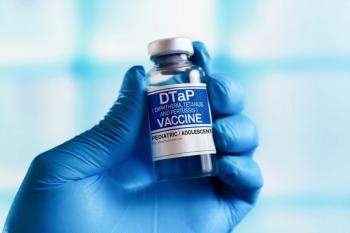
Completing the DTaP primary series was 96.2% effective against pertussis in Alaska children aged 6 months to 6 years during a record 2024 outbreak.

Keisha L. Gibson, MD, MPH, discusses the FDA approval of Gazyva for childhood-onset INS and its implications for relapse prevention and pediatric care.
Hai D. Nguyen-Tran, MD, discusses clinical signs, neurologic warning symptoms, supportive care, and preventing the spread of hand, foot, and mouth disease.
Topical botanical Cinainu earned FDA Breakthrough Therapy status for AA in patients aged 2+, supported by phase 2/3 RAAINBOW data in children.
The FDA accepted the Anaphylm NDA resubmission as a class 2 response, setting a March 16, 2027, PDUFA date for the sublingual epinephrine film.

Children with FASD given choline before age 6 had 9.1% higher nonverbal IQ and 11.3% better working memory vs placebo 5 years after treatment.

A deep learning model reading 1 nondilated fundus photo predicted 1-year progression to high myopia in children with AUCs of 0.91-0.96.

Todd Wolynn, MD, MMM, FAAP, explains how pediatricians can address misinformation through empathetic communication and community engagement.
Advertisement
Advertisement
Trending on Contemporary Pediatrics
1
Youth-onset type 2 diabetes may progress faster, signs easy to miss
2
FDA sets new PDUFA date for Anaphylm for type I allergic reactions
3
When one young athlete’s cardiac arrest revealed a family at risk
4
SUID drives widening Black-White infant mortality gap since 2020
5