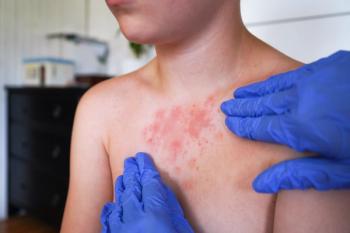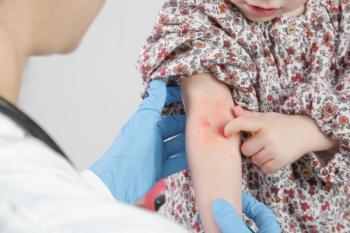
At AAP 2026, Peter Lio, MD, discussed distinguishing allergic and inflammatory skin conditions and when pediatricians should seek specialty care.
Phase 2 INTEGUMENT-INFANT study results show roflumilast cream 0.05% was well tolerated and improved disease severity in infants with atopic dermatitis.
Arcutis Biotherapeutics, Inc, announced positive topline results from the phase 2 INTEGUMENT-INFANT study (NCT06998056) evaluating the safety, tolerability, and efficacy of Zoryve (roflumilast) cream 0.05% in infants aged 3 months to younger than 24 months with atopic dermatitis. According to the company, the topical therapy was well tolerated, with a safety profile consistent with prior clinical trials of Zoryve, and demonstrated improvement in disease severity over 4 weeks of treatment.
“Atopic dermatitis is the most common type of eczema and often starts in infancy. For our youngest patients, it’s critical to have therapies that are both safe and effective and that can be used on all body areas, including the face and diaper region,” said Mercedes E. Gonzalez, MD, pediatric dermatologist and cofounder of Dermatology360 and an INTEGUMENT-INFANT investigator. “These data underscore the potential of investigational Zoryve cream 0.05% to provide meaningful improvements in the signs and symptoms of atopic dermatitis, while reinforcing its well-established and consistent safety profile.”
INTEGUMENT-INFANT was an open-label, multicenter study designed to assess once-daily application of roflumilast cream 0.05% in a population with limited approved topical treatment options. The trial enrolled 101 infants with mild to moderate atopic dermatitis. Investigators reported a low overall incidence of adverse events, all of which were mild to moderate in severity. No serious adverse events were observed, and only 1 participant discontinued treatment because of an adverse event.
Efficacy findings showed measurable clinical improvement within the 4-week study period. More than half of treated participants met a key benchmark of disease improvement, with 58% achieving a 75% reduction in the Eczema Area and Severity Index (EASI-75) at week 4. The company also reported reductions in the extent of skin involvement and overall severity of disease.
Safety outcomes in INTEGUMENT-INFANT were consistent with prior pediatric data for roflumilast cream. The most frequently reported adverse events, occurring in at least 3% of participants, included diarrhea, nasopharyngitis, upper respiratory tract infection, and vomiting. Investigators noted that the overall tolerability profile aligned with findings from the 4-week pivotal
The phase 2 infant study also builds on earlier pharmacokinetic work. INTEGUMENT-INFANT followed the Maximal Usage pharmacokinetics study ARQ-151-105, which evaluated systemic exposure and safety of roflumilast cream 0.05% in infants within the same age range. Together, these studies were designed to inform development of a topical, nonsteroidal treatment option for very young patients with widespread or sensitive-area disease.
“Reaching this clinical development milestone for Zoryve through the INTEGUMENT-INFANT study underscores our commitment toward providing safe, effective non-steroidal treatment options for even the youngest patients with atopic dermatitis who have substantial disease burden and very limited treatment options today,” David Berk, MD, FAAD, vice president of research and development strategy and clinical development at Arcutis, said in a news release. “Based on my experience as a pediatric dermatologist, demonstrating efficacy and tolerability in infants—using a formulation specifically developed with young children suffering from atopic dermatitis in mind—not only advances our development program but gives hope to our patients and their families who are suffering with the burdensome symptoms of atopic dermatitis.”
Atopic dermatitis is a chronic, relapsing inflammatory skin disease that commonly presents in early childhood. In the United States, it affects an estimated 9.6 million children and 16.5 million adults. Approximately 60% of pediatric cases begin within the first year of life. Clinical presentation varies by age, with infants and younger children more likely to experience widespread disease involving the face, neck, and extensor surfaces. Beyond cutaneous symptoms, pediatric atopic dermatitis has been associated with sleep disruption, increased risk of skin infection, and emotional and developmental stress for children and caregivers.
Zoryve is a topical formulation of roflumilast, a selective phosphodiesterase 4 (PDE4) inhibitor. By inhibiting PDE4, an intracellular enzyme involved in inflammatory signaling, roflumilast reduces the production of proinflammatory mediators and modulates immune activity in the skin. The therapy is currently prescribed across multiple inflammatory dermatoses, including atopic dermatitis, seborrheic dermatitis, and plaque psoriasis.
The company noted that results from INTEGUMENT-INFANT further support continued clinical development of roflumilast cream 0.05% for pediatric atopic dermatitis, including in infants who currently have few nonsteroidal topical treatment options.
References