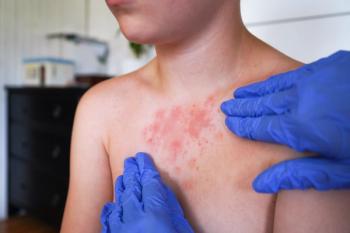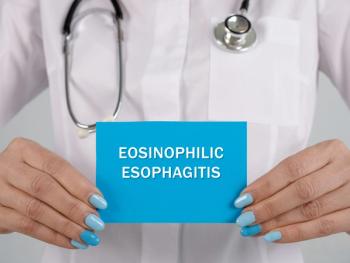
Tezepelumab produced histologic remission in up to 68.9% of patients aged 12+ with EoE vs 3.5% with placebo at week 24, sustained to week 52.
ScolimiR-3D, a 6-microRNA blood test to predict severe curve progression in AIS, received FDA Breakthrough Device designation.
For clinicians who identify adolescent idiopathic scoliosis (AIS) during routine screening, the hardest question is often not whether a curve exists but whether it will worsen. The FDA has granted Breakthrough Device designation to ScolimiR-3D, an in vitro diagnostic that measures 6 circulating microRNAs from a standard blood draw to classify a patient's risk of developing a severe spinal curve, VB Spine LLC announced September 29, 2026.¹ The company said it is the first such designation granted to a predictive scoliosis risk assessment test.¹
Alain Moreau, whose laboratory at the Azrieli Research Centre of CHU Sainte-Justine and Université de Montréal developed the underlying science, said the core clinical challenge is "not simply detecting the curve—it is knowing where that curve is going."¹
The test is based on a prospective cross-sectional study published in Scientific Reports in February 2025.² Investigators collected plasma at diagnosis from 116 skeletally immature, untreated patients with AIS (mean age, 13.3 years; mean Cobb angle, 24.4°) at 3 pediatric spine centers and followed them to skeletal maturity or surgery.²
Patients were stratified as severe progressors (final Cobb angle ≥45°), moderate progressors (25°-44°), or nonprogressors.² Genome-wide profiling identified 15 microRNAs upregulated in patients who developed severe curves.²
A random forest model using 6 of those microRNAs (miR-1-3p, miR-19a-3p, miR-19b-3p, miR-133b, miR-143-3p, and miR-148b-3p) distinguished severe progressors from nonprogressors with 100% accuracy, sensitivity, and specificity (AUC, 1.0).² Those metrics came from a randomly selected 20% of cases held out as a test set after the model was trained on the remaining 80%.²
AIS affects an estimated 2% to 4% of adolescents and is the most common orthopedic condition requiring surgery in this age group.² No validated test currently identifies at diagnosis which patients will progress, so bracing or surgery is often deferred until progression is documented on serial radiographs.²
Bracing is effective for high-risk curves. In the Bracing in Adolescent Idiopathic Scoliosis Trial (BrAIST), which enrolled patients aged 10 to 15 years with curves of 20° to 40°, treatment success (skeletal maturity without progression to ≥50°) was 72% with bracing vs 48% with observation.⁴ That nearly half of observed patients did not progress also highlights how difficult it is to identify who truly needs treatment.⁴
VB Spine said the test could help clinicians match conservative treatment such as bracing to a patient's risk and support family counseling from diagnosis onward.¹
The Breakthrough Devices Program is a voluntary pathway for devices that may provide more effective diagnosis or treatment of life-threatening or irreversibly debilitating conditions.³ Designated sponsors receive more interactive communication with the agency and priority review, but devices must still meet the standard for premarket approval, 510(k) clearance, or De Novo authorization.³
Perfect accuracy in a small holdout set warrants caution. The discovery cohort included 69 patients with AIS and the replication cohort 35, so the 20% test set represented a small number of patients, and the 6-microRNA panel was evaluated for separating severe progressors from nonprogressors rather than across the full range of outcomes.² Adding all 15 microRNAs lowered accuracy to 90% and specificity to 88%.²
The authors acknowledged that participants were a homogeneous population of European ancestry and that findings require replication in larger, more diverse pediatric cohorts.² Samples were collected between 2002 and 2013.² The work was partly funded by Medtronic Canada, and CHU Sainte-Justine holds a pending patent application.²
Independent, prospective external validation will be essential before clinicians can rely on the test to guide bracing decisions. VB Spine said additional supporting research is expected at the Scoliosis Research Society 2026 Annual Meeting, October 6 to 10 in Sydney, Australia.¹