Real-world claims show dupilumab was tied to a 33%-52% lower risk of atopic march progression vs systemic corticosteroids in children with AD.
At AAP 2026, Peter Lio, MD, discussed distinguishing allergic and inflammatory skin conditions and when pediatricians should seek specialty care.
Evaluating a child's rash can require pediatricians to distinguish among allergic, inflammatory, infectious, and medication-related causes, with the patient's history often providing the most useful starting point, according to Peter Lio, MD.
Lio, clinical assistant professor of dermatology and pediatrics at Northwestern University Feinberg School of Medicine in Chicago, Illinois, discussed allergic skin reactions during the American Academy of Pediatrics (AAP) 2026 National Conference & Exhibition.
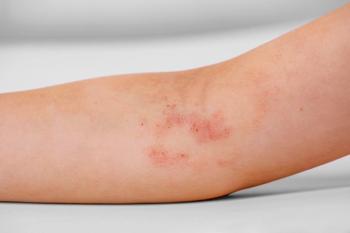
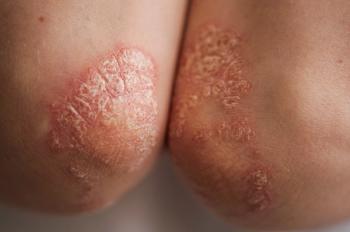
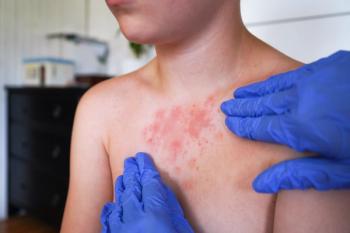
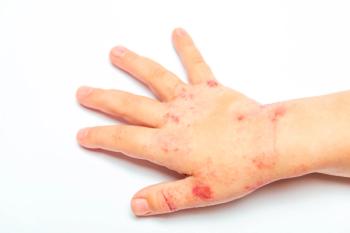
The differential can include atopic dermatitis, allergic and irritant contact dermatitis, urticaria, food-related reactions, and mimics such as scabies and fungal infections.
"It's a bit cliché, but the history really is king," Lio said. "The history is going to help set the tone and going to help us figure out what questions to ask next and what kind of testing to do, if any."
The duration and evolution of a rash can provide important clues. A new eruption that developed within the previous 24 hours presents a different diagnostic picture than a condition that has persisted intermittently for months, Lio explained.
Distribution and morphology are also important. Eczematous disease may involve scaling and changes to the skin surface, whereas urticaria produces transient wheal-and-flare reactions. Individual hives typically disappear within approximately 24 hours, although new lesions may continue to appear elsewhere.
Lio also encouraged clinicians to examine the entire patient rather than focusing only on the area that prompted the visit.
"We're going to get that history. We're going to do a careful exam, and ideally, we're really going to try to look at the whole patient," Lio said.
Even with a thorough evaluation, an acute rash may remain difficult to diagnose initially, he added.
Timing can complicate the evaluation of suspected drug reactions.
Families may focus on medications taken that day or the previous day, but Lio noted that some type IV hypersensitivity reactions associated with antibiotics can emerge days or even weeks after exposure.
"People say, 'Wait a minute! Oh, they took that antibiotic course last week, and now they're developing the rash. Yes, it's possible,'" Lio said.
A viral exanthem can further complicate the picture, particularly when a child has both a recent medication exposure and symptoms of an upper respiratory infection. In some cases, Lio said, determining which factor is responsible can be challenging.
Families frequently arrive at dermatology visits convinced that food is driving their child's skin disease, according to Lio.
Food allergy does have an important relationship with atopic dermatitis. Lio said food allergies are more common among patients with atopic dermatitis and that the likelihood increases with disease severity.
However, he cautioned against assuming that eliminating foods will resolve atopic dermatitis.
Some of his patients have followed highly restrictive diets in an attempt to clear their skin without seeing meaningful improvement. In some cases, those restrictions can create nutritional concerns.
"The vast majority of people, foods can play a role, but they are probably not the whole story as much as I wish it were," Lio said.
Not every reaction around food represents a true allergy either. Acidic foods such as tomatoes, for example, may irritate an infant's cheeks through direct skin contact rather than triggering an allergic reaction.
Lio said pediatricians can manage many skin conditions, including relatively significant disease, depending on their experience and access to dermatology.
Referral becomes particularly useful when treatment is not producing the expected response or when the diagnosis remains uncertain. For example, a presumed fungal infection that worsens despite antifungal treatment should prompt reconsideration of the diagnosis and potentially specialty evaluation.
Poor growth, increasing skin or gastrointestinal reactions, or other signs of a more complex condition may warrant involving additional specialists.
"I don't think patients are best served when we just stay in a tiny little silo," Lio said. "We really want to work together to get that multidisciplinary care."
Depending on the presentation, that team may include dermatology, allergy, gastroenterology, and nutrition specialists, with the pediatrician continuing to serve as the child's primary clinician.