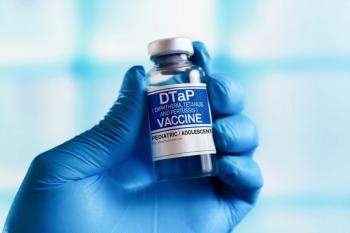
Completing the DTaP primary series was 96.2% effective against pertussis in Alaska children aged 6 months to 6 years during a record 2024 outbreak.
CDC's 2025 NIS-Teen data show HPV vaccine coverage flat for a fourth year, with rural adolescents 12 points behind urban peers in receiving ≥1 dose.
New national survey data show that human papillomavirus (HPV) vaccination coverage among US adolescents has not improved in four consecutive years, even as coverage with two other routine adolescent vaccines held steady near 90%.¹ The findings, published in the Centers for Disease Control and Prevention's Morbidity and Mortality Weekly Report, are drawn from the 2025 National Immunization Survey-Teen (NIS-Teen), which analyzed data for 18,692 adolescents aged 13 to 17 years.¹
In 2025, 77.7% of adolescents had received at least 1 dose of HPV vaccine, and 63.4% were up to date with the full series—both essentially unchanged from 2024 and continuing a plateau that has held since 2021.¹ By contrast, coverage with at least 1 dose of tetanus toxoid, reduced diphtheria toxoid, and acellular pertussis vaccine (Tdap) was 88.8%, and coverage with at least 1 dose of quadrivalent meningococcal conjugate vaccine (MenACWY) was 89.0%—both modest declines from 2024 but still consistent with levels seen since 2019.¹
The report identifies pronounced geographic variation, most notably for HPV vaccine. Coverage with at least 1 HPV dose ranged from 49.5% in Mississippi to 94.1% in Rhode Island, and the share of adolescents up to date with the series ranged from 30.9% to 84.5% across those same states—a roughly 50-percentage-point spread.¹ Tdap coverage varied far less, from 80.5% to 94.6% across jurisdictions.¹
Adolescents living in mostly rural areas had HPV vaccination coverage 12.0 percentage points lower than those in mostly urban areas, a gap that held across income levels.¹ MenACWY coverage was also lower in rural areas, by 3.0 percentage points overall, but that difference was significant only among adolescents living below the federal poverty level, suggesting economic or access barriers play a larger role for meningococcal vaccination than for HPV vaccination.¹
The authors point to differences in school-entry requirements as a likely contributor to the persistent HPV coverage gap: Tdap is mandated for school entry nationwide and MenACWY in most states, but few states require HPV vaccination.¹ Both HPV and measles, mumps, and rubella (MMR) vaccination remain below Healthy People 2030 targets—58.6% of adolescents aged 13 to 15 years had completed the HPV series, well short of the 80% goal, and MMR coverage (92.5%) fell short of the 95% target needed for population-level measles protection.¹
The authors caution that a portion of the 2024-to-2025 declines in Tdap and MenACWY coverage may reflect survey artifact: a bias assessment found that more adolescents in 2025 had multiple vaccination providers, and questionnaires were not returned by all of them, potentially understating true coverage.¹ A prior total-survey-error analysis similarly found NIS-Teen may underestimate HPV series completion by roughly 5 percentage points.¹ The survey's response rate was 21.4%, and adequate provider data were available for only 42.0% of interviewed adolescents, raising the possibility of residual nonresponse bias despite weighting adjustments.¹