Real-world claims show dupilumab was tied to a 33%-52% lower risk of atopic march progression vs systemic corticosteroids in children with AD.
New approvals and emerging data are expanding nonsteroidal topical treatment options for several chronic pediatric skin conditions.
Topical nonsteroidal therapies are becoming available for younger patients with chronic dermatologic conditions, potentially providing alternatives to topical corticosteroids, according to a review published in Current Opinion in Pediatrics.¹
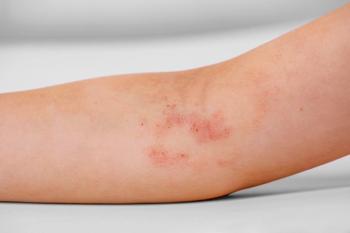
The review evaluated recent evidence on nonsteroidal topical therapies for atopic dermatitis (AD), psoriasis, alopecia areata, vitiligo, and seborrheic dermatitis. Topical corticosteroids remain first-line therapies for many chronic pediatric skin conditions, but adverse effects can include skin atrophy, striae, and telangiectasias. Parental concerns about these effects may also interfere with treatment adherence.
“Future clinical practices will likely rely less on TCS and more on NSTT for treatments of chronic pediatric dermatologic conditions,” the authors wrote.
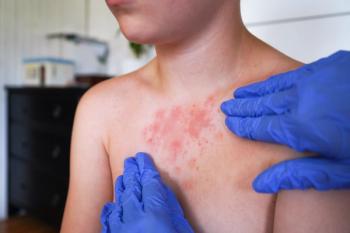
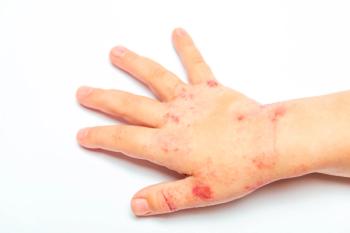
Several recent approvals have expanded options for AD. Difamilast, a topical phosphodiesterase-4 (PDE4) inhibitor, was FDA-approved in February 2026 for patients aged 2 years and older. In a phase 3 study of 41 infants aged 3 to 24 months, 56.1% achieved a Validated Investigator Global Assessment for AD response at week 4, increasing to 75.6% at week 52. Eczema Area and Severity Index 75% improvement was achieved by 82.9% at week 4 and 80.5% at week 52. One drug-related adverse event, folliculitis, was reported.2
Roflumilast 0.05% cream was approved for AD in children as young as 2 years in October 2025. In the 602-patient INTEGUMENT-PED trial, significantly more children aged 2 to 5 years receiving roflumilast achieved measures of skin clearance, eczema improvement, and itch reduction compared with vehicle at week 4. Five patients discontinued because of adverse events.3
Ruxolitinib 1.5% cream was also approved for children aged 2 years and older in September 2025. In the phase 3 TRuE-AD3 trial, both evaluated doses produced significantly greater Investigator Global Assessment Treatment Success than vehicle at week 8. Most adverse events were mild to moderate, and no serious adverse events were reported.4
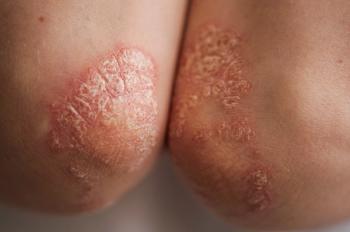
For pediatric psoriasis, roflumilast is approved as a cream for patients aged 6 years and older and as a foam for those aged 12 years and older. A small study of roflumilast 0.3% cream in 10 children aged 2 to 5 years found that 90% achieved Investigator Global Assessment success and 90% achieved at least a 75% reduction in Psoriasis Area and Severity Index score by week 4. One patient reported headache, which did not result in discontinuation.5
Evidence is also emerging for conditions with fewer topical options. In alopecia areata, a study of topical tofacitinib included 9 pediatric patients; 5 had greater than 50% improvement in Severity of Alopecia Tool score at 24 weeks, and no adverse events were reported.6
For vitiligo, a 4-patient pediatric case series found moderate improvement to near-complete resolution of facial vitiligo with daily roflumilast 0.3% cream, without reported adverse events. Two children treated with topical latanoprost for eyelid vitiligo achieved at least 75% repigmentation by week 16.7
Longer-term data are also available for roflumilast foam in seborrheic dermatitis. In a study including patients aged 12 years and older, 56.4% achieved clear or almost clear skin at week 4, increasing to 76% at week 24 and 80.5% among the long-term cohort at week 52.8
The authors concluded that research across these conditions supports continued expansion of nonsteroidal topical treatments, although the amount and strength of pediatric evidence vary by disease and therapy.