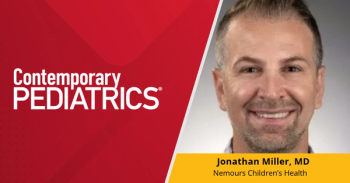
Jonathan Miller, MD, discusses earlier HPV vaccination, individualized conversations with hesitant families, and strategies to improve vaccine uptake.

Ravi Jhaveri, MD, says proposed changes to the childhood vaccine schedule lack evidence and could leave vulnerable children unprotected.
A federal directive to reduce and restructure the childhood vaccine schedule could increase the time children remain susceptible to vaccine-preventable diseases while creating additional barriers for families, according to Ravi Jhaveri, MD, professor of pediatrics at Northwestern University Feinberg School of Medicine and division head of pediatric infectious disease at Ann & Robert H. Lurie Children's Hospital of Chicago.
President Donald Trump signed an
For pediatricians, Jhaveri said the changes do not alter the evidence supporting the existing childhood immunization schedule.
Jhaveri said evidence does not support replacing the combination MMR vaccine with 3 separate vaccines administered at different visits.
"No, there's there's no evidence to support this," he said. "It's important just to review that this combination vaccine is 3 different live attenuated vaccines put into one. It's been used for decades with an excellent efficacy and safety record."
Separate products would first have to be manufactured and evaluated for safety and efficacy, he added. Additional appointments could also increase the burden on families.
"It creates chaos and 3 times as many visits for busy families who are paying $5 a gallon for gasoline, so there's really no rationale for doing this," Jhaveri said.
The order comes as
"Particularly with measles, measles finds the susceptible hosts, and so as we slip ever further, we risk even larger outbreaks of measles," he said.
He emphasized that most families continue to vaccinate their children, but declining coverage can place children who cannot receive vaccines or who are at increased risk of severe disease in danger.
"We have to think about the most vulnerable kids, those youngest kids, and then also potentially older patients who have problems with their immune system," Jhaveri said. "If they're exposed, measles could be a fatal infection for them."
Jhaveri said his institution does not plan to alter its vaccine recommendations in response to the executive order.
"The AAP guidance on vaccines, which has been in place for decades, has not changed, and I'm not expecting it to change," he said. "It is an evidence-based schedule that is fully supported based on our experience and the excellent track record for vaccines."
He also rejected the suggestion that shared decision-making is absent from current vaccine practice.
"Every decision is a shared one. We recommend vaccines because we believe the evidence that's out there over many decades with most of these vaccines," Jhaveri said.
Although Jhaveri expects many private insurers to continue covering vaccines, he expressed concern about children who receive vaccines through publicly funded programs.
"What I am concerned about, and I think what many of us are concerned about, is that these executive orders and efforts from the Secretary of HHS will somehow undermine the children who are covered by publicly paid-for vaccines, specifically Vaccines for Children," he said.
Loss of coverage, he said, could disproportionately affect children from lower-income families.
When families cite the federal changes as a reason to delay vaccination, Jhaveri recommends acknowledging their concerns before explaining the evidence behind the existing schedule.
"The schedule as it's put together is very deliberately put together because there's also further evidence that the vaccines can be safely and effectively given together at the same time," he said.
Creating individualized schedules that arbitrarily space vaccines apart, he added, has not undergone the same evaluation.
"When someone says, ‘Oh, we'll just make up a schedule and space them out,’ that is actually not studied, not evidence-based," Jhaveri said.
Ultimately, he encouraged families to rely on clinicians who know their children and provide their ongoing medical care.
"The pediatricians and primary care doctors are the ones who are with you when your kid is sick at 2:00 a.m. It's not a TikTok influencer, it's not any government agent," Jhaveri said. "And so really the people you should be trusting, because they're there for you when you need them, are your pediatricians and primary care providers."