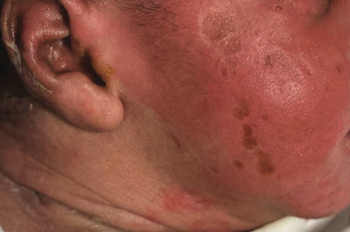
A healthy 9-day-old girl presents with erosions near her eyes, nose, and skin creases on the arm as well as a positive Nikolsky sign. What's the diagnosis?

Bernard A Cohen, MD, is the section editor for Dermcase and professor of pediatrics and dermatology, Johns Hopkins University School of Medicine, Baltimore, Maryland.
A healthy 9-day-old girl presents with erosions near her eyes, nose, and skin creases on the arm as well as a positive Nikolsky sign. What's the diagnosis?
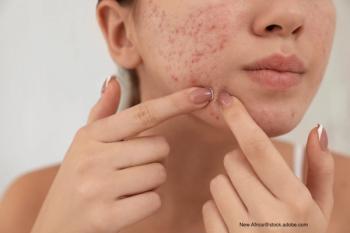
It effects most teenagers and can lead to mental distress. Here are 5 important facts about acne vulgaris in adolescents.
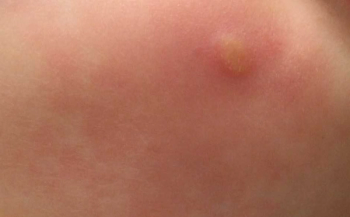
An otherwise healthy 6-month-old boy has a 1-cm area of recurrent blistering with surrounding erythema on his right cheek that developed shortly after birth.

Atopic dermatitis is a chronic, inflammatory skin condition that affects 15% to 20% of children and 1% to 3% of adults in the United States. The prevalence of atopic dermatitis, which is also known as eczema, is increasing in developing and industrialized countries.
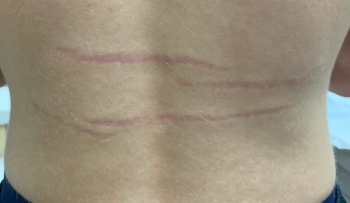
A 15-year-old male first noticed the marks on his back during a recent vertical growth spurt. On exam there are multiple horizontal violaceous linear striae on his back. He is otherwise healthy and denies any history of back injury or exposure to topical or systemic steroids. What's the diagnosis?
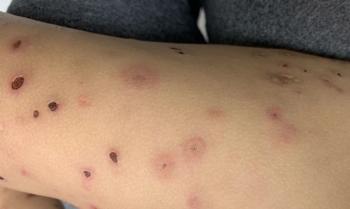
You are asked to evaluate a healthy 19-month-old boy with a history of recurrent blisters on his arms and legs for over a year that have now spread to his face. The blisters scab over quickly, ulcerate, and heal with post-inflammatory pigmentary changes. What's the diagnosis?

COVID-19 has been seen as primarily a disease impacting the lungs, but more of the body's systems have been shown to be impacted by the disease. Here's a look at how the disease impacts the skin.
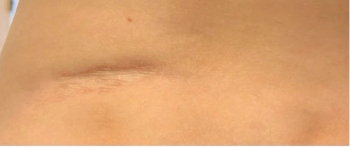
Anxious parents present their healthy 9-year-old son for evaluation of a slowly enlarging plaque that began developing on his lower back 3 months ago. What's the diagnosis?
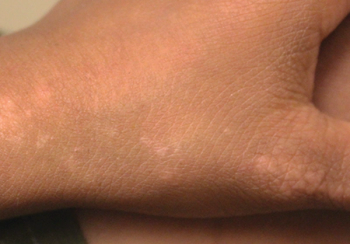
A healthy 6-year-old boy presents for evaluation with a 3-month history of an asymptomatic rash extending from his left thumb to his left wrist. What's the diagnosis?

A healthy full-term newborn presented with a prominent sacral dimple within an oval patch. Ultrasound showed no evidence of spinal anomalies, and the child was discharged home. Three days later, the patch became elevated, red, and moist appearing, and she was brought to the emergency department (ED) for further evaluation of the “growing blister.”
The incidence of childhood melanoma is increasing. There is evidence that cumulative exposure to ultraviolet radiation from the sun in the first 18 years of life contributes to the development of future skin cancers.