

In this cross-sectional population of insured adolescents from 2018 to 2022, receipt of puberty blockers and hormones was rare.

Joshua Fitch is the senior editor for Contemporary Pediatrics. He joined the brand in March of 2023 as an editor before being promoted to senior editor in January 2024. Fitch graduated from Youngstown State University in Youngstown, Ohio in 2020 with a degree in telecommunications and journalism. He started his career as a news and sports videographer before becoming an on-air sports anchor at the NBC-affiliated news station in Youngstown. Fitch briefly worked as a national content writer for a Chicago-based national television station before joining the Contemporary Pediatrics team. He can be reached at: [email protected].
In this cross-sectional population of insured adolescents from 2018 to 2022, receipt of puberty blockers and hormones was rare.

Robert Frenck, MD, explained why 2024 was a big step in the right direction for RSV prevention, and emphasized the importance of vaccination against preventable diseases.

Susan Carnell, PhD explains social media addiction symptoms, but not time on social media, were cross-sectionally and prospectively associated with binge eating.

The photos in this case were taken soon after the painful and red papules appeared.

Among a low-income and racially/ethnically diverse sample of caregiver child dyads, text intervention was effective for toothbrushing, preventive dentist visits, and more.

Findings support continued caution in the use of glucocorticoids among pregnant people.

The use of pulse oximetry screening for asymptomatic newborns at or around 24 hours of life helps identify at-risk infants.

Get caught up with Contemporary Pediatrics! This list helps you navigate our top stories from the week, all in one place.

Russell Libby, MD, FAAP highlights some key benefits of roflumilast 0.15%, approved in 2024 to treat AD in patients aged 6 years and older.

Contemporary Pediatrics' editorial advisory member Russell Libby, MD, FAAP, highlights 2024 FDA approval of epinephrine nasal spray (Neffy) in this video interview.

Greg Forlenza, MD, highlights data from the CLVer trial that included advanced diabetes technology in newly diagnosed T1D patients.
Needle-free treatments, such as Neffy and FluMist, offer promising alternatives for children and adults with needle phobia, ensuring access to critical care.

This week the panel weighs in on monoclonal antibodies in this patient population as well as important overall takeaways about COVID-19 therapies.

The indication is for patients 12 years and older hemophilia A with factor VIII inhibitors or hemophilia B with factor IX inhibitors.
Get caught up with Contemporary Pediatrics! This list helps you navigate our top stories from the week, all in one place.
The expanded indication is approved to reduce excess body weight and maintain reduction long-term in children 2 years and up with obesity due to BBS, POMC, or LEPR deficiency.

"Tapinarof comes in with that mixture of the short-term studies and longer-term studies intermittently, giving us a nice, effective alternative non-steroid for eczema across the ages."

The primary endpoint was non-inferiority in HbA1c levels after 26 weeks.

"Our findings support the recommendation of a healthy diet based on the current guidelines (as measured by the HEI) during pregnancy, since it may reduce patterns of infant growth outside reference ranges."

Nathan Kuppermann, MD, MPH, explains the different quartiles of the pediatric emergency department readiness scale, and why the top tier is so crucial for pediatric patients.
With the federal agency's decision, remestemcel-L-rknd has become the first FDA-approved mesenchymal stromal cell therapy.

This week, our experts weigh in on treatments not specifically indicated for COVID-19 treatment, including metformin, and concerns around using medications in this way.
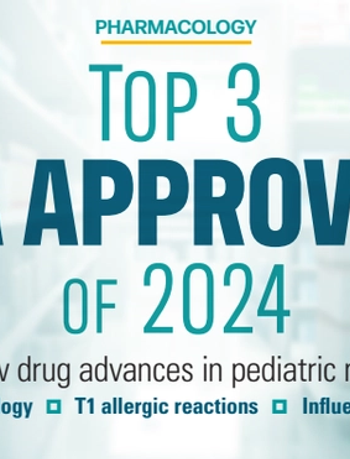
From new topical dermatology treatments for atopic dermatitis to the first nasal spray to treat type 1 allergic reactions, these are our top FDA approvals of 2024.

Currently, golimumab is approved in adults with moderately to severely active ulcerative colitis.

Greg Forlenza, MD, offers practical advise for primary care providers regarding continuous glucose monitors and automatic insulin delivery systems.
The federal agency has set a target action date of June 10, 2025 for potential approval.
According to Galderma, approval is based on positive results from the phase 3 ARCADIA clinical trial program.

"I really hope this becomes a first-line agent that people are comfortable prescribing whether they are in dermatology, pediatric dermatology, or primary care."

A discussion of the evolving landscape of diabetes technology and its implications for primary care providers.

The halt follows a severe respiratory disease safety signal observed in a July 2024 phase 1 trial of Moderna's mRNA-1345 and mRNA-1365 vaccine candidates.