

Study findings underscore the effectiveness of a dual approach to RSV prevention.

Joshua Fitch is the senior editor for Contemporary Pediatrics. He joined the brand in March of 2023 as an editor before being promoted to senior editor in January 2024. Fitch graduated from Youngstown State University in Youngstown, Ohio in 2020 with a degree in telecommunications and journalism. He started his career as a news and sports videographer before becoming an on-air sports anchor at the NBC-affiliated news station in Youngstown. Fitch briefly worked as a national content writer for a Chicago-based national television station before joining the Contemporary Pediatrics team. He can be reached at: [email protected].
Study findings underscore the effectiveness of a dual approach to RSV prevention.
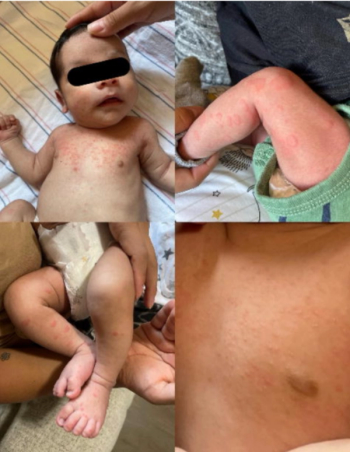
Can you diagnose this patient in our most recent puzzler poll?

Sanjiv Harpavat, MD, PhD, FAAP, lead author of a clinical report recently released by the AAP on identifying infants with biliary atresia, joined to discuss the report and guidance for primary care.

0.05% atropine was associated with a higher incidence of mild side effects, though it was more effective in controlling myopia progression compared to 0.01% atropine or placebo.

90-day interim biopsy data in the first 3 patients revealed an average microdystrophin expression of 110% and improvements in muscle health and resilience biomarkers.

Nurse practitioner Donna Hallas, PhD, PPCNP-BC, CPNP, PMHS, FAANP, FAAN offers her thoughts on the recent FDA approval of GSK's meningococcal ABCWY vaccine.

Get caught up with Contemporary Pediatrics! This list helps you navigate our top stories from the week, all in one place.

The combination vaccine targets 5 groups of the bacteria Neisseria meningitidis (A,B,C,W, AND Y) that cause the most invasive meningococcal disease cases (IMD) globally.
The federal agency has approved Merilog (insulin-aspart-szjj) as biosimilar to Novolog (insulin aspart) for the improvement of glycemic control in adults and pediatric patients with diabetes mellitus.

Genetic research is revealing that up to 35% of cerebral palsy cases have an identifiable genetic cause, leading to earlier diagnoses and potential precision medicine treatments.

Higher physical activity and lower screen time in childhood were linked to reduced stress and depression in adolescence, according to a Finnish cohort study.

Peter S. Jensen, MD, comments on the challenges primary health care providers may face when it comes to mental health treatment in pediatrics, and provides screening tools to consider to combat these challenges.

Ensoma's lead program, EN-374, has been granted a pair of FDA designations for the treatment of X-linked chronic granulomatous disease.
The new risdiplam tablet is suitable for those aged 2 years and older who weigh more than 44 lbs, according to Genentech.

In this discussion, leading experts weigh in on the importance of scientific integrity, proactive advocacy, and the crucial role of vaccinations in pediatric health.
Get caught up with Contemporary Pediatrics! This list helps you navigate our top stories from the week, all in one place.

The investigational biologic targets the interleukin-2 receptor complex in the body in order to stimulate proliferation of inhibitory immune cells.

Cyclo Therapeutics has enrolled 10 patients in a single-arm sub-study treating newborns to 3 years of age, evaluating the Trappsol Cyclo in the youngest subsets.

The FDA is warning diabetes patients that information from CGMs, insulin pumps, and automated dosing systems could fail to be delivered if smartphone settings are not properly configured.
The designations follow the FDA acceptance of IND application for ABO-101 to treat PH1, with a phase 1/2 study planned in the first half of 2025.

The primary and all key secondary endpoints were met compared to cream vehicle in the phase 3 DELTA TEEN trial.
Application submission is based on positive phase 3 data that demonstrated improvement in patients with type 2 and 3 SMA receiving current standard of care.
As a biosimilar to Actemra, tocilizumab-anoh in both IV and SC formulation is approved to treat rheumatoid arthritis, pJIA, sJIA, COVID-19, and giant cell arteritis.
Get caught up with Contemporary Pediatrics! This list helps you navigate our top stories from the week, all in one place.
The past year saw a number of approvals adding to the toolbox for atopic dermatitis, including new formulations that work in new mechanisms.

According to a new study, racial and ethnic disparities were evident when counseling on nutrition, lifestyle, and weight among children with high blood pressure measurements.

Tina Tan, MD, FAAP, FIDSA, FPIDS, discusses the severity of the current respiratory virus season and stresses the importance of vaccinations to protect against influenza, COVID-19, RSV, and more.

Editor-in-chief Tina Tan, MD, FAAP, FIDSA, FPIDS, highlights the January/February, 2025, issue of Contemporary Pediatrics.

Nurse practitioner Donna Hallas, PhD, PPCNP-BC, CPNP, PMHS, FAANP, FAAN underscores how critical simple, but factual, conversations can be with parents when it comes to pediatric care.

The patient had increased her vape use recently, but did not disclose when she started, or how much she vaped.