

New research has led to the Centers for Disease Control and Prevention revising recommendations for distancing in schools from 6 to 3 feet in most situations.
Ms. Hester is Content Specialist with Contemporary OB/GYN and Contemporary Pediatrics.
New research has led to the Centers for Disease Control and Prevention revising recommendations for distancing in schools from 6 to 3 feet in most situations.

An investigation examines whether using a brief behavior therapy program could be a highly effective way to treat anxiety and depression in pediatric patients.

Some cases of multisystem inflammatory syndrome in children (MIS-C) can have severe outcomes. An investigation examined if certain demographic and clinical characteristics are linked to those outcomes.

A meta-analysis examines whether the umbilical cord management strategy used in preterm infants has an effect on mortality and morbidity.

Headache following concussion is not unusual, but could the type help indicate which cases may be prolonged?

Reducing access to guns in the home is a key way to prevent accidental injury and death. A report indicates that many parents may not be fully aware of their child’s access to firearms in the home.
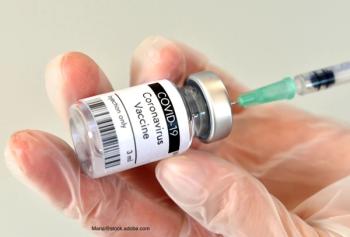
Moderna announces beginning of coronavirus disease 2019 (COVID-19) vaccine trial that include children aged 6 months to >12 years.
Teenagers are a very social group and the pandemic has severely restricted the ability to socialize. A new poll examines the impact of this restriction.

Andrew J. Schuman, MD, FAAP, discusses talking with patients and their families about a variety of nutrition topics including eating disorders and obesity.

An investigation examines whether a key report on global health trends is hugely underestimating eating disorder cases.

Contemporary Pediatrics sat down with Andrew J. Schuman, MD, FAAP, about the lessons learned in the pandemic and what his thoughts are about when it might end.

The push to responsibly use antibiotics has led to shorter treatment courses when the efficacy is similar to a longer one. A study examines whether shorter courses could be effective in treating community-acquired pneumonia.

In this morning’s briefing, the Infectious Diseases Society of America (IDSA) addressed the safety of returning to school and what the future may hold for pediatric vaccination for coronavirus disease 2019.

Coronavirus disease 2019 (COVID-19) is more than a disease that attacks the respiratory system. An investigation examines the neurologic involvement during COVID-19.
Prescription opioid misuse has been linked to suicidality. A study examines whether the timing of the misuse, either past or current, has an impact.

Unfortunately, disparities in health care are nothing unusual. A report examines if there are disparities in attention-deficit/hyperactivity disorder (ADHD) diagnosis and treatment due to race and ethnicity.
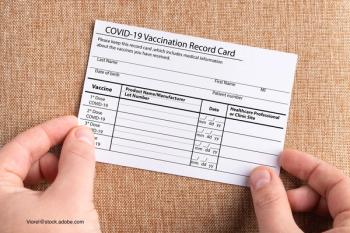
The Centers for Disease Control and Prevention (CDC) has issued interim guidance for masking, social distancing, hand hygiene, and other infection control measures for people who are fully vaccinated for coronavirus 2019 disease (COVID-19).
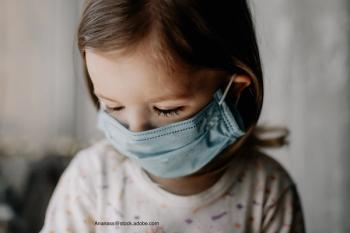
Many mask mandates don’t require young children to wear masks. A new investigation indicates that young children can wear masks without any respiratory distress.

Poverty is connected to a number of negative health outcomes. An investigation examines whether receiving a home eviction during pregnancy is linked to adverse birth outcomes, a determinant of a child’s lifelong health.

In a briefing this morning, the Infectious Diseases Society of America (IDSA) stressed the continued importance of coronavirus 2019 disease (COVID-19) control measures that have been there from the start.

Previous research has shown that type 1 diabetes can impact the brain. A study examines whether this impact can persist or even worsen.

School closures were seen as a key way to prevent the spread of coronavirus disease 2019 (COVID-19), but were there other methods that would have been more effective and less harmful?

The US Food and Drug Administration (FDA) has approved the first treatment for the rare genetic disorder Molybdenum Cofactor Deficiency Type A.
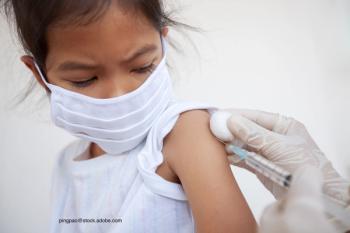
A safe coronavirus 2019 disease (COVID-19) vaccine that can be administered to most of the pediatric population is a necessity for ending the pandemic, but trials for younger children have not occurred. The president of the American Academy of Pediatrics (AAP) wrote to key COVID-19 officials about the need to change this.

An investigation examines how work schedules for resident-physicians can impact safety for those in their care.

A case series offers insight on how to separate multisystem inflammatory syndrome in children (MIS-C) and severe acute coronavirus 2019 disease (COVID-19).
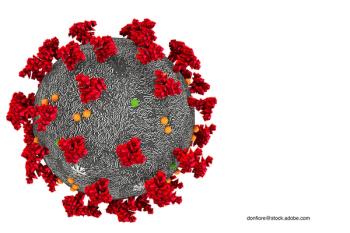
The US Food and Drug Administration (FDA) discussed its latest drug and testing efforts to respond to coronavirus 2019 disease.
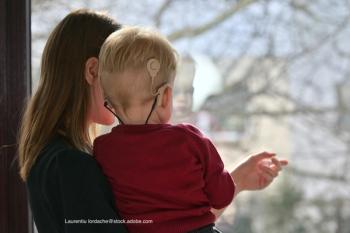
The lockdowns caused by the pandemic have led to many potential negative effects on children. An investigation looks into how they’ve impacted the exposure to spoken language for children with cochlear implants.

Do school-based vision screenings and eyeglass delivery programs increase eyeglass wearing in children? An investigation offers some answers.

A report offers much needed information on whether very young children are at greater risk of having a severe disease course of coronavirus 2019 (COVID-19).