
Children in the United States are consuming as much sodium as adults and like adults are at increased risk for high blood pressure and cardiovascular disease, according to researchers from the Centers for Disease Control and Prevention. More >>
Children in the United States are consuming as much sodium as adults and like adults are at increased risk for high blood pressure and cardiovascular disease, according to researchers from the Centers for Disease Control and Prevention. More >>
Adolescents who use their cell phones to send or receive sexually explicit messages and photos, called “sexting,†may perceive the activity as a safe alternative to real-life sexual encounters, but researchers have found that these children are at increased risk for other dangerous sexual behaviors. More >>
Infants acetaminophen, 80 mg/0.8 mL, was taken off the market early in 2012, and most pharmacies now only carry the 160 mg/5mL concentration. The label, however, does not provide instruction on how to administer an infant dose. Here, another major problem plus simple measures to prevent under- or over-dosing.
The US Food and Drug Administration (FDA) has approved a new pediatric dosage form of everolimus for the treatment of subependymal giant cell astrocytoma (SEGA), a rare brain tumor in children. More >>
Adolescents with metabolic syndrome have significantly lower cognitive performance and reductions in brain structural integrity, New York University researchers have found. Can these impairments affect a teenager’s academic or future professional potential? More >>
Children aged between 1 and 17 years should not take sildenafil for pulmonary artery hypertension, a MedWatch safety communication from the US Food and Drug Administration (FDA) warns. More >>
The Centers for Disease Control and Prevention says that when it comes to measles, mumps, and rubella and varicella vaccination of children entering school, coverage is still not quite where it needs to be. Find out which states are the leaders and which states lag behind. More >>

This child's mother was worried that these lesions were sexually transmitted. What's your suspicion?
The mother of this 4-year-old girl was concerned that these lesions were sexually transmitted. The physician recognized them as molluscum, but was uncertain of the potential relationship of this rash to child abuse.
New guidelines issued by the American Academy of Pediatrics (AAP) call for, among other things, screening all children for obstructive sleep apnea. What prompted these guidelines, and will you add this screening to your exams?
A new study finds that infantile hemangiomas begin growing much faster and earlier than previously thought, which means evaluation and treatment are occurring too late. Find out what experts now recommend.
Up to two-thirds of mothers of critically ill newborns in neonatal intensive care units (NICUs) believe their children are less sick than their treating physicians indicate. How can you optimize communication in this most stressful setting?
Influenza complications hit some children especially hard. Which group had a particularly high rate of influenza-related death in 2009?
It seems yet another reason exists not to overprescribe antibiotics, particularly in infancy. And still something else that may contribute to the childhood obesity epidemic.

Infants and toddlers will put just about anything into their mouths. And foreign objects in the GI tracts of children and teens may not be the result of sexual abuse.
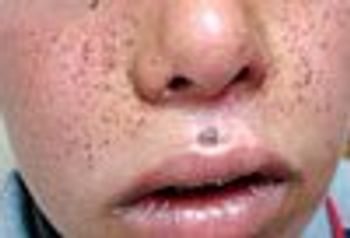
The mother of this 10-year-old boy insists that he has "acne," which started when the boy was a baby. More details here...
A study finds that children exposed to anesthesia before their third birthdays are at higher risk for neuropsychological deficits later in childhood.
Centers for Disease Control and Prevention (CDC) recommendations for the 2012-2013 flu season include an updated vaccination schedule for children aged 6 months through 8 years.
Investigators assessed the efficacy of oral immunotherapy in children with egg allergy in inducing "sustained unresponsiveness" to egg allergen, a greater clinical effect than "desensitization."
The father of a healthy 3-year-old girl begs you to help with a bleeding bump on her left cheek. It has been present for a few weeks but in the last 2 days has bled profusely on 3 occasions for more than 30 minutes each time.
A survey of a large group of Australian schoolchildren when they were aged 12 years and again at 17 years found that levels of physical activity and of sedentary behaviors are associated with health-related quality of life (QOL), which includes physical, mental, and social well-being.
To prevent the morbidity and mortality associated with emergency complications of sickle cell disease, it's important that providers recognize the signs and interpret what lab and imaging results mean.
You are doing a pediatric nephrology rotation. It is late in the evening, and you're just about to leave for home when your pager goes off. You answer the call and learn about a 5-week-old girl who was seen in the orthopedic clinic that afternoon for developmental dysplasia of the hip (DDH).
Children with autism who require emergency medical care have special needs clinicians must address before beginning treatment. Resources and strategies are available to help you coordinate such care in your setting.
Investigators set out to determine whether plasma levels of follistatin-like protein 1 (FSTL-1), which is produced by cardiac myocytes, correlate with Kawasaki disease (KD) and acquired coronary artery aneurysms (CAA), of which KD is a major cause.
Once confused with other gastrointestinal disorders, cyclic vomiting syndrome can be diagnosed using specific criteria instead of extensive confirmatory testing.
A number of studies show that some school-based interventions for the prevention of childhood obesity can be effective, says a draft review from the Agency for Healthcare Research and Quality (AHRQ), the key federal agency charged with improving quality and effectiveness in health care.
Life expectancy has increased markedly for children diagnosed with type 1 diabetes, to the point that estimated life expectancy of patients diagnosed between 1965 and 1980 is only about 4 years less than that of the general US population.
The medical home is a familiar concept to pediatricians. In recent years its definition has been made more formal and more comprehensive, but it is nearly always linked to an environment of primary care in the outpatient setting.
Most children survive serogroup B meningococcal disease without major sequelae. British researchers report, however, that about 10% of children who have had meningococcal infection experience major disabling deficits. What screening is needed for survivors of meningococcal disease? More >>