Real-world claims show dupilumab was tied to a 33%-52% lower risk of atopic march progression vs systemic corticosteroids in children with AD.
New guidance from the American Academy of Dermatology outlines evidence-based strategies for preventing and managing atopic dermatitis in children.
The American Academy of Dermatology (AAD) has published its first guidelines for preventing and managing atopic dermatitis (AD) in children younger than 18 years.1
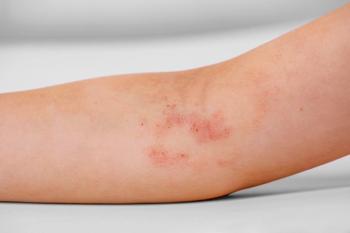
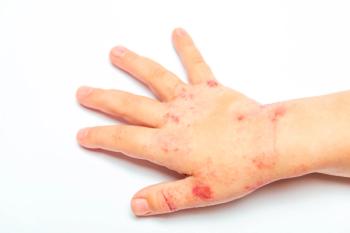
There are many similarities between adult and pediatric AD, but the new guidelines acknowledge unique safety, dosing, and patient-caregiver-clinician interactions that occur in the latter group. Up to 25% of children worldwide are impacted by AD, highlighting its global burden.
“Eczema is extremely common in children, though it doesn’t always look or behave the same way it does in adults,” said Murad Alam, MD, FAAD, AAD president and board-certified dermatologist. “Because eczema can decrease the quality of life of children and their families, we need dedicated guidelines just for children to ensure their best care.”
For preventing AD, the guidelines highlight limitations in current options available. Research has indicated no proven benefit from supplemental therapies such as special diets or skipping baths. In children aged 6 months to 3 years, only moisturizers have received a conditional recommendation for use to reduce AD events.
The guideline authors noted that conditional recommendations are given to therapies with closely balanced risks and benefits. While applicable in most patients, the patient and presentation may influence which action is most appropriate.
Dietary and environmental interventions were also discussed in the guidelines.2 However, these interventions—including human milk consumption, early food introduction, dust mite avoidance, water softening, and probiotic or vitamin D supplementation—showed no benefit or had insufficient evidence to be supported.1
Treatment strategies were also highlighted in the guidelines. While standard treatment options such as moisturizing remain effective for treating pediatric AD, there are more treatments than ever before, 26 of which were highlighted. These include topical therapies, phototherapy, and systemic therapies.
Beyond moisturizers to reduce itch severity, topical calcineurin inhibitors were highlighted as an option for managing flares when dry, itchy skin worsens. These therapies can be used for intermittent maintenance.
Topical corticosteroids were recommended as a first-line treatment because of their affordability and accessibility, making them convenient for maintenance. To reduce the frequency of flares, the guideline recommends phosphodiesterase-4 inhibitors.
In children with mild to moderate AD, topical Janus kinase (JAK) inhibitors may be used for itch reduction. Those with mild, moderate, or severe AD can reduce itch severity and inflammation using topical aryl hydrocarbon receptor agonists.
Finally, the guidelines highlighted monoclonal antibodies and JAK inhibitors as treatment methods. Both groups of therapies may be used to decrease symptom severity and improve itching in patients with moderate to severe AD. Additionally, the former can be used to reduce flares.
Conditional recommendations were also discussed in the guidelines. These recommendations were made for bathing, wet wrap therapy, and phototherapy.
According to the guidelines, bathing can be used as management in children but should be followed by moisturizer as standard care. Wet wrap therapy should be used under the guidance of a health care professional with experience managing AD in their patients and is typically recommended for use during flares.
Phototherapy was recommended to treat patients with severe AD presenting at many body sites. However, it should be performed at a dermatologist’s office. Overall, the guidelines highlighted ways to empower patients and caregivers and optimize care.
“Since 2014, the landscape for eczema care has been transformed by the approval of new therapies for adults. Our goal was to review how these advancements relate to the pediatric population so children also receive optimal, individualized care,” said Dawn Davis, MD, FAAD, cochair of the AAD’s Atopic Dermatitis Guideline Workgroup.
References