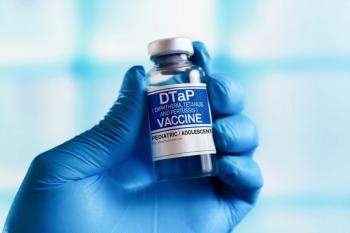
Johanna Chang, MD, offers guidance on vaccination, infection prophylaxis, and clinical warning signs in children receiving biologic therapies.
Bivalent COVID-19 vaccines by both Moderna and Pfizer-BioNTech are no longer authorized for use in the United States.
The FDA has approved and authorized for emergency use updated COVID-19 vaccines that are formulated to more effectively target the currently circulating COVID-19 variants. These updated approvals and authorizations apply to updated mRNA vaccines manufactured by both Moderna (Spikevax) and Pfizer (Comirnaty), which now include a monovalent component corresponding to Omicron variant XBB.1.5.
“Vaccination remains critical to public health and continued protection against serious consequences of COVID-19, including hospitalization and death,” said Peter Marks, MD, PhD, director of the FDA Center for Biologics Evaluation and Research, in an agency news release.1 “The public can be assured that these updated vaccines have met the agency’s rigorous scientific standards for safety, effectiveness, and manufacturing quality. We very much encourage those who are eligible to consider getting vaccinated.”
The FDA first advised manufacturers in June 2023 that COVID-19 vaccines should be updated to a monovalent composition targeting XBB.1.5 for the 2023-2024 vaccination season.2,3
Clinical data presented by Moderna at the June Vaccines and Related Biological Products Advisory Committee (VRBPAC) meeting demonstrated that the company’s updated vaccine “resulted in robust immune responses across multiple XBB sublineages, including XBB.1.5 and XBB.1.16,” a company news release noted.2 In August, Moderna announced additional clinical trial data showing that the vaccine elicited an immune response against EG.5 and FL.1.5.1, the current dominant variants; trial data shared at the beginning of September confirmed that an immune response was also elicited against BA.2.86.
Approval of the updated Pfizer-BioNTech vaccine is “based on the full body of previous clinical, nonclinical, and real-world evidence supporting the safety and efficacy of the COVID-19 vaccines,” a Pfizer press release noted.3 The application also included preclinical data demonstrating that this season’s vaccine “substantially improved responses against multiple Omicron XBB-related sublineages,” which include XBB.1.5, XBB.1.16, and XBB.2.3, compared with the Omicron BA.4/BA.5-adapted bivalent vaccine. Preclinical data also show that serum antibodies induced by this new monovalent vaccine “effectively neutralize the recently emerged Omicron BA.2.86 (Pirola) and globally dominant Omicron-related Eg.5.1 (Eris) subvariants.”3
According to the FDA, approval of these updated mRNA vaccines was supported by the agency’s evaluation of manufacturing data and nonclinical immune response data from the updated formulations. Data from recent studies have shown that the extent of neutralization against currently circulating viral variants—including EG.5 and BA.2.86—“appears to be of a similar magnitude to the extent of neutralization observed with prior versions of the vaccines against corresponding prior variants against which they had been developed to provide protection.”
These data, the agency continued, “suggest that the vaccines are a good match for protecting against the currently circulating COVID-19 variants.”1
The updated mRNA vaccines are approved for individuals aged 12 years and older. They are also authorized under emergency use for individuals aged 6 months to 11 years of age. Importantly, the bivalent COVID-19 vaccines by both Moderna and Pfizer-BioNTech are no longer authorized for use in the United States.1
The FDA outlined eligibility for these new vaccines, summarized below:
“COVID-19 remains a leading cause of death in the US and poses a significant threat to vulnerable populations, particularly as we enter peak respiratory virus season,” said Moderna CEO Stéphane Bancel, in a company news release.2 “As the primary circulating strain continues to evolve, updated vaccines will be critical to protecting the population this season.”
“This decision comes at a time when COVID-19 cases are once again climbing,” said Pfizer Chairman and CEO Albert Bourla in a news release.3 “We expect this season’s vaccine to be available in the coming days.”
“Studies about confirmed viral infections suggest that COVID-19 adopts a seasonal pattern with peaks in fall and winter, similar to other respiratory viruses,” added Ugur Sahin, MD, CEO and cofounder of BioNTech.3 “Our goal is to provide people worldwide with COVID-19 vaccine that are adapted to circulating virus variants or sublineages.”
Vaccine manufacturers have announced that the updated vaccines will be ready this fall. The CDC’s Advisory Committee on Immunization Practices is scheduled to meet on Tuesday, September 12, to discuss clinical recommendations around who should receive an updated vaccine and considerations for specific populations such as immunocompromised and older individuals.