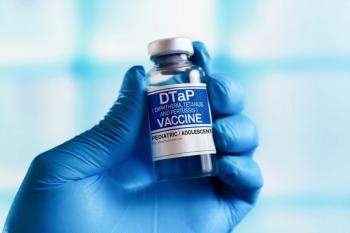
Completing the DTaP primary series was 96.2% effective against pertussis in Alaska children aged 6 months to 6 years during a record 2024 outbreak.
Review some of the top stories from the Contemporary Pediatrics website over the last week, and catch up on anything you may have missed.
Thank you for visiting the Contemporary Pediatrics® website. Take a look at some of our top stories from last week (Monday, September 21 to Friday, September 25, 2026) and click each link to read and watch anything you may have missed.
A study led by Audrey Brewer, MD, of Ann & Robert H. Lurie Children's Hospital of Chicago, published in Annals of Emergency Medicine, found that suicide-related emergency department visits among US children climbed from 224,850 to 391,491 between 2016 and 2022, a 74% increase. Overall pediatric mental health visits rose a more modest 24% over the same period, from 668,054 to 858,638. About half of the suicide-related visits occurred at lower-volume EDs, and nearly 30% of children with mental health conditions seen at the lowest-volume sites needed transfer to another facility; the analysis also found Black and Hispanic children had higher odds of presenting to high-volume EDs, while Native American children had lower odds.
The authors cautioned that the 74% figure reflects visit counts rather than unique children, that diagnosis coding may misclassify some cases, and that the data cannot explain why visits rose or account for childhood adversity factors.
The FDA granted Priority Review to Genentech's satralizumab (Enspryng) for myelin oligodendrocyte glycoprotein antibody-associated disease (MOGAD) in patients 12 years and older, with a decision expected by January 10, 2027. In the phase 3 METEOROID trial, satralizumab cut relapse risk by 68% compared with placebo, and 87% of treated patients remained relapse-free at 48 weeks versus 67% on placebo. MOGAD affects an estimated 0.51 to 3.42 people per 100,000, and no FDA-approved therapy currently exists for the condition.
The company's announcement did not include adverse-event rates, discontinuation data, or pediatric-specific safety findings, which the article notes limits assessment of the benefit-risk balance for adolescents, particularly those on concomitant immunosuppression.
A national claims analysis led by Justin Ryder, PhD, of Ann & Robert H. Lurie Children's Hospital of Chicago, examined 2,031 pediatric patients ages 10 to 17 prescribed GLP-1 receptor agonists (mostly liraglutide, at 78.6%) between 2017 and 2022. Nearly 17% developed a nutritional deficiency within a year of starting therapy, most often vitamin D deficiency (12.4%). Despite this, only 5% of patients received nutritional counseling within 30 days of starting the medication, and fewer than 25% had received counseling by 6 months.
The authors noted that claims data capture diagnosis codes rather than confirmed lab deficiencies in every case, cannot account for baseline diet or supplement use, and cannot fully separate deficiency risk attributable to the medication from that of underlying obesity or diabetes.
A post hoc analysis of an open-label extension study, presented by Amélie Lothe, PhD, of UCB, followed 151 patients ages 2 to 35 with Lennox-Gastaut syndrome for 12 months on fenfluramine. Among the 59 patients who transitioned from placebo, median seizure reduction reached 32.1% by month 1 and climbed to 48.2% by months 4 to 6 as doses were optimized. By month 12, 52.6% of patients showed clinically meaningful improvement in global functioning by caregiver rating (46.3% by investigator rating). Adverse events such as decreased appetite, somnolence, fatigue, and diarrhea increased initially but generally eased over time.
Because titration in the study was not standardized, the authors noted it may differ somewhat from routine clinical practice, and they recommend evaluating effectiveness over at least 4 months to allow for adequate dose optimization.
The Infectious Diseases Society of America issued an updated component of its histoplasmosis treatment guidance on September 16, 2026, marking the first comprehensive revision since the original 2007 guideline. The new release includes a consensus statement on initial antifungal treatment for severe histoplasmosis, covering both severe pulmonary and disseminated disease, and addresses when pediatric patients with pulmonary infection should start itraconazole therapy. It follows two earlier updates from March 2025 that addressed asymptomatic pulmonary nodules and mild-to-moderate acute pulmonary cases.