New ecopipam analyses show tic reduction within 8 weeks and sustained to 18 months in Tourette syndrome as the FDA weighs approval.
If approved, the expanded indication would make roflumilast cream 0.05% the first once-daily, steroid-free topical PDE4 inhibitor approved specifically for this age group.
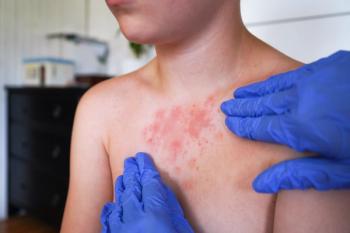
The FDA has accepted a supplemental new drug application (sNDA) for roflumilast cream 0.05% (ZORYVE; Arcutis Biotherapeutics) seeking to expand its indication for mild to moderate atopic dermatitis (AD) to infants aged 3 to 24 months, with a PDUFA target action date of February 23, 2027.1
If approved, the expanded indication would make roflumilast cream 0.05% the first once-daily, steroid-free topical phosphodiesterase 4 (PDE4) inhibitor approved specifically for this age group—a population of approximately 1 million children in the US who are currently treated topically for AD with few purpose-built approved options.
"Infants with atopic dermatitis are particularly vulnerable to burdensome symptoms such as intense itch and sleep disruption, which can impact the whole family. There is a significant unmet need in this population for therapies that can be used anywhere on the body for any duration of time, including on sensitive areas such as the face and skin folds. If approved, ZORYVE cream 0.05% could provide clinicians and caregivers with an important new steroid-free treatment option that was specifically developed for infants and very young children,” said Lawrence F. Eichenfield, MD, of Rady Children's Hospital San Diego and the University of California San Diego School of Medicine, an investigator in the INTEGU-MENT-INFANT trial, in a news release from Arcutis. "1
The sNDA is supported by 2 open-label studies: the phase 2 INTEGUMENT-INFANT trial (n = 101 infants aged 3 months to less than 24 months with mild to moderate AD) and a phase 1 pharmacokinetic (PK) study enrolling 19 infants in the same age range.1 Both studies evaluated once-daily roflumilast cream 0.05% applied to affected areas for 4 weeks. Neither study included a placebo or vehicle-controlled arm; the regulatory package instead positioned the infant PK and safety profiles against prior data from controlled trials in children aged 2 to 5 years.
Among the 96 infants who completed 4 weeks of treatment in INTEGUMENT-INFANT, 34.4% achieved Validated Investigator Global Assessment for Atopic Dermatitis (vIGA-AD) success—defined as a score of 0 (Clear) or 1 (Almost Clear) with at least a 2-grade improvement from baseline.1 In addition, 58.3% achieved at least a 75% reduction from baseline in Eczema Area and Severity Index (EASI-75) at Week 4, with 34% reaching EASI-75 as early as Week 2. Among the 40 infants who had at least mild scalp involvement at baseline, 67.5% achieved vIGA-scalp success at Week 4. Caregiver-reported pruritus outcomes were also favorable, with 46.6% of infants showing at least a 25% improvement in itch within 10 minutes of application at Week 4, as measured by the Dynamic Pruritus Scale.
The safety profile observed in INTEGUMENT-INFANT was consistent with that seen in prior roflumilast cream 0.05% studies in children aged 2 to 5 years, with no new safety signals identified.1 The most commonly reported adverse events through 4 weeks included diarrhea, nasopharyngitis, upper respiratory tract infection, and vomiting. The cream formulation used in INTEGUMENT-INFANT does not contain propylene glycol, polyethylene glycol, ethanol, or fragrances, formulation characteristics of potential relevance for a population with a compromised epidermal barrier.
Atopic dermatitis affects approximately 9.6 million children in the United States, with up to 60% developing symptoms within their first year of life and approximately 90% by age 5.2 Infantile AD often presents with more widespread involvement than disease in older children, frequently affecting the face, scalp, and neck—areas where long-term topical corticosteroid use raises particular concerns about skin atrophy, hypothalamic-pituitary-adrenal axis suppression, and tachyphylaxis in a population with higher body-surface-area-to-weight ratios and thinner skin.
Current FDA-approved non-steroidal topical options for infants under 2 years are limited. Crisaborole ointment 2% (Eucrisa; Pfizer), a PDE4 inhibitor, is approved for mild to moderate AD in patients aged 3 months and older, having received that expanded indication in March 2020.3 Topical calcineurin inhibitors (tacrolimus and pimecrolimus) are not FDA-approved for patients younger than 2 years. Off-label TCI use in infants is practiced at some centers, supported by meta-analyses, but is not guideline-endorsed for this age group.4 The practical result is that most infants with AD are managed primarily with low-to-mid potency topical corticosteroids and emollient therapy, with prescribers navigating steroid-related concerns on a case-by-case basis.
Roflumilast is a selective PDE4 inhibitor that reduces intracellular cyclic AMP degradation in inflammatory cells, thereby decreasing production of pro-inflammatory cytokines including IL-4, IL-13, IL-31, and TNF-α—mediators central to the type 2 inflammatory axis implicated in AD pathogenesis.1
The sNDA for the infant indication is the seventh regulatory submission for roflumilast across its cream and foam formulations in just over three years.5 Current FDA-approved ZORYVE indications span plaque psoriasis (cream 0.3% in patients aged 2 and older; foam 0.3% in patients aged 12 and older), seborrheic dermatitis (foam 0.3% in patients aged 9 and older), and mild to moderate AD (cream 0.15% in patients aged 6 and older; cream 0.05% in children aged 2 to 5 years, approved October 6, 2025). Roflumilast cream 0.05% for children aged 2 to 5 years received a strong recommendation from the American Academy of Dermatology in updated 2025 AD guidelines.5
The proposed infant indication would lower the age threshold for roflumilast cream 0.05% from 2 years to 3 months—closing the gap between its current labeled population and the lower age boundary of crisaborole's approved use. The PK study supporting the sNDA was designed specifically to characterize drug exposure in infants, addressing the concern that neonatal and early infantile drug absorption, distribution, and clearance patterns may differ materially from those in toddlers.
References
1. Arcutis Biotherapeutics, Inc. FDA accepts supplemental new drug application for Arcutis' ZORYVE (roflumilast) cream 0.05% for the treatment of mild to moderate atopic dermatitis in infants down to 3 months. Press release. July 8, 2026. Accessed July 8, 2026. https://investors.arcutis.com/news-releases/news-release-details/fda-accepts-supplemental-new-drug-application-arcutis-zoryver-0
2. Eichenfield LF, Tom WL, Berger TG, et al. Guidelines of care for the management of atopic dermatitis: section 2. Management and treatment of atopic dermatitis with topical therapies. J Am Acad Dermatol. 2014;71(1):116-132. doi:10.1016/j.jaad.2014.03.023
3. US Food and Drug Administration. FDA approves new treatment for atopic dermatitis in younger patients. Press release. March 26, 2020. Accessed July 2026. https://www.fda.gov/news-events/press-announcements/fda-approves-new-treatment-atopic-dermatitis-younger-patients
4. Draelos ZD, Lain T, Webster DE, Fowler JF Jr. Topical calcineurin inhibitors in infantile atopic dermatitis: a systematic review and meta-analysis of randomized controlled trials. J Drugs Dermatol. 2020;19(11):1021-1028. doi:10.36849/JDD.2020.5267
5. Drugs.com. Zoryve (roflumilast) FDA approval history. Accessed July 2026. https://www.drugs.com/history/zoryve.html
6. Eichenfield LF, Stein Gold L, Torsekar R, et al. Roflumilast cream 0.05% in children (2 to 5 years of age) with atopic dermatitis: results from the phase 3 INTEGUMENT-PED randomized controlled trial. JAMA Dermatol. 2025;161(1):36-44. doi:10.1001/jamadermatol.2024.4521