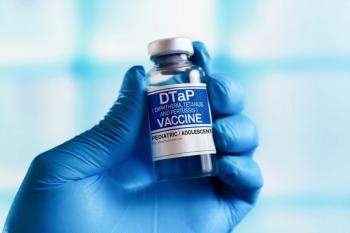
Completing the DTaP primary series was 96.2% effective against pertussis in Alaska children aged 6 months to 6 years during a record 2024 outbreak.
In this episode of Infectious Insights, our host Tina Tan, MD, is joined by Juan C. Salazar, MD, to discuss the rise in measles cases, vaccine hesitancy, and more.
Rising measles cases in the United States are increasing pressure on pediatricians to reinforce vaccination guidance and identify infections early, according to infectious disease experts featured on the Infectious Insights podcast.
During the discussion, hosted by Contemporary Pediatrics Editor-in-Chief Tina Tan, MD, FIDSA, FPIDS, FAAP; guest Juan C. Salazar, MD, MPH, James C. Overall professor and chair of the Department of Pediatrics and system pediatrician-in-chief ofMonroe Carell Jr. Children’s Hospital at Vanderbilt, highlighted the growing impact of measles outbreaks on pediatric practice.
“As of May 7, 1,842 confirmed cases have been reported in 2026 and 2,002 88 cases in 2025,” Tan said during the podcast, noting that most reported cases occurred in unvaccinated individuals or those with unknown vaccine status.1
Salazar described the resurgence of measles as “a real problem,” adding that pediatric trainees historically rarely encountered the disease because of successful vaccination efforts.
“The numbers now are astonishing. I mean, this is really unbelievable,” Salazar said. “And kids who actually have died of measles is very, very sad.”
Salazar emphasized that pediatricians continue to play a central role in counseling families about vaccines, particularly amid increasing parental anxiety surrounding vaccine safety, travel, and school exposure risks.
“The good news that we've heard is that you, as a pediatrician, and the pediatricians are still the trusted advisors for the parents,” he said.
He encouraged clinicians to continue discussions with families directly during office visits, describing those conversations as more effective than public commentary or media messaging.
“The most effective way is for you, as the pediatrician, when you have that mom, when you have that father, when you have the teenager, that you talk about vaccines and you share the importance of the vaccines,” Salazar said.
The podcast also focused on the economic and clinical impact of delaying hepatitis B vaccination in newborns. Tan reviewed evidence showing that universal birth-dose vaccination reduced hepatitis B infections in infants, children, and adolescents by 99%.2
Salazar said pediatricians in his region continue to follow longstanding American Academy of Pediatrics recommendations for universal newborn hepatitis B vaccination despite changes discussed during a December 2025 Advisory Committee on Immunization Practices meeting.3
“The majority of the providers in the region have continued to use the newborn hepatitis B vaccine as we have always done it,” Salazar said. “It's the best time to catch them.”
He added that some parents are now declining both hepatitis B vaccination and vitamin K administration for newborns, creating additional challenges for pediatricians and newborn hospitalists.
“It is essentially impossible to have complete knowledge of maternal status at the time of delivery,” Salazar said. “So, the easiest way to make sure that we change the dynamic, which worked, and you pointed out the numbers, there were very few. To, if any, cases of hepatitis B in babies with this practice.”
The discussion concluded with guidance on seasonal infectious diseases, including tick-borne, mosquito-borne, and waterborne illnesses.
Salazar encouraged pediatricians to counsel families about prevention strategies ahead of summer travel and outdoor activities.
“The best way to do this is to avoid the tick bite,” he said while discussing Lyme disease prevention.
He also noted that changing climate patterns and population movement may increase exposure to illnesses previously uncommon in some US regions.
“With the changing climate, we're beginning to see things that in the past we would not have seen in the United States,” Salazar said.
Salazar emphasized that preventive counseling should include guidance on insect repellents, protective clothing, safe water practices, and awareness of regional infectious disease risks.