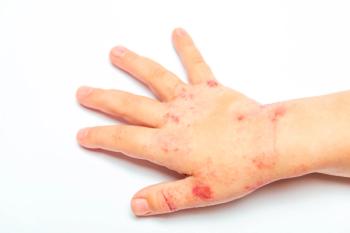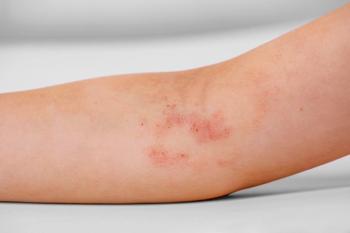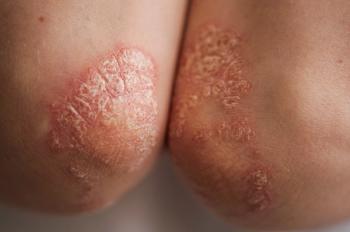
Oral icotrokinra sustained scalp, genital, and hand/foot psoriasis clearance through week 112 in ICONIC-TOTAL, with no new safety signals.
The FDA has approved bemotrizinol as the first new active sunscreen ingredient under the OTC monograph in nearly two decades, clearing the broad-spectrum UV filter for use in adults and children 6 months of age and older.
American consumers have long had fewer sunscreen filter options than their counterparts in Europe and much of the world. That disparity narrowed meaningfully on June 9, 2026, when the FDA finalized an administrative order adding bemotrizinol to the over-the-counter (OTC) sunscreen monograph—the first new active ingredient to be added since the late 1990s.¹ The FDA determined bemotrizinol to be generally recognized as safe and effective (GRASE) at concentrations up to 6% for use in sunscreen products by adults and children 6 months of age and older.¹
"As promised in the Trump Administration's MAHA Strategy Report, HHS is advancing innovation by bringing a new sunscreen ingredient to the US market for the first time in 20 years," said HHS Secretary Robert F. Kennedy, Jr. "Bemotrizinol has been used safely in Europe for decades, and FDA's action will increase competition and consumer confidence in sunscreen products."¹
The final order follows an OTC monograph order request submitted by DSM Nutritional Products LLC, which markets bemotrizinol under the trade name PARSOL Shield. DSM requested the addition of bemotrizinol at concentrations up to 6% as a permitted sunscreen active ingredient.¹ The FDA issued a proposed order on December 12, 2025, accepted public comments through January 26, 2026, and finalized the order within seven months, a timeline that reflects the streamlined administrative order process established by the CARES Act.¹ Bemotrizinol is the first new ingredient added to any OTC monograph under that process.¹
"This is exactly the kind of progress we can achieve when we modernize our processes and apply sound science to regulatory decisions," said Mike Davis, MD, PhD, acting director of the FDA Center for Drug Evaluation and Research (CDER).¹
Bemotrizinol is a synthetic broad-spectrum UV filter that absorbs radiation across both the UVB (280–320 nm) and UVA (320–400 nm) ranges, converting absorbed UV energy into heat that is then released from the skin.² It has been commercially available in Europe and many other countries for years, where regulators concluded it poses no skin irritation at concentrations up to 10%.³
Systemic absorption was a key focus of the FDA's GRASE review. In a pivotal open-label maximum usage trial (MUsT), plasma concentrations of bemotrizinol rarely exceeded the FDA's threshold of 0.5 ng/mL under maximal topical application conditions of a 6% formulation, with no evidence of drug accumulation.² Adverse events were few and predominantly mild.² An in vitro skin permeation test conducted prior to the MUsT supported those findings.² Taken together, the data indicate that maximal topical application of bemotrizinol at 6% does not result in clinically meaningful systemic exposure.²
"The FDA's rigorous standards ensure consumers can be confident in the sunscreens and other nonprescription drugs they use," said Karen Murry, MD, director of the Office of Nonprescription Drugs in CDER. "Now, through the best available science and updated regulatory framework, we can work with companies to get innovative products to market in a more efficient manner than ever before."¹
Skin cancer remains the most common cancer in the United States, with over 5 million cases diagnosed annually.⁴ The disease burden continues to grow, cases more than tripled between 1975 and 2021, and melanoma incidence has risen at an average rate of 1.1% per year over the past decade.⁴ Most skin cancers are associated with cumulative UV radiation exposure, and inadequate UVA protection has been identified as a persistent gap in the US sunscreen market.⁴
While the European Union has approved more than 30 UV filter ingredients, the US currently recognizes only a small number as GRASE.⁴ Bemotrizinol's addition is particularly relevant to closing the UVA protection gap: by providing durable, broad-spectrum coverage across both UV spectra, it may enable formulators to develop products that offer stronger UVA protection than many currently available domestic options.³ The ingredient's photostability, its resistance to degradation under UV exposure, is also considered an advantage over some existing filters that can break down during prolonged sun exposure.³
Although bemotrizinol has an established real-world safety record in Europe and has cleared FDA's GRASE threshold for systemic absorption, the agency and independent commentators have noted that long-term post-market surveillance in a broader US population will be important as use scales up.³ The current MUsT data were collected under controlled, maximal-use conditions; further evidence in pediatric subpopulations and in individuals with sensitive skin conditions may be warranted over time.
Manufacturers wishing to market sunscreens containing bemotrizinol can now do so under OTC monograph conditions without a separate drug application, provided their formulations meet the conditions, including the 6% concentration ceiling, established in the final order.¹ The FDA's action does not obligate any manufacturer to use the ingredient; competitive uptake will depend on formulation feasibility and consumer demand.