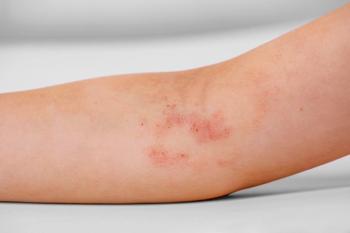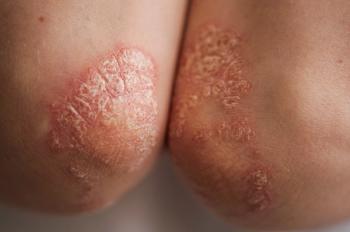
Real-world claims show dupilumab was tied to a 33%-52% lower risk of atopic march progression vs systemic corticosteroids in children with AD.
Lisa Swanson, MD, lays out the current JAK inhibitor landscape for pediatric AD.
Lisa Swanson, MD, lays out the current JAK inhibitor landscape for pediatric AD. Topical ruxolitinib is approved for mild-to-moderate disease in patients age 2 and up, while two oral JAK inhibitors, abrocitinib and upadacitinib, are approved for moderate-to-severe disease in patients age 12 and up. She calls these medications a genuinely valuable addition to the AD toolbox, noting that they work quickly and are particularly effective against itch — often the symptom driving the most disruption for patients and families.
To illustrate just how fast relief can come, Swanson cites data showing that topical ruxolitinib can begin improving itch in as little as 15 minutes after application — roughly the time it takes to watch two episodes of the children's show Bluey, she jokes. Across both topical and oral formulations, she frames JAK inhibitors as offering meaningfully faster relief than many pediatricians and families may expect, especially where itch has been difficult to control with other therapies. Understanding these age indications and relative speed of response, she suggests, helps pediatricians set realistic expectations for families and identify which patients are likely to benefit most from a referral built around this class of medication.
In the next episode, "Closing the Pediatric AD Referral Gap: What Specialists Need to See," Swanson turns to why so many families struggle to get a timely referral in the first place — and exactly what information helps a specialist visit move faster.