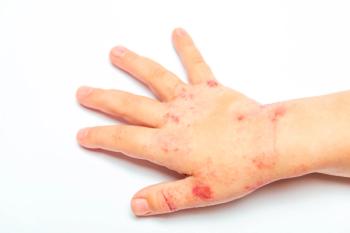
Real-world claims show dupilumab was tied to a 33%-52% lower risk of atopic march progression vs systemic corticosteroids in children with AD.
Ingrid Polcari, MD, highlights concerns with teen skin care trends and emphasizes simple, age-appropriate routines tailored to patient needs.
At the American Academy of Pediatrics 2025 National Conference & Exhibition, Ingrid Polcari, MD, associate professor of dermatology and pediatrics at the University of Minnesota, discussed the rise of complex skin care routines among adolescents.
In this Q and A with Contemporary Pediatrics, Polcari shared her concerns about retinol and acid-containing products in young patients, explained why simple routines are often best, and emphasized the importance of listening to teens’ goals when tailoring recommendations.
Contemporary Pediatrics: Social media often drives interest in new products. What are the most common skin care trends you’re seeing among adolescents, and how should clinicians address misinformation or unsafe practices?
Ingrid Polcari, MD: One of the trends I'm seeing the most is that teens are using many unnecessary skin care products. So one of the products that I have particular concern about is products that have retinol. Retinol is really meant for an adult age group but not for young skin. It can cause photosensitivity and also irritation.
Contemporary Pediatrics: Which ingredients in over-the-counter products are most concerning for adolescent skin, and what guidance can pediatricians provide to help families navigate product selection?
Polcari: Many of the over-the-counter products that tweens and teens are using have acids in them. Things like salicylic acid, glycolic acid, and these can be pretty irritating and harsh. So especially for kids who don't have a lot of oil in their skin yet, they can get lots of irritation from these.
Contemporary Pediatrics: How do you counsel adolescents on developing age-appropriate skin care routines that balance effectiveness with safety and affordability?
Polcari: The truth is that skin care routines don't have to be that complex. So if you're before puberty and you don't have a lot of oil in your skin or pimples, really, just a gentle cleanser and a bland moisturizer is all you need in your routine. So for the older age group, for the teens who are starting to get acne, they may choose an over-the-counter acne cleanser along with their moisturizer.
Contemporary Pediatrics: What strategies can clinicians use to engage adolescents in conversations about skin care that are both evidence based and responsive to the influence of social media?
Polcari: I think it's really important for pediatricians to listen without judgment when they're going to hear about a skin care routine. Assume it's a big routine, smile, and listen. Let them say their piece and then ask the child what their goal is with their skin care routine. Once you hear about why they're using their routine—say, for example, because they have acne or their skin is too dry—then they can customize the products for that particular patient.
Disclosure: Polcari reports no relevant disclosures.
Access practical, evidence-based guidance to support better care for our youngest patients. Join our email list for the latest clinical updates.
Subscribe