

Release of school report cards on a Friday is associated with a significant rise in certified child physical abuse reports the following day, a retrospective study of a single academic year in Florida found.
Marian Freedman is a freelance writer.
Release of school report cards on a Friday is associated with a significant rise in certified child physical abuse reports the following day, a retrospective study of a single academic year in Florida found.
Whereas rates of screening for adolescent major depressive disorder (MDD) have increased in recent years, they still are insufficient to address the current mental health crisis among adolescents, an analysis of countrywide data for 413,080 12- to 14-year-olds showed.
Many 6- and 12-month-old infants do not yet sleep through the night, but Canadian researchers found no significant associations between this situation and infants’ mental and psychomotor development or their mothers’ mood.
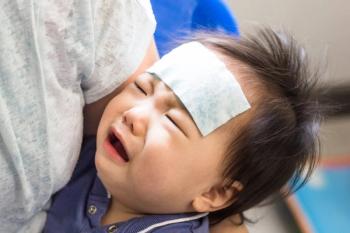
Febrile infants from disadvantaged neighborhoods with high rates of childhood poverty are much more likely than their peers from more affluent neighborhoods to have a bacterial source for their fever, according to a retrospective study of infants aged 90 days or younger with a temperature of 100°F or greater who visited an emergency department (ED) of an urban children’s hospital.
Of 973 preschool-aged children with acute gastroenteritis who visited 1 of 10 geographically diverse pediatric emergency departments (EDs), those who received a 5-day course of Lactobacillus rhamnosus GG, a commonly recommended and used probiotic, did not have better outcomes than those who received placebo, a prospective, randomized trial found.
A survey of more than 700 women who had given birth to at least 1 child found that about one-third of women who were aware that breastfeeding reduces the risk of breast cancer thought this knowledge had contributed to their decision to breastfeed.
A longitudinal study begun when participants were aged 15 years showed that body mass index (BMI) tends to increase more rapidly over time in individuals who experience food insecurity in their early teenaged years than in those who don’t.
Acetaminophen is a safe antipyretic against febrile seizures (FSs) and has the potential to prevent FS recurrence during the same fever episode, a study in Japan found.
A study conducted in Australia found that that the answer to this question is a resounding “no.” A comparison of behavioral outcomes in 124 children who had colic that had resolved by age 6 months (colic group) and 503 infants without problem crying at 1, 4, and 6 months (no colic group) found that the colic group did not manifest any adverse effects related to behavior, regulatory abilities, temperament, or family functioning when they were aged 2 to 3 years.
Infants who are exposed to tobacco smoke during their mothers’ pregnancy or after birth are at increased risk of gastroesophageal reflux (GER), especially of events with bolus movement detected by impedance (GER-imp), according to a French study in 31 neonates referred to a medical center for investigation of suspected GER.
Infants who are breastfed exclusively show less hypothalamic stress response than infants who have been breastfed little or not at all, according to a study in 42 healthy, 5-month-old infants and their mothers.
Frequently sending texts to caregivers with messages about infant development, safety, and basic care reduces the number of visits to the emergency department (ED) in the first year of life, according to a new study conducted in a large urban pediatric care practice that serves a low-income population with limited health literacy.
Women who use marijuana while breastfeeding produce breast milk with a measurable amount of the primary psychoactive ingredient in marijuana, delta-9-tetrahydrocannabinol (delta 9-THC), for up to 6 days since they last smoked. This was the primary finding in a study in 50 breastfeeding women who reported using marijuana and provided breast milk samples to a research repository for analysis.
Most parents in a Facebook peer support group for parents using behavioral sleep interventions (BSIs) reported in an online survey that their infant cried significantly less by the end of 1 week of BSI implementation and that they achieved complete success within 2 weeks, regardless of which type of BSI they used.
Treatment of obstructive sleep apnea/nocturnal hypoxia with continuous positive airway pressure (CPAP) in children with nonalcoholic fatty liver disease (NAFLD) reduces the severity of liver injury and of oxidative stress.
Indeed it does, according to a randomized trial conducted during a 3-year period in England and Wales in more than 1300 exclusively breastfed infants.

Infants born to mothers who receive vitamin D supplementation while pregnant are at reduced risk of being small for gestational age and experience improved growth during infancy, with no increased risk of fetal or neonatal mortality and congenital malformation. These were major findings of a systematic review and meta-analysis of 24 randomized controlled trials involving 5405 participants.
Most parents of young children who are overweight or obese think their child’s weight is “just right,” according to a study conducted in Sweden. However, as their child grows older, more parents recognize when their child is too heavy-especially if he or she has reached the level of obesity.
Compared with their peers who spend no more than 2 hours each weekday exposed to digital media, school-aged children who are in front of screens for longer are less likely to be doing well overall, according to their parents. Furthermore, how much digital media exposure (DME) a child gets is inversely related, in a dose-dependent manner, to markers of childhood “flourishing.”
Researchers at Wisconsin Children’s Hospital in Milwaukee, Wisconsin, found that 100 children who visited a pediatric emergency department (ED) with a reported history of penicillin allergy based on low-risk symptoms all had negative allergy testing for penicillin and all tolerated a penicillin challenge (500 mg of oral amoxicillin) without developing a severe allergic reaction. Penicillin allergy labels were removed from these children’s hospital medical records.
When you approach a parent who is hesitant about vaccinating her infant at the appropriate well-baby visits, perhaps you say something like this: “Well, we have to do some shots.” Or you might say, “How do you feel about vaccines today?” The former strategy (a “presumptive” approach) is more likely to be effective than the latter (a “participatory” approach), according to a study in parents whom a standardized survey classified as being hesitant about vaccines.
New mothers may develop postpartum depression (PPD) at any time during the first year after giving birth, an analysis of monthly depression screening data showed. Furthermore, the highest rate of positive screens-23%-was at 12 months postpartum.

A retrospective study of data from a regional community pharmacy chain in the Midwest encompassing 98 zip codes found that almost 1 in 8 new prescriptions for individuals aged up to 18 years went unfilled after the pharmacy received the prescription.

Exposure to acid-suppressive medications or antibiotics in the first 6 months of life is associated with development of allergic disease, according to a retrospective study in more than 750,000 children from within 35 days of birth until aged at least 1 year.
Investigators compared the accuracy of an American Academy of Pediatrics (AAP) practice guideline algorithm for diagnosing of urinary tract infection (UTI) in 2- to 23-month-olds with a new tool (UTICalc; University of Pittsburgh, Pennsylvania) that first estimates UTI probability based on clinical variables and then, if laboratory testing is performed, updates the estimate based on the results.

Among a variety of generic titles, parents prefer being addressed as “Mom” or “Dad” rather than “Mommy/Daddy” or “Ma’am/Sir,” according to a survey of 137 parents of children being seen or admitted to a New York State children’s hospital.