

A 10-year King County study found MMRV was the first vaccine for 15% of children who were disproportionately Hispanic, Black, or VFC eligible.
Morgan Ebert is executive editor Contemporary Pediatrics®. She joined the MJH Life Sciences team in December 2019. She graduated from Youngstown State University in 2019 with a bachelor's degree in journalism and a minor in political science. Prior to graduating, Morgan worked as the editor-in-chief of her college newspaper. She went on to work as an assignment editor at a broadcast news station in Youngstown, Ohio, before joining Contemporary Pediatrics. You can reach her at mebert@mjhlifesciences.com.
A 10-year King County study found MMRV was the first vaccine for 15% of children who were disproportionately Hispanic, Black, or VFC eligible.

A matched cohort study found no meaningful difference in serious or outpatient infection risk between infliximab and adalimumab in pediatric IBD.

Tegacorat received FDA orphan drug and rare pediatric disease designations for Duchenne muscular dystrophy.

A 2.6 million-pair Korean cohort found modest PPI/H2RA-IBD associations that vanished once sibling comparisons controlled for family factors.
Saol resubmitted SL1009 to the FDA for PDCD after added survival analyses, with no new clinical trial reported.

FDA expanded wilate's label to routine prophylaxis in VWD patients aged 6 and up, based on phase 3 WIL-31 data showing an 84% drop in bleeding rate.

About 25% of children with EoE also have joint hypermobility and orthostatic light-headedness, new Lurie Children's data show.
FDA cleared an IND for a NCATS-sponsored AAV9/SUMF1 gene therapy in multiple sulfatase deficiency, moving the ultra-rare disease toward its first-in-human trial.
FDA accepted Pharvaris's NDA for deucrictibant IR, an oral B2 antagonist for HAE attacks, based on phase 3 RAPIDe-3 data.

Take a quick look at everything you may have missed in June, including the top FDA approvals and latest clinical updates.

A look back at the FDA approvals, regulatory decisions, and pipeline updates in the pediatric health care space from June 2026.

A 25-year GUTS cohort study links childhood sugar-sweetened beverage and juice intake to adult hypertension; whole fruit showed no risk.

First RCT in pediatric ARFID finds family-based and individual therapy both cut symptoms; family therapy also drove more weight gain.

A look back at the latest clinical trial updates for the pediatric population during June 2026.
FDA expands approval of roflumilast cream 0.3% for plaque psoriasis to children aged 2 years and older, offering the first topical PDE4 inhibitor.

A small study links sequential bilateral TMS to improved depression and suicidality scores in youth with TRD.
A look back at the latest clinical trial updates for the pediatric population during the second quarter (April-June) of 2026.

New AAP guidance recommends age-specific iron deficiency screening, updated ferritin thresholds, and simplified treatment strategies for children.
FDA approved risankizumab for children 6 and older with plaque psoriasis or psoriatic arthritis, adding a weight-based 55-mg syringe for those under 40 kg.
A look back at the FDA approvals, label expansions, and regulatory decisions in the pediatric health care space from April through June 2026.

A preview of 5 pending FDA decisions for pediatric patients expected in the second half of 2026, spanning ADHD, psoriasis, a metabolic gene therapy, cardiomyopathy, and muscular dystrophy.

A new child-protective lithium coin-cell battery reduced esophageal tissue injury in testing, but urgent treatment protocols remain unchanged.
BM-3103 received FDA Fast Track designation for epidermolysis bullosa simplex as a phase 2 trial evaluates safety and efficacy.
Teva's NDA for ecopipam rests on phase 3 data showing a 50% relapse-risk cut, potentially the first new pediatric Tourette mechanism in a decade.

Research suggests childhood factors linked to later menarche may contribute to a wide range of adult health conditions, from heart disease to tobacco use disorder.
FDA approved the first generic rifapentine for active and latent tuberculosis, expanding treatment options for eligible pediatric patients.

New Endocrine Society guidance recommends more individualized evaluation and treatment of central precocious puberty in children.

Researchers detected multiple endocrine-disrupting chemicals in breast milk and infant urine, highlighting early-life exposure during infancy.

Get caught up with Contemporary Pediatrics. This list helps you navigate our top stories from the week, all in one place.
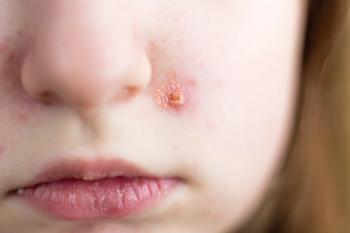
Learn how early detection and treatments for childhood eczema and hives can curb the atopic march and boost sleep, school, and quality of life.