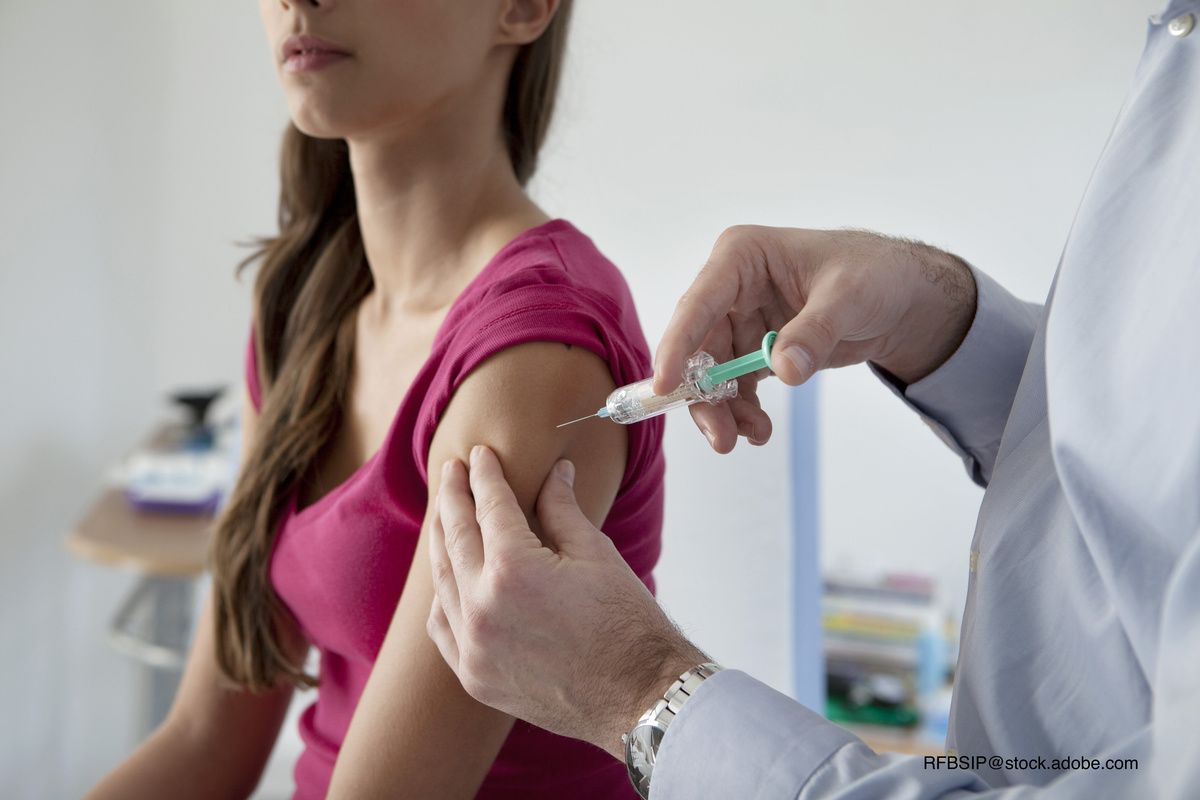
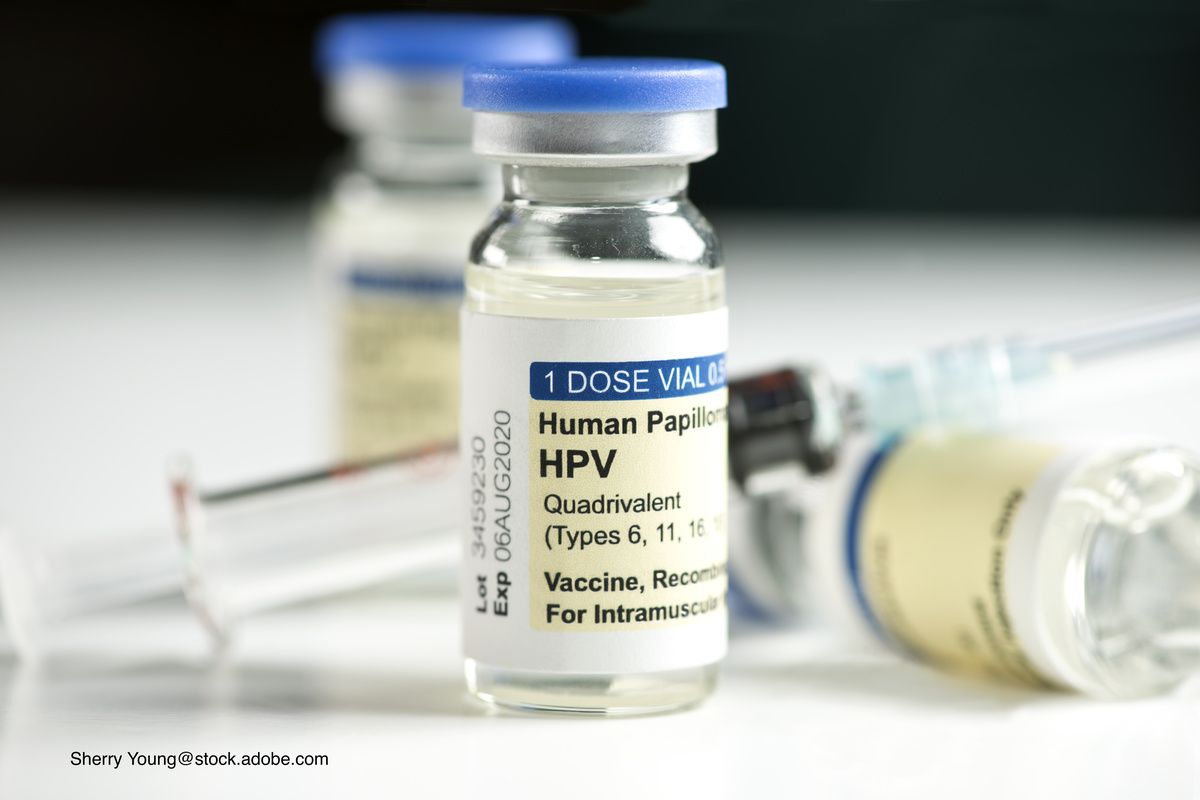

Initiation and completion rates for human papillomavirus (HPV) vaccine aren’t where public health officials would like them to be. A report examines whether an intensive intervention can help improve those rates.
Initiation and completion rates for human papillomavirus (HPV) vaccine aren’t where public health officials would like them to be. A report examines whether an intensive intervention can help improve those rates.

The US Food and Drug Administration (FDA) announced the approval of Tivicay and Tivicay PD for the treatment of HIV-1 in children aged at least 4 weeks.

This rash on a teenage boy's palms began on his hands and spread to his torso and upper and lower extremities over several days. He had no pain or pruritus. Two weeks before the lesions appeared, he had experienced fatigue, fever, and myalgia of 1 week's duration.
The July 2006 issue, which featured an update on STDs, included a case on primary syphilis in a teenager (page 427). Therapy with intramuscular penicillin G (weekly for 3 weeks) or ceftriaxone (daily for 2 weeks) was recommended. However, the CDC's newly published guidelines on STD treatment recommend therapy with a single intramuscular dose of 2.4 million units of penicillin G.1 If the patient is allergic to penicillin, the alternative is therapy with doxycycline (100 mg orally bid for 14 days) or tetracycline (500 mg qid for 14 days). Ceftriaxone is not a recommended treatment for syphilis.
Fourteen-year-old JT is worried. During health class last week, he learned about the different sexually transmitted infections as well as about testicular self-examination. While practicing his monthly testicular examination in the shower, he noticed that he had a number of small growths on his penis. On further questioning, JT insists that he has never been sexually active with another person.
Your doctor has just told you that you have an infection with human papillomavirus (HPV). Most teens have a lot of questions about warts and HPV. This guide will help answer some of those questions.
Adolescents are at high risk for HPV infection because they tend to become involved with multiple simultaneous sexual partners rather than forming monogamous relationships.
Most cases of HSV-2 infection are spread through sexual transmission. An infected person can have virus in his or her saliva, semen, or vaginal secretions. When a seronegative partner comes in sexual contact with these secretions, the virus can enter the body through mucosal surfaces (such as the vagina, anus, or mouth) or micro-abrasions on the skin (eg, the penile shaft, scrotum, thighs, or perineum).
How did I get herpes? Is there a cure? What causes an outbreak-- and what can I do to prevent another one? My friend got herpes and had to stay in the hospital; will that happen to me? Can I still have children?
Your doctor has just told you that you have a herpes simplex virus infection (herpes). Most teens have a lot of questions about herpes. This guide will help answer some of them for you.
Gonorrhea (aka "the clap," or "the drip") is caused by sexually transmitted Neisseria gonorrhoeae--a Gram-negative diplococcus. One of the most common reportable diseases in the United States, gonorrhea frequently affects sexually active adolescents. Approximately 30% of the 350,000 annual cases involve 15- to 19-year-olds. (That percentage is thought to be an underestimate!) Those most often infected are young women 15 to 24 years old. Recent data suggest that infection rates are higher among teens who are homeless or pregnant, and in those from a minority group or an economically disadvantaged background.
Your patient, Keith, is a 19-year-old college freshman who is currently on spring break following the successful completion of his midterm exams. You have known him since he was 9 years old and you are looking forward to hearing about his first few months away at school.
A 9-year-old girl presented with these lesions on her face and extremities. The lesions, which had developed within the past 24 hours, were warm to the touch and only mildly pruritic. The child feels unwell with nonspecific complaints of malaise and lack of energy. Before this eruption, she had been healthy and had not been taking any medications.