

Poison center data show most water bead ingestions are mild, but children younger than 2 years face higher risk for serious outcomes.
Poison center data show most water bead ingestions are mild, but children younger than 2 years face higher risk for serious outcomes.

A 173-mother cohort study found parenting role models—not income alone—drove the link between maternal education and COVID-19 vaccination intent.

CTx-1301 improved clinician-rated ADHD symptoms versus placebo in a phase 3 pediatric trial, but detailed safety data remain limited.

Many families with a first-degree history of type 1 diabetes underestimate their risk, highlighting opportunities for pediatricians to discuss screening.

A California study found rising pediatric e-bike injuries, prompting calls for pediatricians to counsel families on safe riding and helmet use.

Pediatric psychologist Jeff Temple, PhD, says healthy routines, parental modeling, and child maturity matter more than screen time alone.

Corresponding author Cynthia Gyamfi-Bannerman, MD, MS, says late preterm hypoglycemia did not adversely affect neurodevelopment.
Temple recommends structured back-to-school routines and intentional screen use instead of strict limits to support child well-being.

Ensitrelvir adds an FDA-approved COVID-19 postexposure prophylaxis option for adults and adolescents aged 12 years or older.

FDA cleared Masimo's pediatric Patient State Index, a SedLine EEG-based sedation score calibrated for children aged 4 and older.

In the OUTMATCH trial, omalizumab achieved higher treatment success than multiallergen oral immunotherapy, largely because of fewer adverse events.

CSL reported that most children receiving garadacimab remained attack-free in a recent phase 3b study of garadacimab-gxii for prevention of hereditary angioedema.
The FDA has approved novel norepinephrine, dopamine, and serotonin reuptake inhibitor (NDSRI) centanafadine for ADHD in children, adolescents, and adults
FDA approved Tylenol with Naproxen, the first OTC fixed-dose acetaminophen/naproxen sodium tablet, for 12-hour pain relief in patients 12 and older.

US measles cases have climbed to 2,318 in 2026, already exceeding all of 2025 and marking the country's highest annual total since 1991, as CDC data show falling MMR coverage continuing to fuel outbreaks.
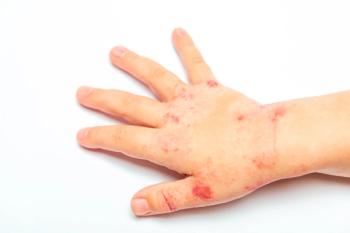
A pooled ADORING trial analysis found tapinarof cream improved skin clearance by week 2 across ages 2 through adulthood in atopic dermatitis.

Serial prenatal amnioinfusions improved survival in fetal renal failure, but surviving infants require complex multidisciplinary care after birth.

Jon Farber, MD, shares his thoughts on the diagnosis of slipped capital femoral epiphysis.

The SMARTER trial found prenatal and postnatal safe sleep video texting did not significantly improve 4 primary sleep outcomes.
Jon Farber, MD, shares his thoughts on the efficacy of laser therapy for temporal lobe epilepsy.

Olivia Kim-McManus, MD, discusses how personalized antisense therapy reduced seizures and improved development in 2 children with SCN2A-related developmental epileptic encephalopathy.
Jon Farber, MD, shares his thoughts on probiotics for reducing gastrointestinal problems in autism spectrum disorder.

Study finds higher intake of ultra-processed foods in early childhood linked to lower volume of several subcortical brain regions by age 6.

The PECOS study found 20 post-COVID symptoms in children; Roberta L. DeBiasi, MD, discusses evaluation and follow-up.

Joyce Woo, MD, says timely diagnosis, coordinated transfer, and early surgical planning may improve care for newborns with severe congenital heart defects.

A new AAP/NASPGHAN guideline replaces "failure to thrive" with "faltering weight" and adopts z-score–based diagnostic criteria in place of percentiles.
Study highlights prenatal diagnosis gaps and hospital-level factors that may affect timely transfer for newborns with severe congenital heart defects.

Alesia McKeown, PhD, of Roche Diagnostics discusses why pertussis is missed in children and adolescents and how PCR testing can help.

Udenafil lowered ELF scores after 12 months in an exploratory Fontan substudy, but liver stiffness measures did not significantly change.
Later transfer to a cardiac surgical center was associated with longer hospitalization for newborns with severe congenital heart defects, Joyce Woo, MD, MS, explains.