

In this Contemporary Pediatrics interview, James Wallace, MD, discusses increased trends in school avoidance and the negative effects associated with less days in the classroom.

Joshua Fitch is the senior editor for Contemporary Pediatrics. He joined the brand in March of 2023 as an editor before being promoted to senior editor in January 2024. Fitch graduated from Youngstown State University in Youngstown, Ohio in 2020 with a degree in telecommunications and journalism. He started his career as a news and sports videographer before becoming an on-air sports anchor at the NBC-affiliated news station in Youngstown. Fitch briefly worked as a national content writer for a Chicago-based national television station before joining the Contemporary Pediatrics team. He can be reached at: [email protected].
In this Contemporary Pediatrics interview, James Wallace, MD, discusses increased trends in school avoidance and the negative effects associated with less days in the classroom.
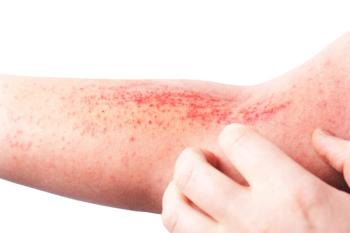
Positive topline results from a pair of identical phase 3 trials support the submission of a supplemental New Drug Application to the FDA for Arcutis Biotherapeutics’ roflumilast cream 0.15%, a once-daily topical to treat mild to moderate atopic dermatitis (AD) in children 6 years or older.
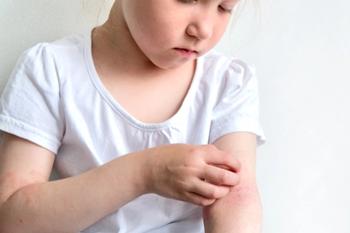
Based on recent positive phase 3 results, Arcutis Biotherapeutics,. intends to submit a supplemental New Drug Application with the FDA for roflumilast cream 0.05% to treat mild to moderate atopic dermatitis in children aged 2 to 5 years.

The FDA issued the Complete Response Letter (CRL) based on the request for a completed pharmacokinetic/pharmacodynamic study to assess how repeat doses of the epinephrine nasal spray compare to repeat doses of an epinephrine injection product. ARS Pharma is set to file a Formal Dispute Resolution Request to appeal the CRL.

Francheska M. Merced-Nieves, PhD, Assistant professor, Departments of Pediatrics and the Institute for Exposomic Research of Environmental Medicine & Public Health, Icahn School of Medicine at Mount Sinai, explains the associations prenatal exposure to a metal mixture and the potential negative effects for the infant.

According to a recent C.S. Mott Children’s Hospital National Poll on Children’s Health, the recent wildfires and extreme weather events that are creating poor or unhealthy air quality are also causing concern for parents in regards to their children's health.
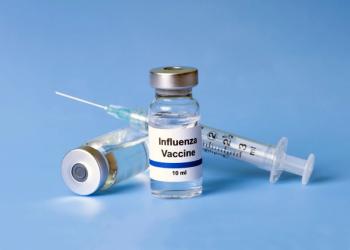
Standout updates include a relaxed recommendation for patients with a history of egg allergies, and that all available influenza vaccines for the 2023 to 2024 flu season are quadrivalent.

Review some of the top stories from the Contemporary Pediatrics website over the last week, and catch up on anything you may have missed.

Two infant formula products are being voluntarily recalled by the LittleOak Company after the FDA deemed they were illegally sold in the United States.

Surveys collected for a study published in the Canadian Journal of Diabetes revealed that desire for telehealth care amid pediatric diabetes families increased from the early onset of the COVID-19 pandemic, to more than 1 year later.

In this interview originally conducted by our sister publication Contemporary OB/GYN, Marci Bowers, MD, shares the biggest takeaways from her presentation on transgender reproductive care, presented at the 2023 Society of OB/GYN Hospitalists Annual Clinical Meeting in Chicago, Illinois.
Review some of the top stories from the Contemporary Pediatrics website over the last week, and catch up on anything you may have missed.

In this Contemporary Pediatrics interview, Rob Knight, PhD, discusses translating adult studies into children to determine gut microbiome biomarkers, and how they are associated with neurological and cognitive conditions.

Due to increased RSV activity observed in Southeastern regions of the United States, the Centers for Disease Control and Prevention (CDC) has issued an official Health Alert Network Health Advisory. The CDC recommends that clinicians prepare to implement recently FDA-approved prevention methods.

The EarliPoint Evaluation has demonstrated positive phase 3 trial results, aiding in autism diagnosis and assessment in children aged 16 to 30 months. Warren Jones, PhD, chief scientific officer and cofounder of EarliTec Diagnostics, Inc., discusses the eye-tracking tool, how it is currently being used, and what could be in store for the future.

In this Contemporary Pediatrics interview, Bernard A. Cohen, MD, discusses VP-102, approved by the FDA on July 22, 2023, to treat molluscum contagiosum in pediatric patients 2 years and up.
Review some of the top stories from the Contemporary Pediatrics website over the last week, and catch up on anything you may have missed.

The FDA inspected each company’s facilities, in which the agency issued inspectional observations and exercised oversight of each firm as recalls were initiated in December 2022, February 2023, and March 2023, respectively, for the removal of products potentially contaminated with Cronobacter sakazakii from the marketplace.

According to a recent Morbidity and Mortality Weekly Report, the original COVID-19 monovalent and bivalent vaccines helped reduce emergency department or urgent care encounters for children aged 6 months to 5 years.

Patients 6 years and up with ADHD now have alternate options for prescription lisdexamfetamine dimesylate (Vyvanse; Takeda Pharmaceuticals USA Inc), after the FDA-approval of multiple generic options.
Rob Knight, PhD, Wolfe Endowed Chair in Microbiome Science at Rady Children's Hospital-San Diego, professor of pediatrics, UCSD, explains how links between gut microbiomes and cognitive and neurological conditions are being researched and what could be ahead for these associations in children.
Review some of the top stories from the Contemporary Pediatrics website over the last week, and catch up on anything you may have missed.

Across a variety of concerns, the overuse of devices and screen time was the top concern for parents listed in the 2023 Top 10 Child Health Concerns for Parents, released by the C.S. Mott Children’s Hospital National poll on Children’s Health.

Investigators of a study published in Pediatrics examined whether a 30-minute exposure to outdoor air (< 50 °F) would improve symptoms of mild to moderate croup.

In 2021, firearm deaths continued to be the leading cause of death for US children, with further worsening disparities noticed, according to a study published in Pediatrics.

Study authors concluded that developmental delay domains should be separately considered when discussing screen time and potential delays in childhood development.

In this Contemporary Pediatrics® interview, Tammy Brady, MD, PhD, explains how an incorrectly-fitting blood pressure cuff can lead to the wrong diagnosis in the pediatric population, and what tips to look for when shopping for cuffs currently on the market.

Tina Tan, MD, FAAP, FIDSA, FPIDS, discusses what Pfizer's recently FDA-approved RSV vaccine means for infants ahead of the traditional RSV season.

Approved for use at 32 weeks through 36 weeks gestation, Pfizer’s maternal respiratory syncytial vaccine (Abrysvo), is delivered through a single dose injection to the muscle, and is the first vaccine for use in pregnant individuals to prevent lower respiratory tract disease (LRTD) and severe LRTD because of RSV in infants (birth to 6 months).
Review some of the top stories from the Contemporary Pediatrics website over the last week, and catch up on anything you may have missed.