

A total of 3761 cases of congenital syphilis were reported to the CDC in 2022, with the lack of timely testing and adequate treatment contributing to 88% of these cases.

Joshua Fitch is the senior editor for Contemporary Pediatrics. He joined the brand in March of 2023 as an editor before being promoted to senior editor in January 2024. Fitch graduated from Youngstown State University in Youngstown, Ohio in 2020 with a degree in telecommunications and journalism. He started his career as a news and sports videographer before becoming an on-air sports anchor at the NBC-affiliated news station in Youngstown. Fitch briefly worked as a national content writer for a Chicago-based national television station before joining the Contemporary Pediatrics team. He can be reached at: jfitch@mjhlifesciences.com.
A total of 3761 cases of congenital syphilis were reported to the CDC in 2022, with the lack of timely testing and adequate treatment contributing to 88% of these cases.

The study authors sought to compare pain scores over 2 years in 3 treatment strategies in non-systemic JIA patients who were treated to target aimed at inactive disease, and to determine the effect of inactive disease and time to inactive disease on pain.

In a systematic and meta-analysis review of cohort studies that featured nearly 1.7 million individuals, study authors concluded that there is an association between high body mass index (BMI) and an increased risk of incident type 1 diabetes (T1D).

Ustekinumab-auub is approved to treat indications that are currently approved for ustekinumab, including moderate to severe plaque psoriasis (candidates for phototherapy or systemic therapy) and for those with active psoriatic arthritis, aged 6 years and older.
The FDA was made aware some health care providers had administered the full single dose vial of the vaccine, which contains “notably more” volume than the 0.25 mL volume indicated for children aged 6 months to 11 years.

Review some of the top stories from the Contemporary Pediatrics website over the last week, and catch up on anything you may have missed.

Take a look back at some of the top-performing stories from Contemporary Pediatrics with this review article. Stories featured in this article are re-capped and directly link to our most-viewed articles from August through October 2023.

For the first time since 2001 to 2002, a year-to-year increase of the infant mortality rate was observed in the United States from 2021 to 2022. The provisional 20,538 infant deaths reported in 2022 were a 3% increase compared to 2021.

Longer-term data was recently released for dupilumab as a treatment for eosinophilic esophagitis (EoE) in children aged 1 to 11 years, demonstrating a similar safety and efficacy profile for up to 1 year of treatment. A supplemental Biologic License Application was accepted by the FDA in September 2023 with a Priority Review designation.
A usability study demonstrated that individuals older than 18 years could self-administer the intranasal treatment or administer it to eligible patients aged 2 to 49 years, when given instructions and no additional guidance.

A child with profound genetic hearing loss was dosed with an investigational otoferlin gene therapy (DB-OTO), the first patient dosed in a phase 1/2 trial evaluating the treatment. The child experienced improved auditory response at week 6 with no concerning safety signals.
Vamorolone, oral suspension 40 mg / ml, has been approved by the FDA to treat Duchenne muscular dystrophy (DMD) in patients aged 2 years and up, according to Santhera Pharmaceuticals.

In this interview with Contemporary Pediatrics®, Lauren Lanzon, MSW, MA, BCBA, clinical trainer, Carolina Behavioral Innovations, explains how technology and software is helping families following an autism diagnosis in their child.

The combination vaccine candidates demonstrated a safety profile consistent with Pfizer’s COVID-19 vaccine. A phase 3 trial is anticipated to commence in the coming months, according to a press release from Pfizer.
The Centers for Disease Control and Prevention is advising providers to prioritize 100 mg doses of nirsevimab, a monoclonal antibody FDA-approved to prevent respiratory syncytial virus (RSV), for infants at the highest risk of severe RSV disease.
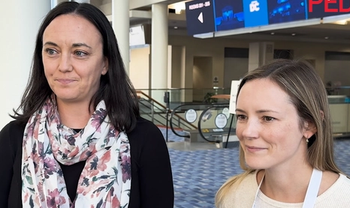
Meghan Harrison, DO; and Brittany Perry, DO, discuss including early autism screening in the primary health care setting, following their session presented at the 2023 American Academy of Pediatrics National Conference & Exhibition, held in Washington DC.

While at the 2023 American Academy of Pediatrics National Conference & Exhibition, Steven Selbst, MD, spoke with Contemporary Pediatrics® about current trends in pediatric emergency medicine, and highlighted the ongoing mental health crisis.

Susan J. Kressly, MD, FAAP, shares tips and aspects of her session, "How to Ensure You Will Be Paid What You’re Worth," presented at the 2023 American Academy of Pediatrics National Conference & Exhibition, in this Contemporary Pediatrics® interview.

In this Contemporary Pediatrics® interview, Marian F. Earls, MD, MTS, FAAP, and Kori Flower, MD MS MPH, FAAP, discuss their session "How to Include Screening for Social Emotional Health in Your Practice," presented at the 2023 American Academy of Pediatrics National Conference & Exhibition.

Cassidy Foley Davelaar, DO, FAAP, CAQSM, shares some of the findings from her research on how social media affects young athletes and their body image at the 2023 American Academy of Pediatrics National Conference & Exhibition.
"I was honored this year, really truly honored, to receive the Jim Seidel Distinguished Service Award for the section of emergency medicine," said Contemporary Pediatrics Editorial Advisory Board member Steven Selbst, MD at the 2023 American Academy of Pediatrics National Conference & Exhibition.

In this Contemporary Pediatrics interview, Michelle Loy, MD, FAAP, recaps her session, "Culinary Medicine: Using Food for Physical, Mental, and Environmental Health" presented at the 2023 American Academy of Pediatrics National Conference & Exhibition in Washington DC.
Steven Selbst, MD, provides a quick update on what he has noticed in his hospital when it comes to RSV-associated emergency department visits and how they compare to this time last year, during the "tripledemic." This interview was conducted at the 2023 American Academy of Pediatrics National Conference and Exhibition in Washington DC.

In this Contemporary Pediatrics® interview, Scott Sicherer, MD, FAAP, discusses his session, "Feed the Baby! Essential Advice for Food Introduction and Allergy Prevention," presented at the 2023 2023 American Academy of Pediatrics National Conference & Exhibition.

At the 2023 American Academy of Pediatrics National Conference & Exhibition, Eric J. Sigel, MD, FAAP, professor of pediatrics, University of Colorado School of Medicine, explains his session "Suicide and Gun Violence: What We Know, What We Can Do."

At the 2023 American Academy of Pediatrics National Conference & Exhibition, Paul V. Williams, MD, FAAP, explains his session "Tell Me it Ain't So: Delabeling Penicillin Allergy," and how general pediatricians can make a difference by removing a false penicillin allergy label from a child's medical record.

George J. Fuchs, III, MD, FAAP, explains how certain branding and labeling can lead parents to purchase toddler formula, though products are not nutritionally complete and lack FDA regulations present in infant formulas. This interview was conducted at the 2023 American Academy of Pediatrics National Conference & Exhibition in Washington DC.
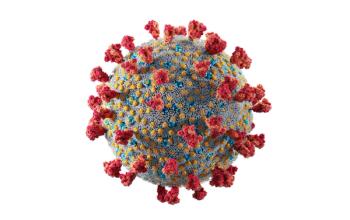
Eculizumab and anakinra should be considered in critically ill patients with severe infections that require immunomodulating therapies for life-threatening dysregulation, according to a poster session at the 2023 American Academy of Pediatrics National Conference & Exhibition.
The topical gel is the first and only FDA-approved triple-combination, fixed-dose topical treatment for acne, and is set to be available in the first quarter of 2024, according to Bausch Health Companies Inc.
In a phase 2 clinical trial, the safety and efficacy of vosoritide was similar in children aged younger than 5 years to those older than 5 years.