AHA, AAP, ACOG, and SMFM issued a Female Life Stage framework that starts cardiovascular risk assessment at perimenarche, around ages 8 to 15.
Morgan Ebert is executive editor Contemporary Pediatrics®. She joined the MJH Life Sciences team in December 2019. She graduated from Youngstown State University in 2019 with a bachelor's degree in journalism and a minor in political science. Prior to graduating, Morgan worked as the editor-in-chief of her college newspaper. She went on to work as an assignment editor at a broadcast news station in Youngstown, Ohio, before joining Contemporary Pediatrics. You can reach her at mebert@mjhlifesciences.com.
AHA, AAP, ACOG, and SMFM issued a Female Life Stage framework that starts cardiovascular risk assessment at perimenarche, around ages 8 to 15.

In PROGRESS Cohort 2, zilurgisertib reduced total HO volume vs placebo at 24 weeks in children aged 6 to 11 with FOP, with no new HO lesions.

Registry data presented at ASN Kidney Week 2026 linked SCD-PED to higher 90-day survival vs historical controls in pediatric sepsis-associated AKI.

The FDA approved insulin icodec-abae for children 10+ with T2D, based on adult ONWARDS data and a single-dose pediatric pharmacokinetic study.

FDA draft guidance proposes cadmium limits of 10 to 45 ppb for processed foods for children younger than 2, from purees to dry infant cereals.

Lower maternal PlGF in the third trimester was tied to child ADHD in a University of Iowa cohort, independent of preeclampsia and FGR.
FDA approves berotralstat 150-mg oral pellets for HAE prophylaxis in patients 12+ who cannot or prefer not to swallow capsules.

In a meta-analysis of 46 RCTs, behavioral interventions modestly improved HbA1c in youth with T1D; family-focused approaches worked best.

A GBD analysis of 204 countries estimated measles cases in children under 5 rose from 11.1 million in 2019 to 15.6 million in 2023.

Tezepelumab produced histologic remission in up to 68.9% of patients aged 12+ with EoE vs 3.5% with placebo at week 24, sustained to week 52.

Black race was the strongest predictor of T2-high inflammation in 451 children with severe asthma adjusted for social and environmental factors.

A Mott Poll of 2,027 parents found 81% say having a baby costs too much; 73% strongly back state paid leave around birth.

In phase 3 SHINE-2, 50% of mirikizumab induction responders aged 6 to 17 with moderate to severe UC were in clinical remission at week 52.
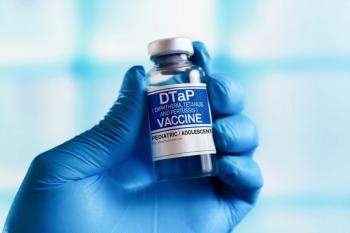
Completing the DTaP primary series was 96.2% effective against pertussis in Alaska children aged 6 months to 6 years during a record 2024 outbreak.

Keisha L. Gibson, MD, MPH, discusses the FDA approval of Gazyva for childhood-onset INS and its implications for relapse prevention and pediatric care.

Topical botanical Cinainu earned FDA Breakthrough Therapy status for AA in patients aged 2+, supported by phase 2/3 RAAINBOW data in children.
The FDA accepted the Anaphylm NDA resubmission as a class 2 response, setting a March 16, 2027, PDUFA date for the sublingual epinephrine film.

Children with FASD given choline before age 6 had 9.1% higher nonverbal IQ and 11.3% better working memory vs placebo 5 years after treatment.

A deep learning model reading 1 nondilated fundus photo predicted 1-year progression to high myopia in children with AUCs of 0.91-0.96.

SUID was the largest single contributor to the Black-White infant mortality gap in 2024 and drove the biggest share of its rise since 2020.

Nationwide Children's experts urge early screening and family-based lifestyle change as youth-onset T2D progresses faster than adult disease.

Poison center reports of intentional school exposures rose 287% in elementary and 112% in middle school children from 2000 to 2024.

Real-world claims show dupilumab was tied to a 33%-52% lower risk of atopic march progression vs systemic corticosteroids in children with AD.

Once-daily roflumilast cream 0.05% was well tolerated in infants 3 to <24 months with AD, with 34.4% reaching vIGA-AD success at week 4.

Oral icotrokinra kept PASI 90 rates at ≥72% and IGA 0/1 at ≥70% from week 64 to 112 in ICONIC-LEAD, with no new safety signals.

Nichole Tyson, MD, outlines how pediatricians can evaluate menstrual concerns, identify red flags, and determine when specialty care is needed.
Maternal high egg and peanut intake in pregnancy and lactation did not lower infant IgE-mediated egg or peanut allergy at 1 year in PrEggNut.

Only 21.5% of 65 health institutions posted on Instagram in response to claims linking prenatal acetaminophen use with autism.

E-bike and e-scooter injuries nearly quadrupled from 2019 to 2025 at a pediatric hospital, with e-bike injuries associated with greater severity.

TikTok misinformation about prenatal acetaminophen and autism represented 28.3% of analyzed videos but generated more than half of total views.

September 2nd 2026

May 9th 2022