

Leah K. Middleberg, MD, FAAP, explains her research on magnet ingestion and socioeconomic disparities, which was recently presented at the 2023 American Academy of Pediatrics National Conference & Exhibition.
Leah K. Middleberg, MD, FAAP, explains her research on magnet ingestion and socioeconomic disparities, which was recently presented at the 2023 American Academy of Pediatrics National Conference & Exhibition.

At the 2023 American Academy of Pediatrics National Conference & Exhibition, Paul V. Williams, MD, FAAP, explains his session "Tell Me it Ain't So: Delabeling Penicillin Allergy," and how general pediatricians can make a difference by removing a false penicillin allergy label from a child's medical record.

A recent study was highlighted at the 2023 American Academy of Pediatrics National Conference & Exhibition that shed light on the long-term impact of very preterm birth on the health-related quality of life (HRQOL) of infants and identified key determinants.

George J. Fuchs, III, MD, FAAP, explains how certain branding and labeling can lead parents to purchase toddler formula, though products are not nutritionally complete and lack FDA regulations present in infant formulas. This interview was conducted at the 2023 American Academy of Pediatrics National Conference & Exhibition in Washington DC.

Eculizumab and anakinra should be considered in critically ill patients with severe infections that require immunomodulating therapies for life-threatening dysregulation, according to a poster session at the 2023 American Academy of Pediatrics National Conference & Exhibition.

The Complete Response Letter (CRL) is based on additional efficacy data required by the FDA, according to Sanofi and Regeneron.

The topical gel is the first and only FDA-approved triple-combination, fixed-dose topical treatment for acne, and is set to be available in the first quarter of 2024, according to Bausch Health Companies Inc.

Nipocalimab (Janssen) may be promising for the antenatal and postnatal management of fetal anemia in pregnancies at high risk for EOS-HDFN , according to data from the phase 2 UNITY study presented at the 2023 American Academy of Pediatrics National Conference & Exhibition
In a phase 2 clinical trial, the safety and efficacy of vosoritide was similar in children aged younger than 5 years to those older than 5 years.
The FDA approval could simplify meningococcal vaccine schedules while providing broad serogroup coverage.

Authors of a study highlighted at the 2023 American Academy of Pediatrics National Conference & Exhibition suggest psychosocial factors are significant contributors to parents' decisions regarding safe sleep

A new study says yes.

A new study suggests that new information on who is most likely to have a reaction may help boost immunizations.

Parents who reported the stigmatizing belief “My child is not having sex” were much more likely to rely on health care providers as a source of information than parents who did not report this belief.
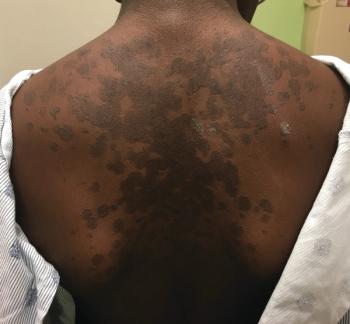
A healthy 13-year-old girl presented with a 1-month history of an asymptomatic, well-demarcated rash on her back and upper chest. The eruption consisted of discrete, dark brown papules that coalesced into large, flat-topped plaques with mild superficial scale and accentuation of skin markings. What's the diagnosis?

As more states legalize marijuana for recreational purposes, pediatric health care providers need to know how to educate and discuss the drug with families.

A significant improvement of stimulated C-peptide levels at week 78 for patients newly diagnosed with type 1 diabetes (T1D) was observed for teplizumab-treated patients compared to placebo. Significant differences between groups for insulin dose, percentage of time in target glucose range, and change in glycated hemoglobin were not observed.

At IDweek 2023, Flor Munoz, MD, MSc, provided an update on maternal Group B Streptococcus (GBS).

Vana Papevangelou, MD, PhD, presented current and upcoming strategies to prevent congenital cytomegalovirus (CMV) infections in neonates at IDWeek 2023.

Of the patients that responded to lebrikizumab at week 16 in the phase 3 trials ADvocate 1 and ADvocate 2, 84% achieved a clinically meaningful response in at least 1 domain of the disease (mild signs, symptoms, or quality of life impact) at 52 weeks.

Desensitization was observed in children aged 1 to 4 years using peanut sublingual immunotherapy (SLIT) compared to placebo, demonstrating a significantly greater median cumulative tolerated dose and higher likelihood of demonstrating remission.
Patients aged 12 years and up with completely resected Stage IIB/C melanoma can now be treated (adjuvant) with FDA-approved nivolumab (Opdivo; Bristol Meyers Squibb Company).

Review some of the top stories from the Contemporary Pediatrics website over the last week, and catch up on anything you may have missed.

A rapid reduction in pruritis as early as 24 hours after first application was announced as new positive data from a pair of identical, phase 3 studies of tapinarof cream 1% in children as young as 2 years and adults with atopic dermatitis (AD).

A systematic review and meta-analysis found that such sequencing indeed has an equivalent high genetic diagnostic yield in cerebral palsy, which supports including this neurodevelopmental disorder among those for which diagnostic exome sequencing should be used.

New immunizations for RSV are making this respiratory infection preventable in ways it never was before. Here is the latest news on recent approvals and future outlooks.

Compared to clinician nudges alone, higher receipt of influenza vaccination among children with special risk medical conditions (SRMCs) was observed when their respective parents received an additional short message service (SMS) reminder.

A 22-month-old female patient with sickle cell disease on folic acid and penicillin prophylaxis with a 3-day history of nasal congestion, rhinorrhea, fever and decreased oral intake presents to the emergency department (ED) for acute facial swelling noted when she woke up from a nap. What's the diagnosis?

From 2006 to 2019, psychotropic medication use for those with type 1 diabetes (T1D) increased, leading investigators to call for risk-benefit studies, further evaluating effectiveness and improved diabetes care in this population.

Crinecerfont, an investigational, oral, selective corticotropin-releasing factory type 1 receptor antagonist, achieved the primary and key secondary endpoints in a phase 3 study to treat congenital adrenal hyperplasia due to 21-hydroxylase deficiency in children aged 2 to 17 years.